Active Travel Is Growing, But UK Routes Still Forget the Basics: Water
// NO DESCRIPTION DATA
Walking & Cycling
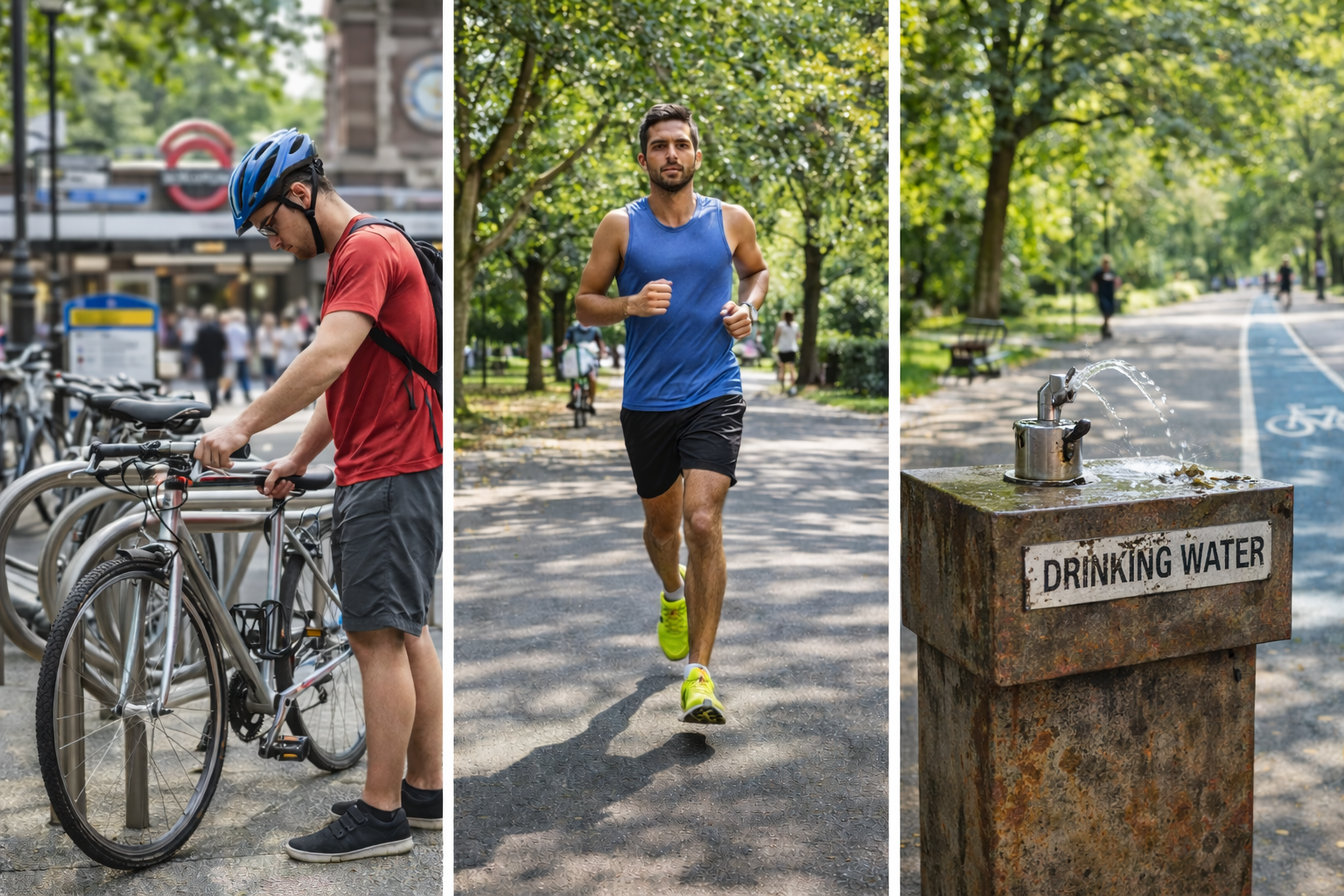
The UK is investing in walking and cycling. That is good policy. But most active travel plans still miss a simple question:
where do people get water when they are moving?
If you want more people walking, wheeling, cycling, or running as part of daily life, hydration needs to be as normal as lighting, bins, and wayfinding.
The UK is actively funding walking and cycling growth
Government strategy and investment is explicitly pushing walking, wheeling, and cycling through national planning and council integration.
Active Travel England has also announced major funding allocations to councils for walking, wheeling, and cycling infrastructure.
When you widen routes and improve crossings, you increase movement. When you increase movement, you increase hydration need.
People do not fail active travel because they hate walking
They fail because the environment is not supportive:
- no shade in summer
- no seating
- no toilets
- nowhere to top up water
- too many “small frictions” that turn a healthy choice into a tiring one
And when water is not available, people default to convenience shops and single-use bottles.
Hydration nodes make routes feel complete
A good active travel route works like a system, not a strip of tarmac.
Hydration nodes can sit naturally at:
- transport interchanges
- cycle parking clusters
- park entrances
- campus edges
- leisure centres
- high-footfall pedestrian corridors
The point is not to replace refill stations. It is to acknowledge that many people do not have a bottle in the moment. Systems built for real behaviour perform better.
Schools and “safe routes” are an obvious match
Active travel policy is increasingly tied to getting children moving safely. When routes are designed for school travel, the environment must support:
- kids
- carers
- prams
- slower walking speeds
- heat exposure at pick-up time
Free hydration near these corridors is a small upgrade that changes daily experience.
Why Freee Water fits active travel better than most solutions
Freee Water’s model is designed for high-footfall movement:
- grab-and-go access
- predictable placement
- clear signage
- packaging choices that reduce waste compared with endless plastic bottle purchases
It becomes a support layer for the exact behaviour active travel policy wants.
How councils could deploy it without complexity
A realistic pilot approach:
- choose 5 to 10 locations along a corridor
- measure demand, restock frequency, peak times
- adjust placement based on actual movement patterns
- publish simple public data
The goal is not perfection. It is reliability.