Third Places Win: How Community Hubs Can Host Free Hydration Without Making It Weird
// NO DESCRIPTION DATA
The UK Still Runs on “Third Places”
Most people live between spaces:
home, work, and everything else.
That “everything else” is what planners call third places:
- community halls
- youth clubs
- advice centres
- faith spaces
- food hubs
- charities
- local centres
These places already do something rare:
they let people exist without paying for permission.
That’s exactly the vibe free hydration needs.
Why This Host Model Works
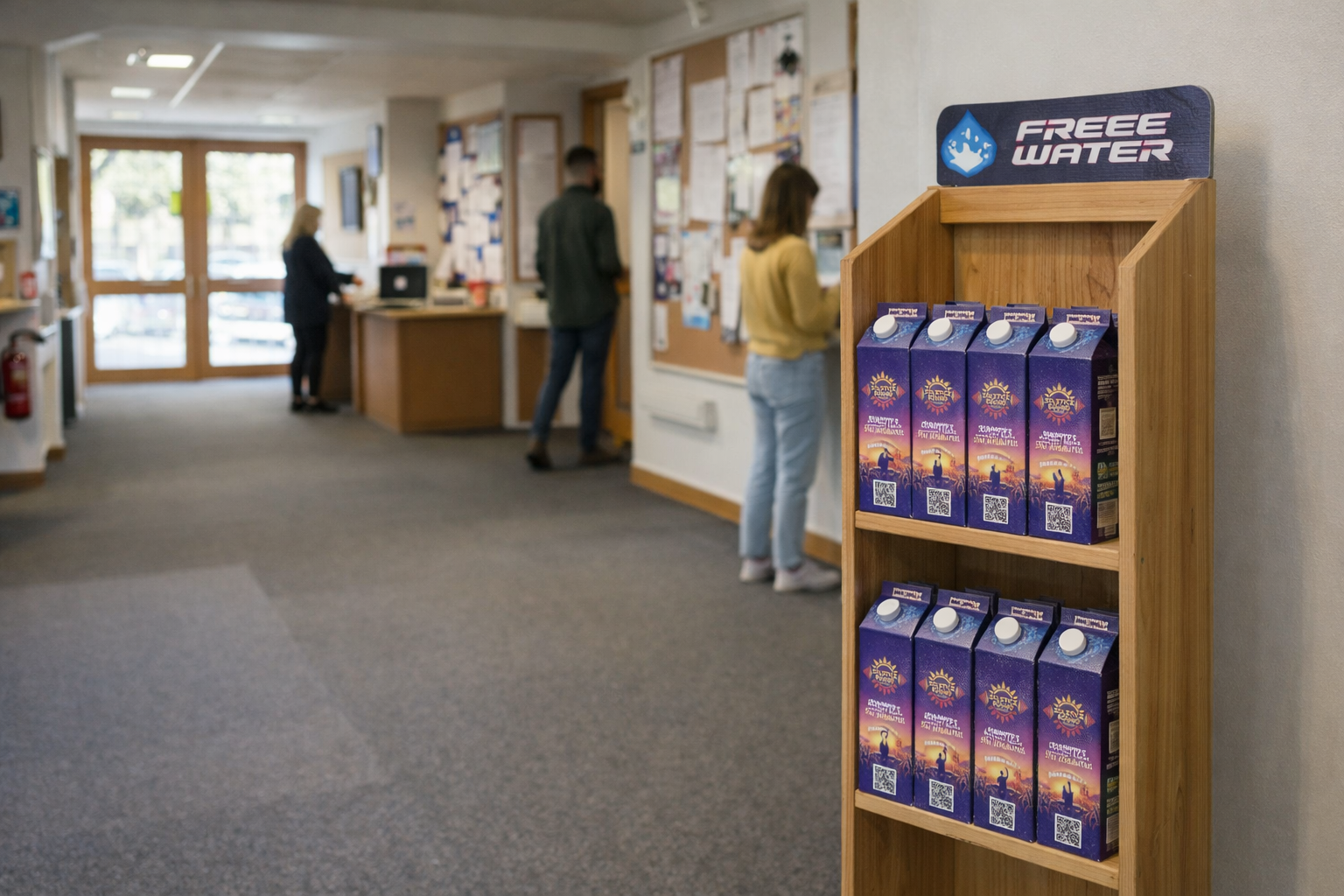
A Freee Water stand works best when the location already has:
- consistent footfall
- trust
- routine use
- community legitimacy
That’s why community hosts matter:
people won’t overthink it.
It feels like infrastructure, not a stunt.
The Unspoken Problem: People Don’t Want to Ask
Even when free water exists, people avoid the social friction:
- “Is it allowed?”
- “Do I need to be a customer?”
- “Will someone judge me?”
Community hubs remove that tension.
They’re already built for access.
Making It Inclusive and Neutral
If Freee Water is hosted in a community space, the rules should be simple:
- open access
- no pressure
- clear placement
- visible, clean, reliable
That’s what keeps it universal, not “for certain people”.
Why Sponsors Like This Too
Brands want trust-by-association.
Community hubs offer:
- credibility
- real-world use
- local visibility
- repeat exposure
Without feeling like advertising spam.