Faith Spaces Are Everywhere: Why Mosques, Churches and Temples Could Be the Quiet Hydration Network
// NO DESCRIPTION DATA
Faith
Faith spaces are one of the most underused pieces of community infrastructure in the UK. Not in a sentimental way. In a practical way. They are everywhere, already trusted by locals, and already run on a model of service and care.
If the UK is serious about reducing “pay-to-function” public space, faith spaces could quietly become part of a real hydration network.
Faith Spaces Are Built for Welcoming People In
Many faith buildings already host food banks, warm spaces, advice sessions, youth groups, and community events. They understand footfall. They understand dignity. They know how to offer help without making people feel like a charity case.
Hydration fits that pattern. Water is universal. Low stigma. No complicated judgement call. If it is set up right, it can be offered in a way that feels normal.
Location and Routine Make Them Powerful
A big reason public hydration fails is predictability. People only build habits when they can rely on access. Faith buildings tend to be stable, local, and regular. People know where they are. They are often near high streets, transport routes, residential areas, and community nodes.
That matters because hydration is not just about “being out.” It is about daily movement patterns, routine, and the places people pass anyway.
How Freee Water Can Fit Without Making It Weird
The mistake would be turning this into a complicated, awkward “ask at the desk” setup. The point is to reduce friction, not add it.
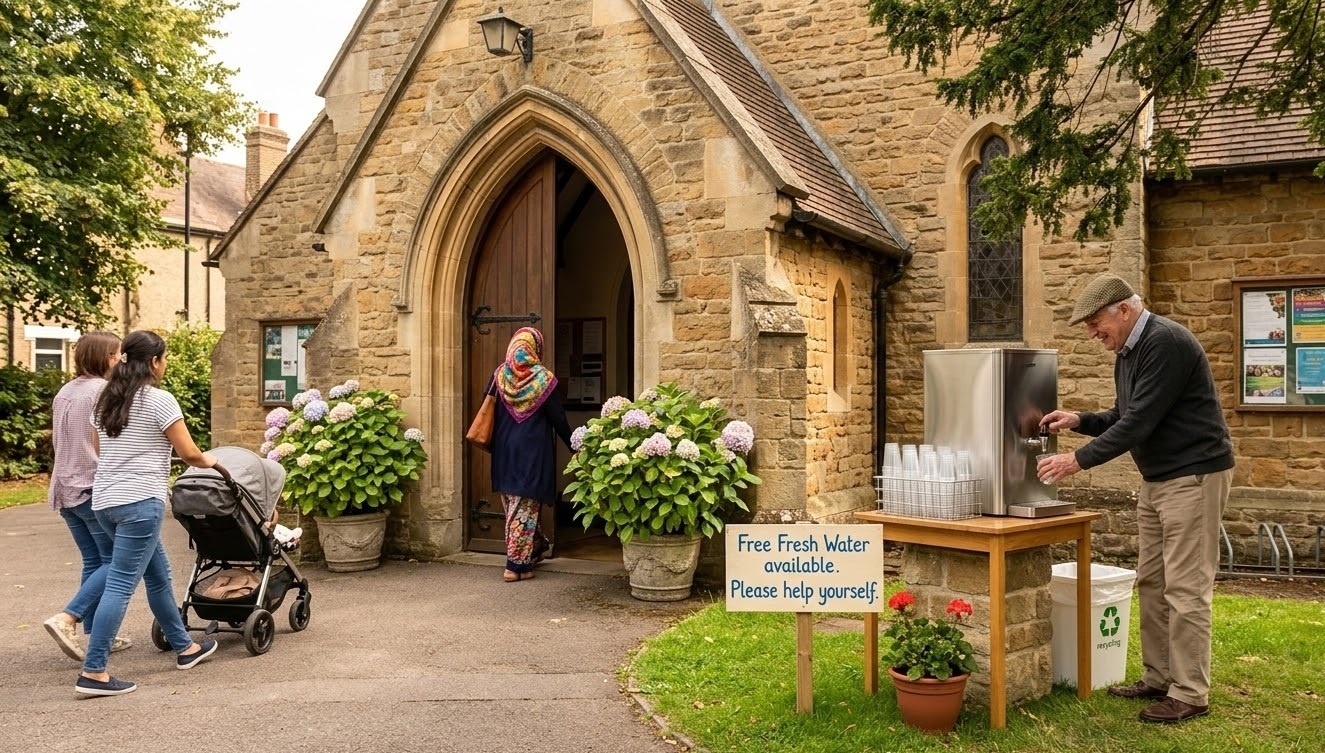
A simple visible point near an entrance, clearly signed, with minimal ceremony, is the model. Hosting needs to feel like a normal community offer, not a special exception. The easier it is, the more it gets used, and the more it becomes part of everyday life.
The Bigger Win: Trust and Social Proof
If people see Freee Water hosted by institutions they already trust, it helps solve the legitimacy problem. It signals: this is safe, normal, and community-backed.
That’s how networks grow. Not by one heroic fountain, but by many trusted nodes that people can depend on.