
Water During Disruption: Why Free Hydration Matters When Trains Stop, Crowds Build, and Plans Collapse
// NO DESCRIPTION DATA
Hydration
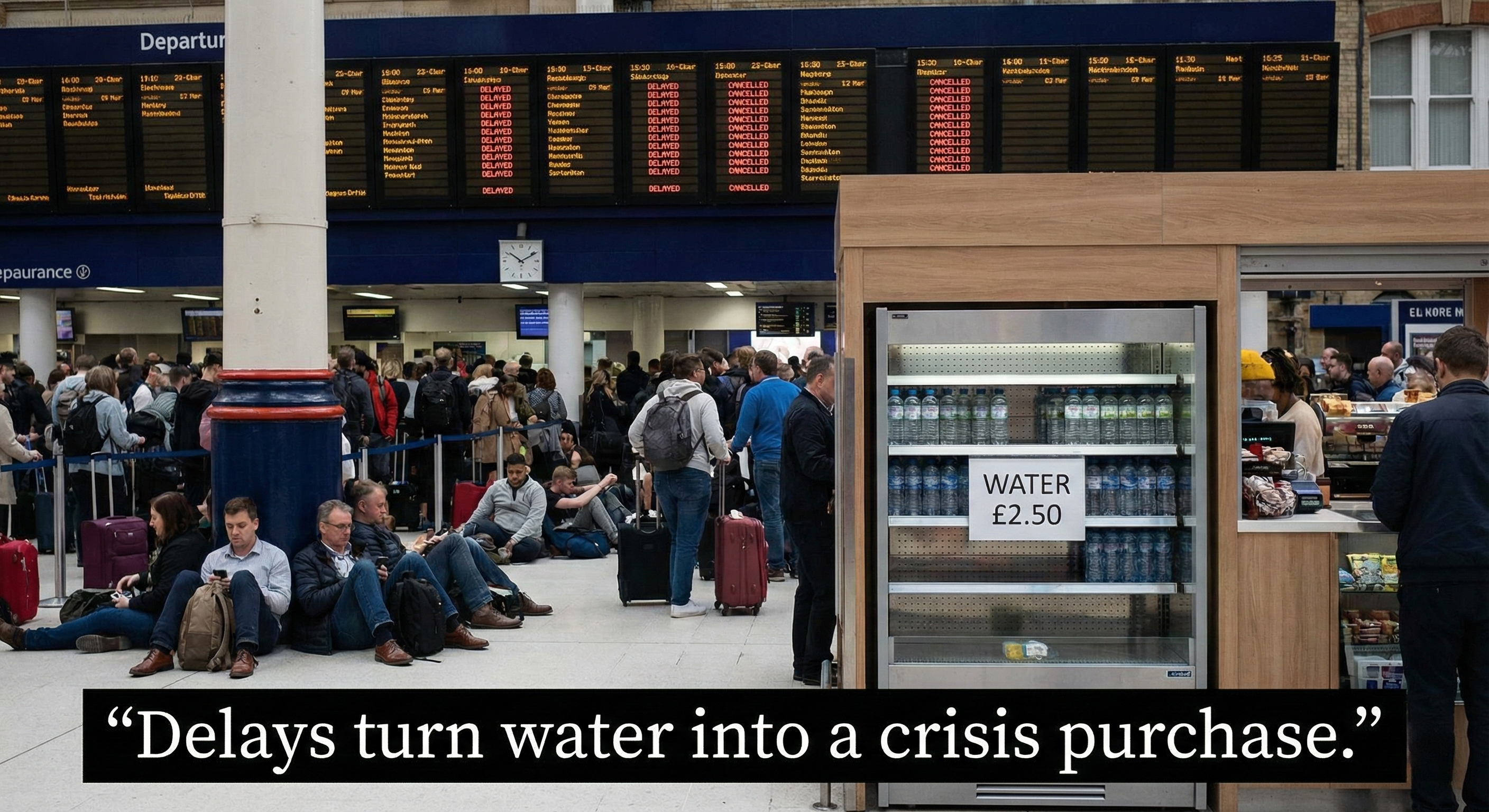
Most people think hydration problems happen on hot summer days. They do. But there’s another common UK scenario where hydration becomes instantly expensive and unfair: disruption.
Train delays. Cancelled services. Bus strikes. Event crowd surges. Road closures. Emergency incidents. Queue systems breaking down.
When movement fails, people get stuck. When people get stuck, water becomes the first thing they need and the first thing that gets monetised.
Freee Water CIC is being built around the reality that cities are not smooth. They are messy. And basic needs should not become a premium add-on when life glitches.
Disruption creates forced buying
If you’re delayed for 40 minutes, you will usually do one of three things:
- Buy an overpriced bottle
- Buy a sugary drink because it’s everywhere
- Do nothing and just cope
None of those is a healthy, fair default. They are just what the environment pushes.
Disruption turns a normal day into a pressured day. Pressure reduces good decisions. It increases impulse buying. It makes people accept bad prices.
That is the problem: the system treats thirst as an opportunity.
Who gets hit hardest
Disruption doesn’t affect everyone equally. The people most exposed include:
- People commuting on tight budgets
- Parents with children
- Older residents and people with health vulnerabilities
- Workers who cannot “just wait it out”
- Visitors who don’t know where to find refill points
- People stuck outdoors at interchanges with limited shelter
In disruption, the difference between “minor inconvenience” and “serious stress” is often basic access, water, shade, toilets, and predictability.
Why “there are shops nearby” isn’t good enough
Shops exist, sure. But shops create bottlenecks.
Crowds surge into the same small retail points. Queues form. Prices rise. Stock runs out. Staff get overwhelmed. The “quick bottle” becomes a time sink.
The environment is shouting: pay to survive the wait.
A free hydration node is not a replacement for retail. It is a pressure release valve.
What a disruption-ready hydration layer looks like
A disruption-ready approach focuses on predictable choke points:
- Station exits and concourses
- Bus interchanges
- Event perimeters and queue lines
- City centre squares where people accumulate
- Public corridors between transport and venues
The goal is not to give water everywhere. It is to stabilise the places where life reliably breaks.
Pilots can test real-world disruption behaviour
Because Freee Water is building, it can pilot around actual pain points:
- Days with planned rail works
- Big event weekends
- Heat alerts
- Busy commuter times
- Known bottleneck sites
A pilot can track:
- Depletion speed during peak delays
- User behaviour under pressure
- Whether signage reduces confusion
- Whether location placement reduces crowding
- Whether free water reduces risky “no water” periods
This is how the system becomes infrastructure, not a photo moment.
Why this matters for councils and operators
Disruption is a public safety issue, not just a service issue.
Free hydration supports:
- Reduced heat stress during delays
- Less conflict in queues and crowded retail points
- A calmer public space experience
- Visible care for residents and visitors
When sponsor funding comes later, it should fund resilience, not just brand visibility.
Disruptions will keep happening. Water shouldn’t become the punishment for being stuck.
UK Regulatory & Legal Framework for Public Water Access
Public hydration access across the United Kingdom operates within a fragmented statutory environment. Under The Licensing Act 2003 (Mandatory Licensing Conditions) Order 2014, licensed on-trade premises such as pubs, bars, and restaurants are legally required to provide free potable tap water to customers where reasonably available. However, because this legal mandate applies exclusively to paying or recognized patrons, it inadvertently establishes an exclusionary “pay-to-function” commercial barrier for the broader public navigating high streets, public transport corridors, and town centres.
According to nationwide behavioral data published by Refill UK and the City to Sea campaign, over 71% of UK consumers feel acute psychological stigma and social hesitation when requesting free tap water in commercial venues without making a purchase. Furthermore, under the Water Industry Act 1991 (Sections 181 and 182) and guidance from the Drinking Water Inspectorate (DWI), municipal local authorities bear no statutory duty to install or maintain public outdoor drinking fountains. Faced with severe budgetary deficits, local councils frequently decommission municipal water fountains due to winter freezing liabilities, pipework deterioration, legionella testing requirements, and anti-social behavior risks.
Hydration Channel & Economic Footfall Comparison
To examine why conventional public infrastructure struggles to provide reliable, stigma-free hydration across UK urban centres, we compare the primary access channels across physical accessibility, consumer friction, and municipal maintenance:
| Hydration Channel | Accessibility / Cost | Stigma Level | Maintenance Burden |
|---|---|---|---|
| Commercial Venues (Cafes/Pubs) | “Pay-to-function” barrier (£2.50–£4.50 purchase barrier) | High (71% social hesitation) | Low (Customer-funded hospitality staff) |
| Municipal Fountains | Free, but high freeze, lead-pipe & vandalism risk | Low | High Council Maintenance & Winter Shutdowns |
| FreeeWater Faith / Community Mesh | 100% Free, Heated, Staffed & Welcoming | Zero Stigma (Open-Door Civic Hospitality) | Community-Partnered & Sponsor-Funded |
Civic Infrastructure Topology & Community Mesh Flow
The FreeeWater community mesh leverages existing civic architecture, faith institutions, municipal libraries, and community hubs to distribute free hydration with zero taxpayer expenditure. By situating sustainable paper-carton dispensers directly inside community warm spaces, the network solves both physical access constraints and social stigma.
[ Local Resident / Passerby ] ──► [ Faith / Community Hub ] ──► [ FreeeWater Dispenser ]
                                         │                              │
                                         ▼                              ▼
                              [ Warm Space & Dignity ]      [ Zero Plastic Waste ]
Operational Lifecycle & Verified Environmental Impact
Civic hydration initiatives often falter during operational scaling due to plumbing maintenance overheads and regulatory water safety compliance. When traditional outdoor fountains freeze or become contaminated, local councils face months of procurement delays. The FreeeWater ecosystem bypasses centralized utility gridlocks by supplying pre-packaged, hermetically sealed paperboard cartons directly to verified distribution hubs.
Every FreeeWater unit is packaged in FSC-certified paperboard laminated with a thin plant-based barrier, generating 64% fewer greenhouse gas emissions across its lifecycle than standard virgin PET bottles. Ethical brand partners sponsor the outer packaging canvas, turning essential public utility into a high-recall communication channel. In turn, 10p from every distributed carton is transferred directly to the Feed and Flow Foundation to build permanent clean water infrastructure globally.
Oliver Green
Verified AuthorLead Technical Writer & Civic Hydration Specialist • FreeeWater Impact Research
Lead technical writer and community infrastructure analyst at FreeeWater. Researching civic hydration accessibility, UK water regulatory policy, circular packaging lifecycle analysis, and community-driven utility models.
Explore Related Hydration Dispatches
Continue reading connected technical guides and community case studies.
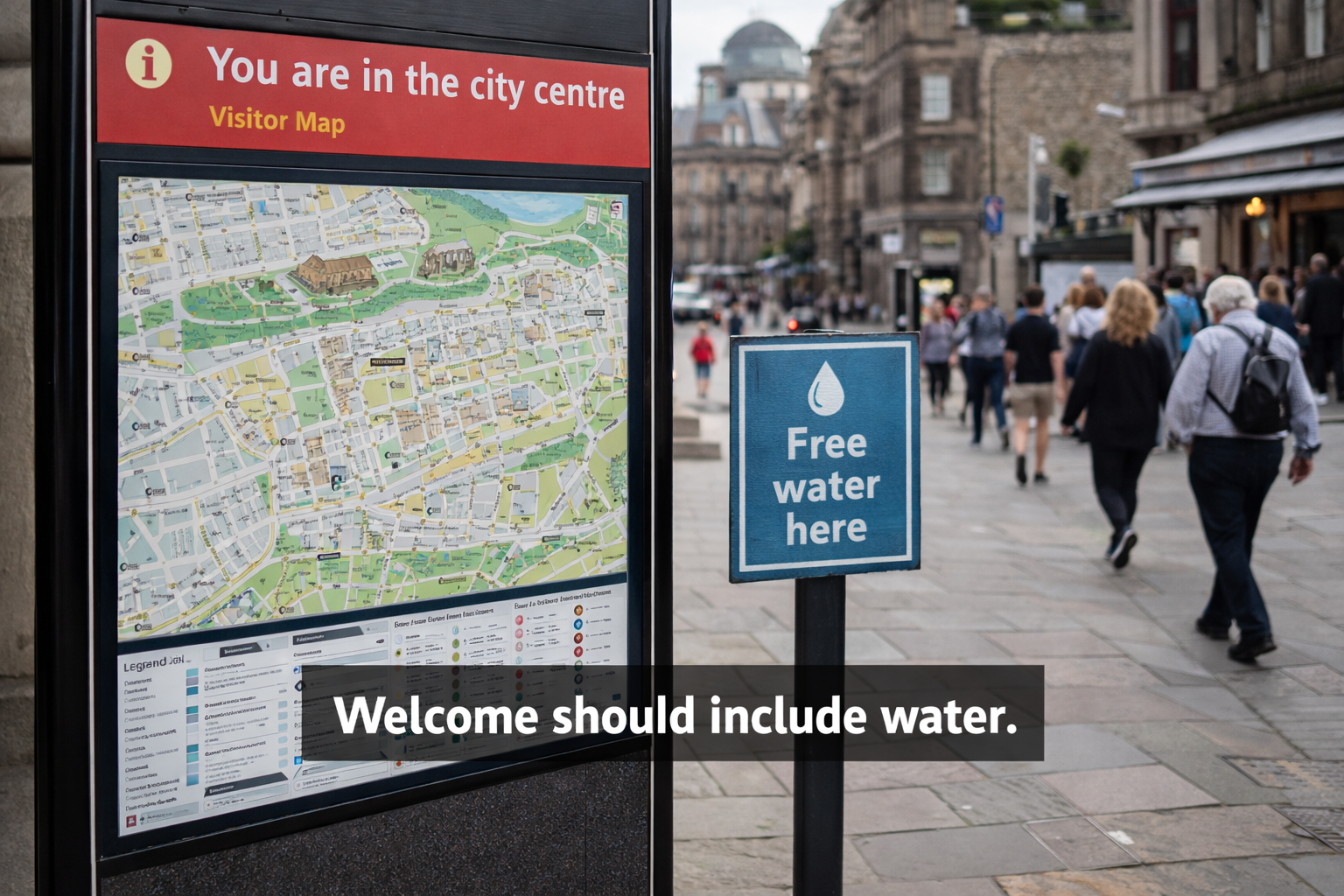
A City That Gives Water Feels Different: Tourism, Pride, and the Visitor Economy Angle
UK cities Most UK cities spend money trying to feel welcoming. Branding campaigns. Banners. Visitor maps. Beau...
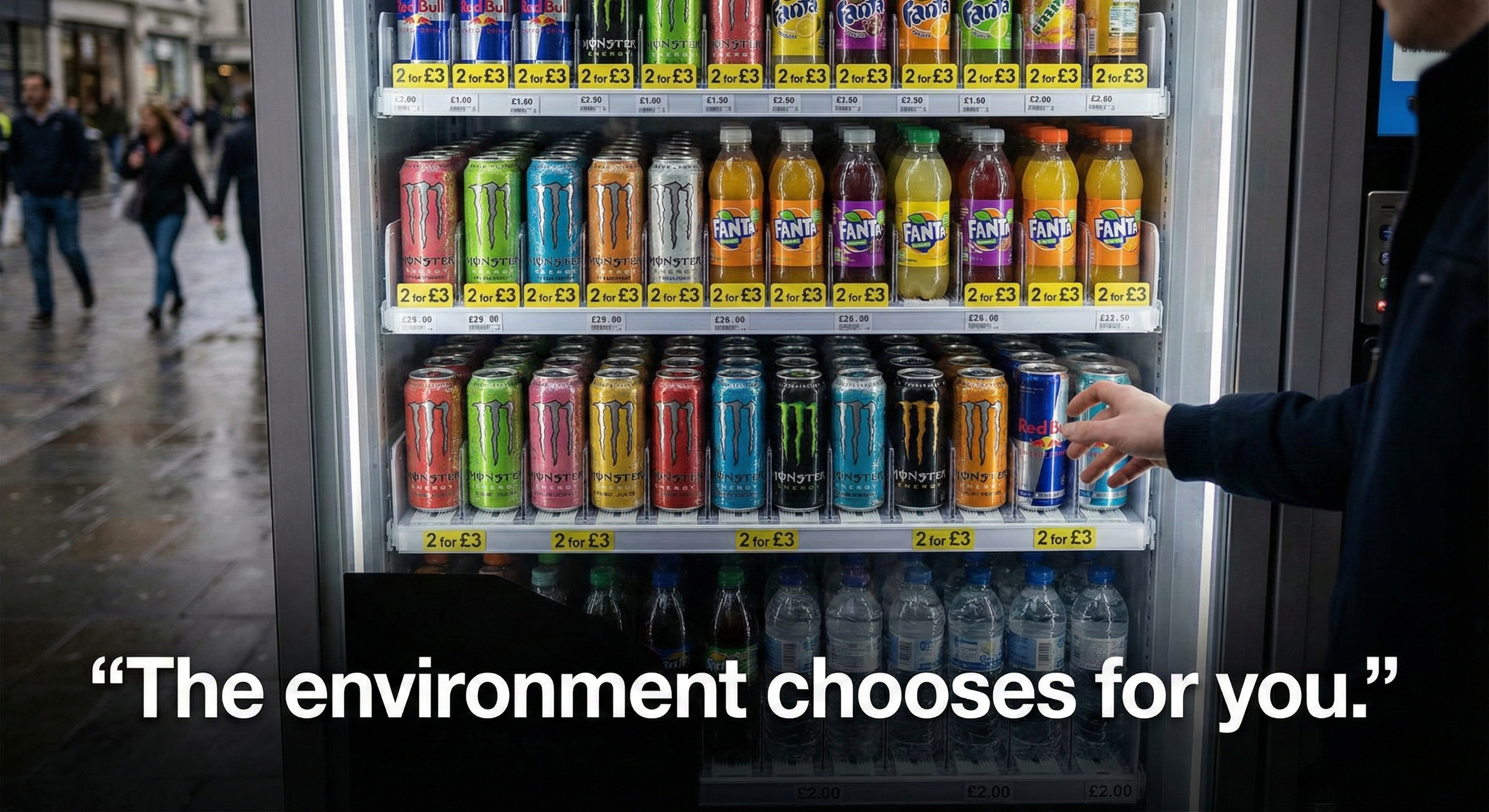
Why People Buy Sugar First: The Choice Architecture Problem on UK Streets
Public health Public health messaging often blames individuals. Drink more water. Make better choices. Cut hoo...
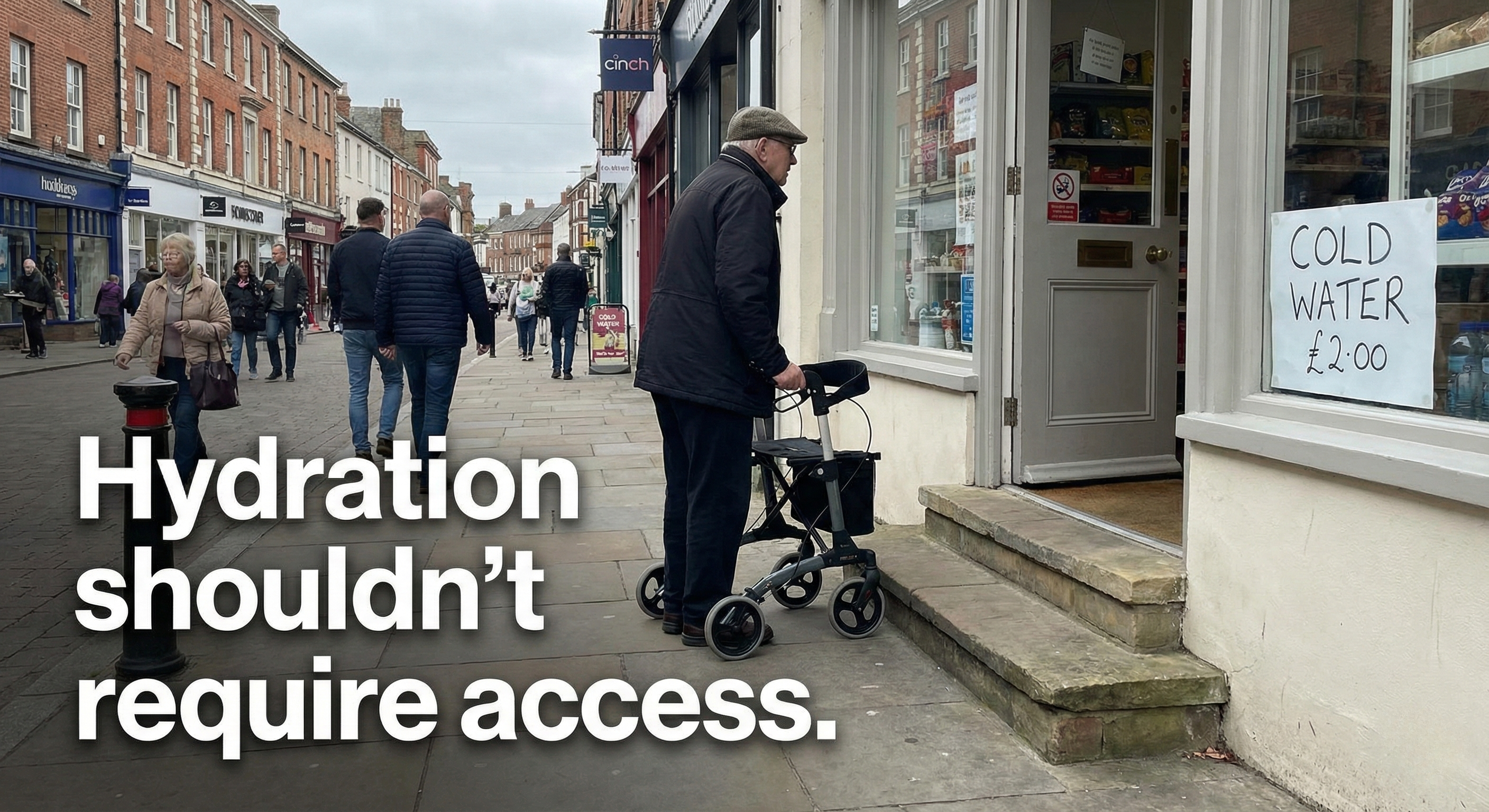
The Accessibility Gap: Why “Just Buy Water” Fails Disabled People, Carers, and Anyone Moving Slow
Hydration Hydration advice in the UK is full of assumptions. Carry a bottle. Pop into a shop. Refill at a stat...