Freee Water Is Not Charity: The CIC Model That Turns Ads Into Free Drinking Water
// NO DESCRIPTION DATA
Freee Water gets misunderstood because people are used to two options: government provides it, or charities try to fill the gap.
Freee Water is neither.
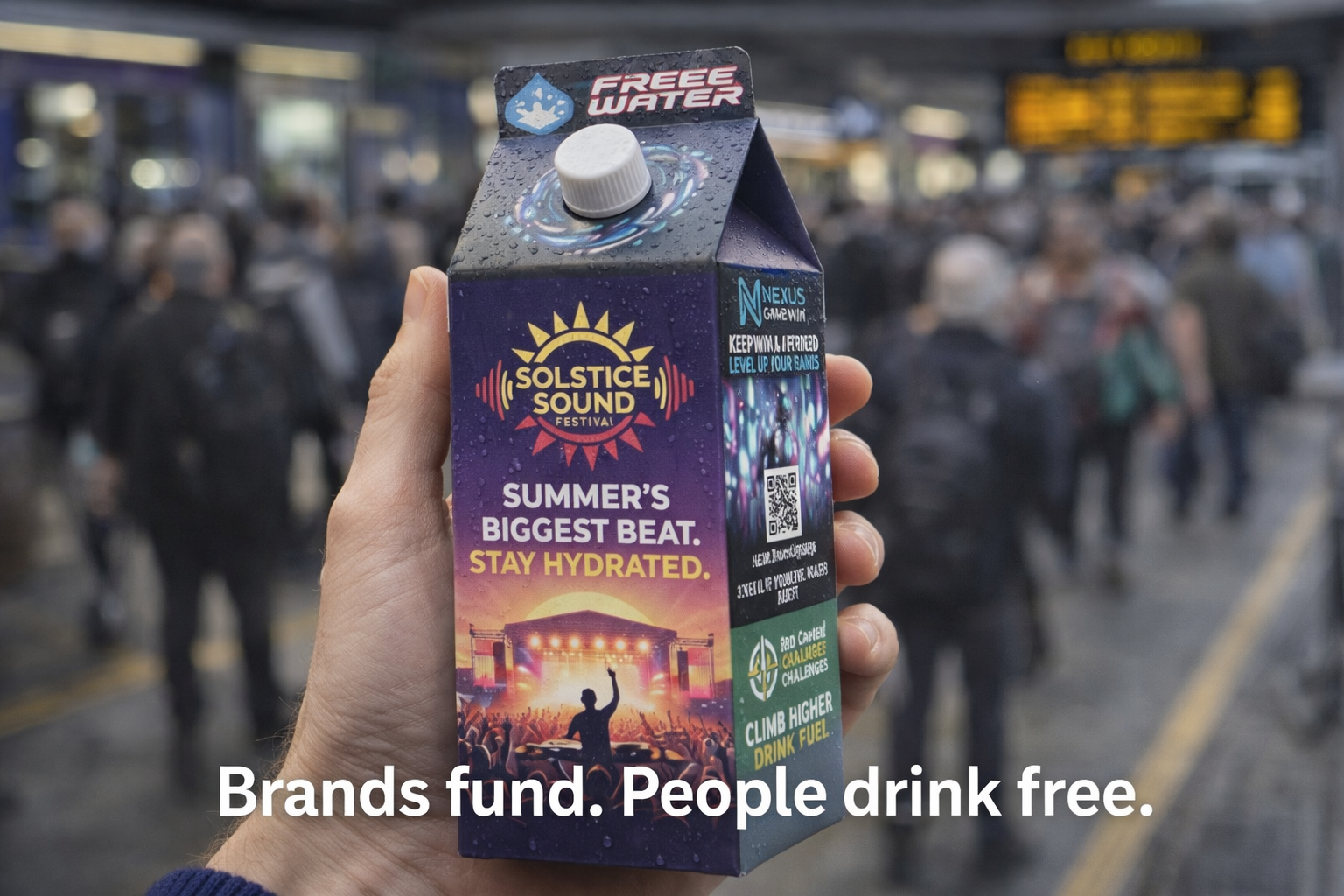
Freee Water is a CIC. It’s a delivery model where brands pay, and people drink for free. The public gets hydration access. Sponsors get high-attention local media. Freee Water builds a network that can actually scale.
What Freee Water Actually Does
Freee Water puts free packaged drinking water in the places people get forced into paying for it: high streets, travel nodes, waiting zones, busy community routes.
Not because “free stuff is nice.” Because public space currently makes hydration expensive by default.
The product is simple. The system is the innovation: funding + placement + distribution + repeatable rollout.
Where the Money Comes From
Sponsors fund the cartons through advertising on the packaging and through planned placement. That turns hydration into a utility people actually want, and turns brand spend into a measurable public-facing service.
This is not donation culture. It’s a media buy with public benefit.
Why Sponsors Like This
Freee Water is a rare form of advertising where the brand message arrives at the exact moment people are thankful.
People don’t remember billboards.
They remember the brand that made thirst disappear.
That creates recall, goodwill, and repeat exposure in daily routes.
Why This Scales Better Than “Refill Only”
Refill is great. But real life is messy. People forget bottles. Points are hidden. Taps are broken. Asking feels awkward.
Freee Water works on the day the person didn’t prepare. That is where public hydration currently fails.
The Real Point
Freee Water isn’t “help.” It’s infrastructure funded by sponsorship. The system works when it becomes normal: visible nodes, reliable stock, and brands competing to fund the coverage.