Heat Alerts Are a Trigger, Not a Warning: A Simple Deployment Playbook for Freee Water
// NO DESCRIPTION DATA
The UK now has structured alerting around weather-related health risk.
That should not just be information.
It should be a trigger for action.
The UK already runs heat-health communications
UKHSA explains why heat events are dangerous and how the body cools through sweating, and why risk rises when that fails.
Government hot weather guidance also stresses practical steps like drinking fluids and taking action to reduce risk.
This is already an official public-health priority.
The missing part: hydration you can actually reach
Advice like “drink more fluids” is only useful if fluids are accessible.
Public space still fails here:
- people are out, commuting, stuck, walking
- water costs money
- taps are hard to find
- queues block access
So alerts land… but the infrastructure doesn’t follow.
A simple trigger model that councils and partners can use
When a heat alert risk rises:
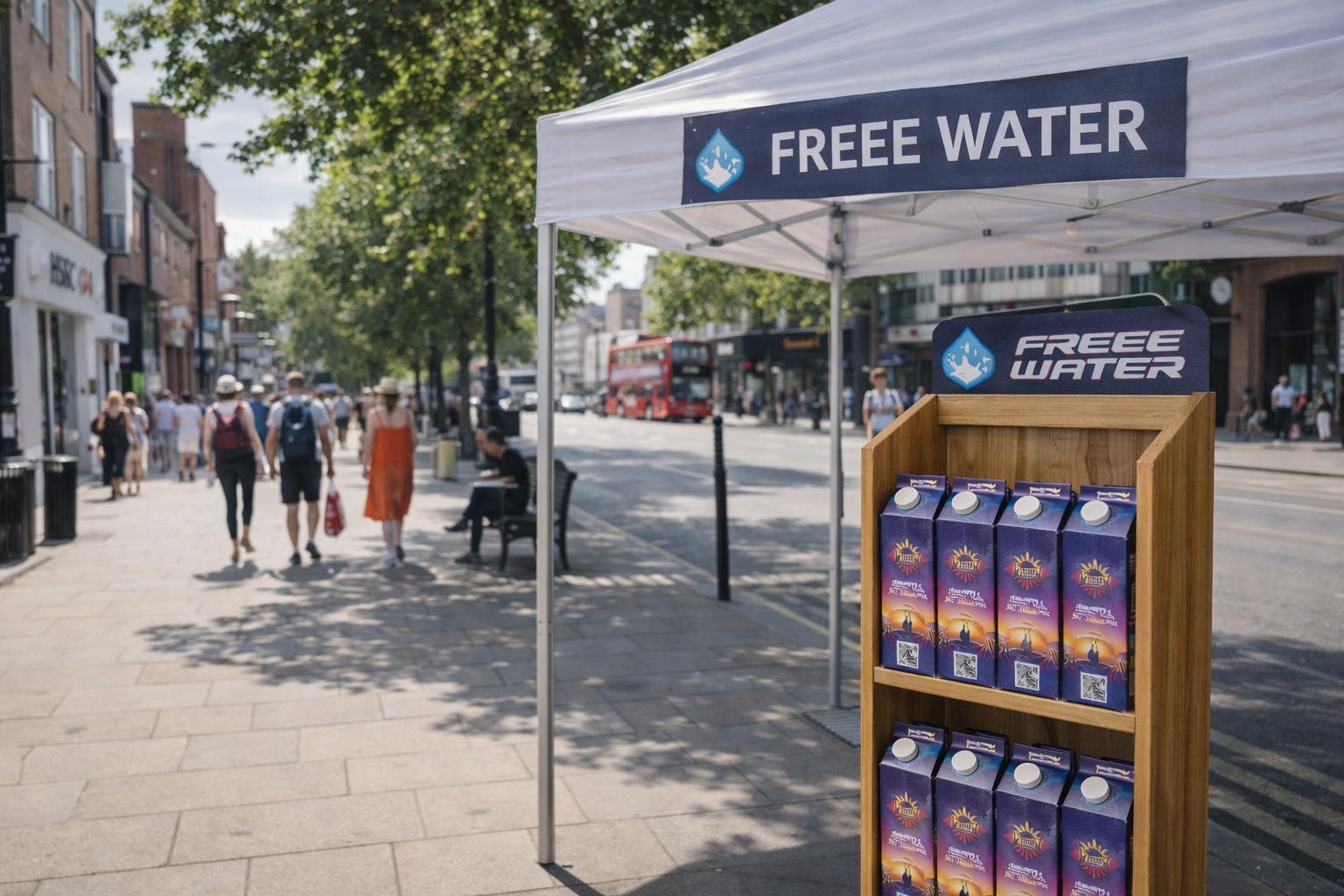
- Activate additional Freee Water placements
- Prioritise high-footfall and high-wait areas
- Extend replenishment frequency
- Add wayfinding signage
- Track uptake to learn where demand spikes
Where to deploy first
High-impact nodes during heat risk:
- transport interchanges
- civic buildings and waiting rooms
- high streets and shopping corridors
- parks with heavy family footfall
- cultural districts and tourist zones
This turns heat resilience into something visible and real.
Why this works for sponsorship too
Heat alerts create urgency and clarity.
For sponsors, it becomes:
- time-bound support
- measurable distribution
- strong public association with “helpful utility”
It’s advertising that feels like public service, because it is.
The outcome: resilience people can feel
A city does not feel safe because of a PDF guidance page.
It feels safe when:
- water is where people are
- access is obvious
- help is immediate
Heat alerts should be the switch that makes that happen.