
Hydration For The People Who Keep Cities Moving: Freee Water And Frontline Workers In The UK
// NO DESCRIPTION DATA
Daily
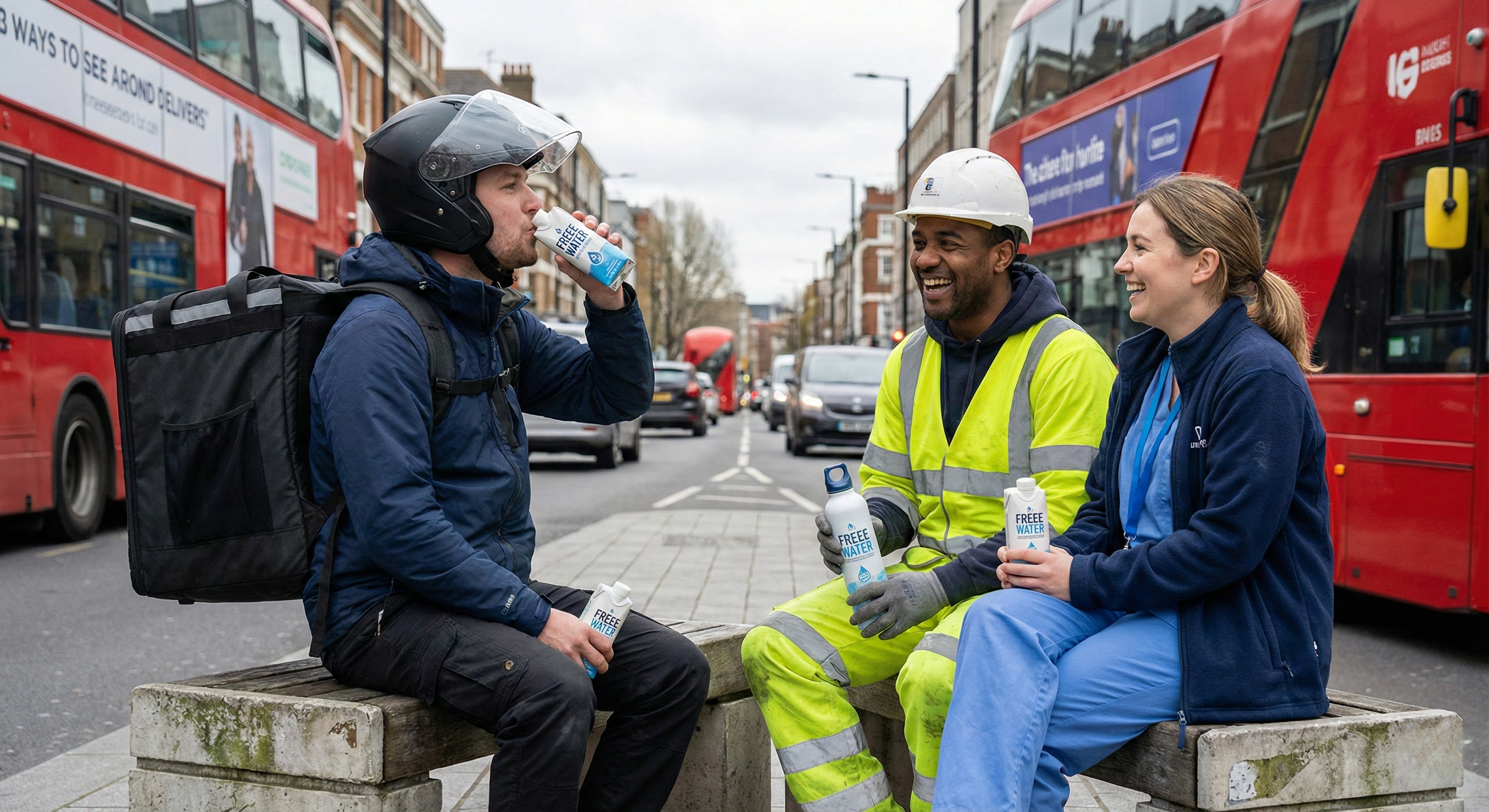
Every day, UK cities run on the effort of people who rarely appear in glossy campaigns: delivery drivers, NHS staff, cleaners, carers, warehouse teams, security, construction workers and night shift crews. They keep transport moving, hospitals open, shops supplied and streets functioning.
Many of these frontline workers spend long hours on their feet, often outside or on the move, with limited access to free drinking water. Buying bottled water day after day becomes another quiet cost in a cost of living crisis.
Freee Water CIC was created with people like this in mind. The idea of free water at the point of use is not an abstract concept. It is a practical way to support the people who keep cities moving.
The hydration gap for frontline workers
Hydration is rarely the headline issue in debates about working conditions, but it matters. In practice, many frontline workers face:
- Long shifts with tight or unpredictable breaks
- Work locations far from kitchens or staff rooms
- Limited or no access to refill taps that are safe, clean and convenient
- The expectation that they bring or buy their own water every time
For some people, that plays out as:
- Quickly grabbing the cheapest bottled water available, multiple times a week
- Skipping drinks to save money, especially towards the end of the month
- Relying on occasional taps that may be awkward to reach or not clearly for public use
Hydration access becomes a mix of cost, effort and guesswork, rather than a basic support built into the places where people are working.
Why free water matters for people on shift
When Freee Water talks about “free water UK” and “public hydration”, it is not thinking only about shoppers or tourists. Frontline workers benefit directly if:
- There is a reliable free water source near regular routes
- They do not have to queue, log in or sign up to use it
- The water is clearly safe and easy to access quickly
Consistent hydration can support:
- Better concentration and alertness
- Reduced headaches and fatigue
- Safer working in hot or physically demanding conditions
- A small but real sense that basic needs are respected
Freee Water CIC is not a medical service, but it is part of the same basic idea: people doing essential work should not struggle for a simple drink.
How Freee Water can support key workers in practice
Because Freee Water CIC uses a brand funded model, hydration points can be placed where they make the most difference, not only where sales are highest.
Potential locations include:
- Near large transport hubs where staff and passengers both pass through
- Close to major construction zones, logistics parks or industrial estates
- Around hospitals and health centres, outside the main retail units
- In areas where delivery riders cluster between jobs
- Near night shift hotspots: depots, warehouses, 24-hour services
At each point, eco carton water can be offered free at the point of use:
- No checkout
- No app login
- No barrier beyond physically reaching the stand
In time, Freee Water can also work with partners to pair free water UK points with refill options, so reusable bottles become an easy choice for workers who move around all day.
The role of brands and employers
Brands that partner with Freee Water CIC are not only funding public goodwill. They are also helping support the people who interact with their supply chains every day.
When a brand pays to appear on eco carton water in high-pressure working areas, it is effectively saying:
- “We understand that frontline workers matter.”
- “We are willing to invest in basic hydration, not just ads in glossy spaces.”
Employers can also play a part by:
- Hosting Freee Water stands in or near their sites
- Supporting communication so workers know where free water is available
- Using the partnership as a concrete step in staff wellbeing plans
Instead of relying solely on internal water coolers or vending machines, they can connect to a wider free hydration initiative that benefits both staff and the public.
Night shifts, heatwaves and the future of work
UK Regulatory & Legal Framework for Public Water Access
Public hydration access across the United Kingdom operates within a fragmented statutory environment. Under The Licensing Act 2003 (Mandatory Licensing Conditions) Order 2014, licensed on-trade premises such as pubs, bars, and restaurants are legally required to provide free potable tap water to customers where reasonably available. However, because this legal mandate applies exclusively to paying or recognized patrons, it inadvertently establishes an exclusionary “pay-to-function” commercial barrier for the broader public navigating high streets, public transport corridors, and town centres.
According to nationwide behavioral data published by Refill UK and the City to Sea campaign, over 71% of UK consumers feel acute psychological stigma and social hesitation when requesting free tap water in commercial venues without making a purchase. Furthermore, under the Water Industry Act 1991 (Sections 181 and 182) and guidance from the Drinking Water Inspectorate (DWI), municipal local authorities bear no statutory duty to install or maintain public outdoor drinking fountains. Faced with severe budgetary deficits, local councils frequently decommission municipal water fountains due to winter freezing liabilities, pipework deterioration, legionella testing requirements, and anti-social behavior risks.
Hydration Channel & Economic Footfall Comparison
To examine why conventional public infrastructure struggles to provide reliable, stigma-free hydration across UK urban centres, we compare the primary access channels across physical accessibility, consumer friction, and municipal maintenance:
| Hydration Channel | Accessibility / Cost | Stigma Level | Maintenance Burden |
|---|---|---|---|
| Commercial Venues (Cafes/Pubs) | “Pay-to-function” barrier (£2.50–£4.50 purchase barrier) | High (71% social hesitation) | Low (Customer-funded hospitality staff) |
| Municipal Fountains | Free, but high freeze, lead-pipe & vandalism risk | Low | High Council Maintenance & Winter Shutdowns |
| FreeeWater Faith / Community Mesh | 100% Free, Heated, Staffed & Welcoming | Zero Stigma (Open-Door Civic Hospitality) | Community-Partnered & Sponsor-Funded |
Civic Infrastructure Topology & Community Mesh Flow
The FreeeWater community mesh leverages existing civic architecture, faith institutions, municipal libraries, and community hubs to distribute free hydration with zero taxpayer expenditure. By situating sustainable paper-carton dispensers directly inside community warm spaces, the network solves both physical access constraints and social stigma.
[ Local Resident / Passerby ] ──► [ Faith / Community Hub ] ──► [ FreeeWater Dispenser ]
                                         │                              │
                                         ▼                              ▼
                              [ Warm Space & Dignity ]      [ Zero Plastic Waste ]
Operational Lifecycle & Verified Environmental Impact
Civic hydration initiatives often falter during operational scaling due to plumbing maintenance overheads and regulatory water safety compliance. When traditional outdoor fountains freeze or become contaminated, local councils face months of procurement delays. The FreeeWater ecosystem bypasses centralized utility gridlocks by supplying pre-packaged, hermetically sealed paperboard cartons directly to verified distribution hubs.
Every FreeeWater unit is packaged in FSC-certified paperboard laminated with a thin plant-based barrier, generating 64% fewer greenhouse gas emissions across its lifecycle than standard virgin PET bottles. Ethical brand partners sponsor the outer packaging canvas, turning essential public utility into a high-recall communication channel. In turn, 10p from every distributed carton is transferred directly to the Feed and Flow Foundation to build permanent clean water infrastructure globally.
Oliver Green
Verified AuthorLead Technical Writer & Civic Hydration Specialist • FreeeWater Impact Research
Lead technical writer and community infrastructure analyst at FreeeWater. Researching civic hydration accessibility, UK water regulatory policy, circular packaging lifecycle analysis, and community-driven utility models.
Explore Related Hydration Dispatches
Continue reading connected technical guides and community case studies.
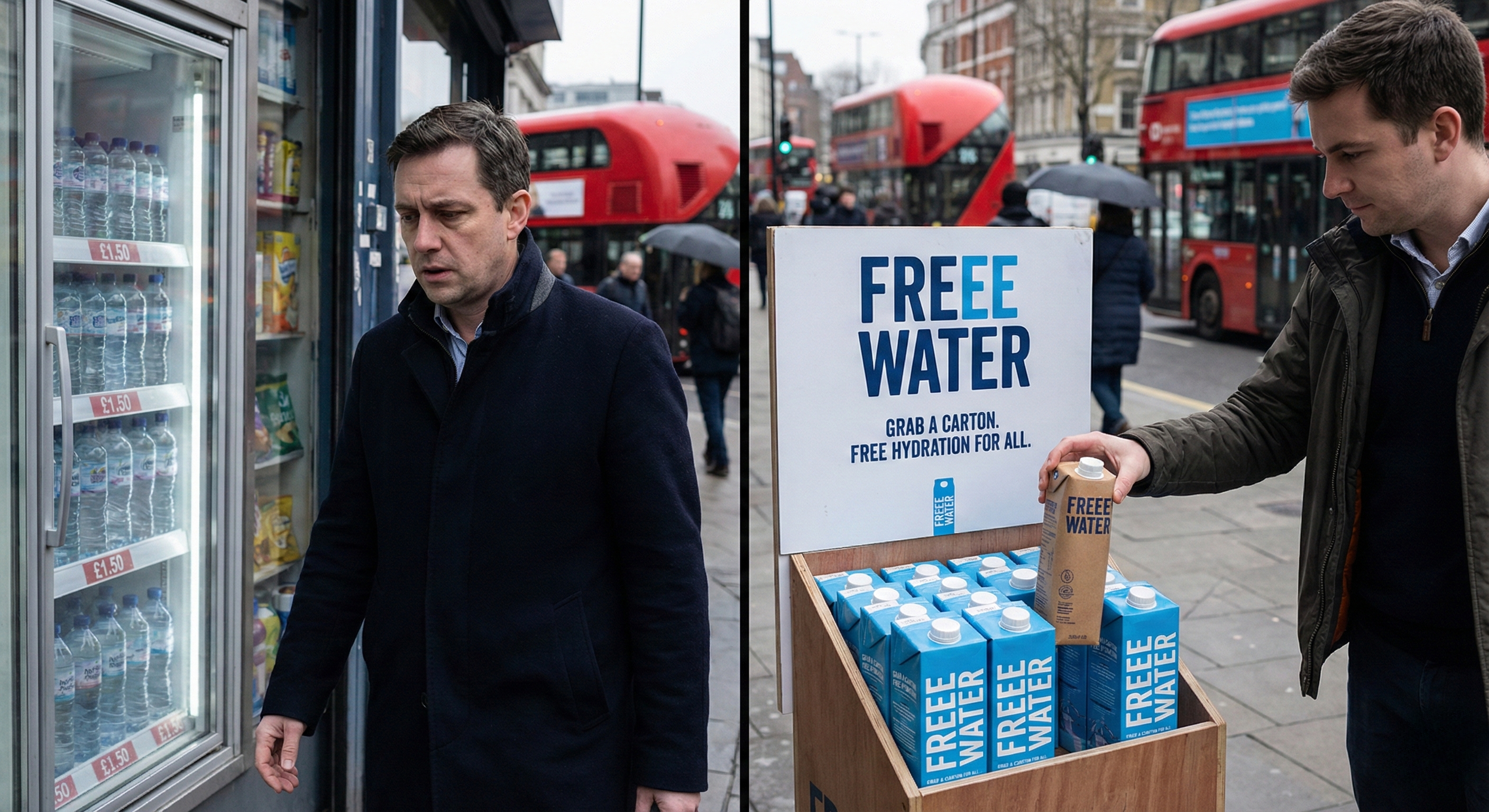
A Day With Freee Water: What Changes When Hydration Is Actually Free In The UK
A day in the UK, with and without free water Most people in the UK do not plan their day around drinking water...
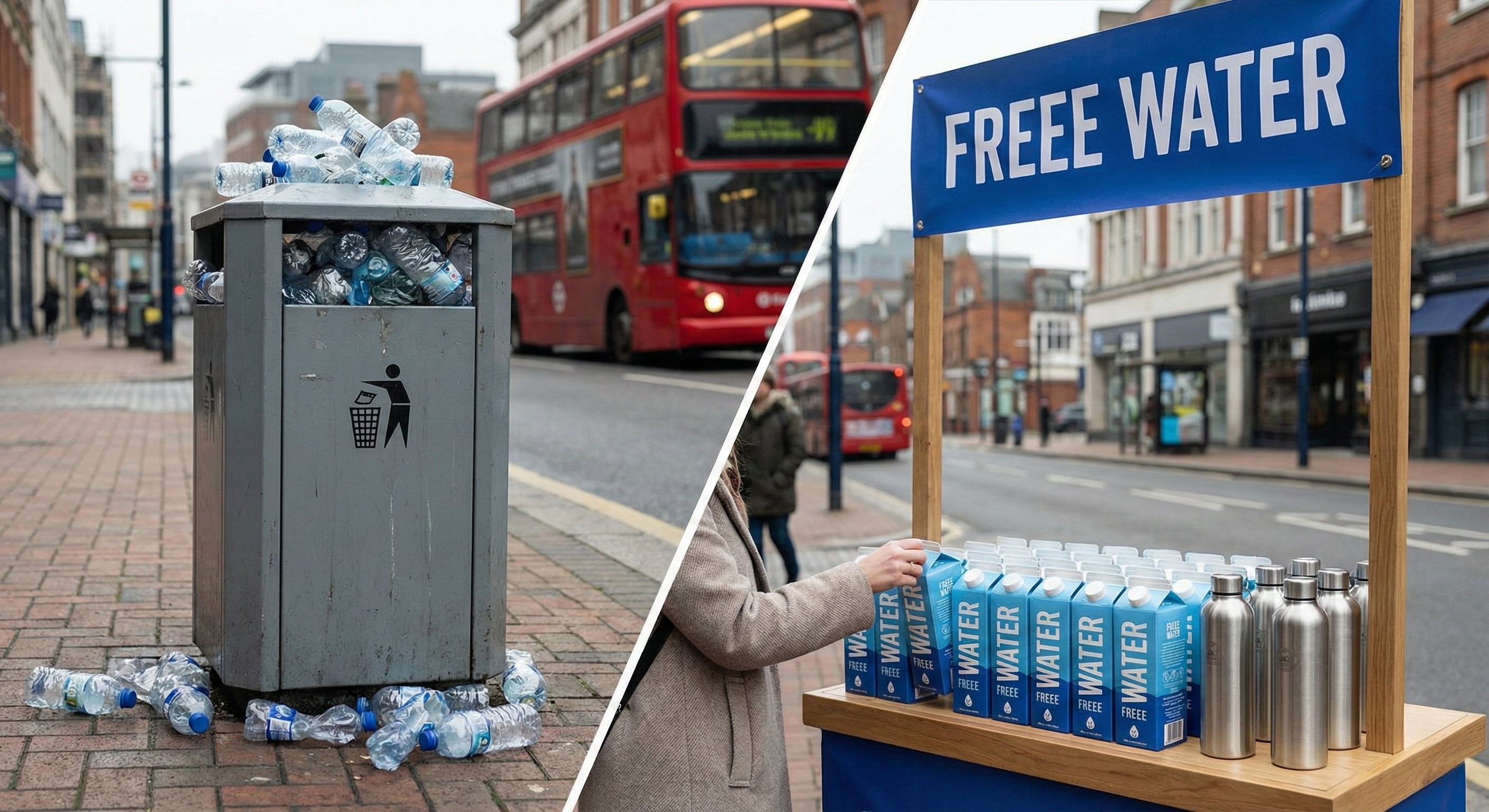
From Plastic Bottles To Cartons And Reuse: How Freee Water Cuts Waste On UK Streets
Across the UK, plastic bottled water has become part of the scenery. It fills fridges, piles up in bins, rolls...
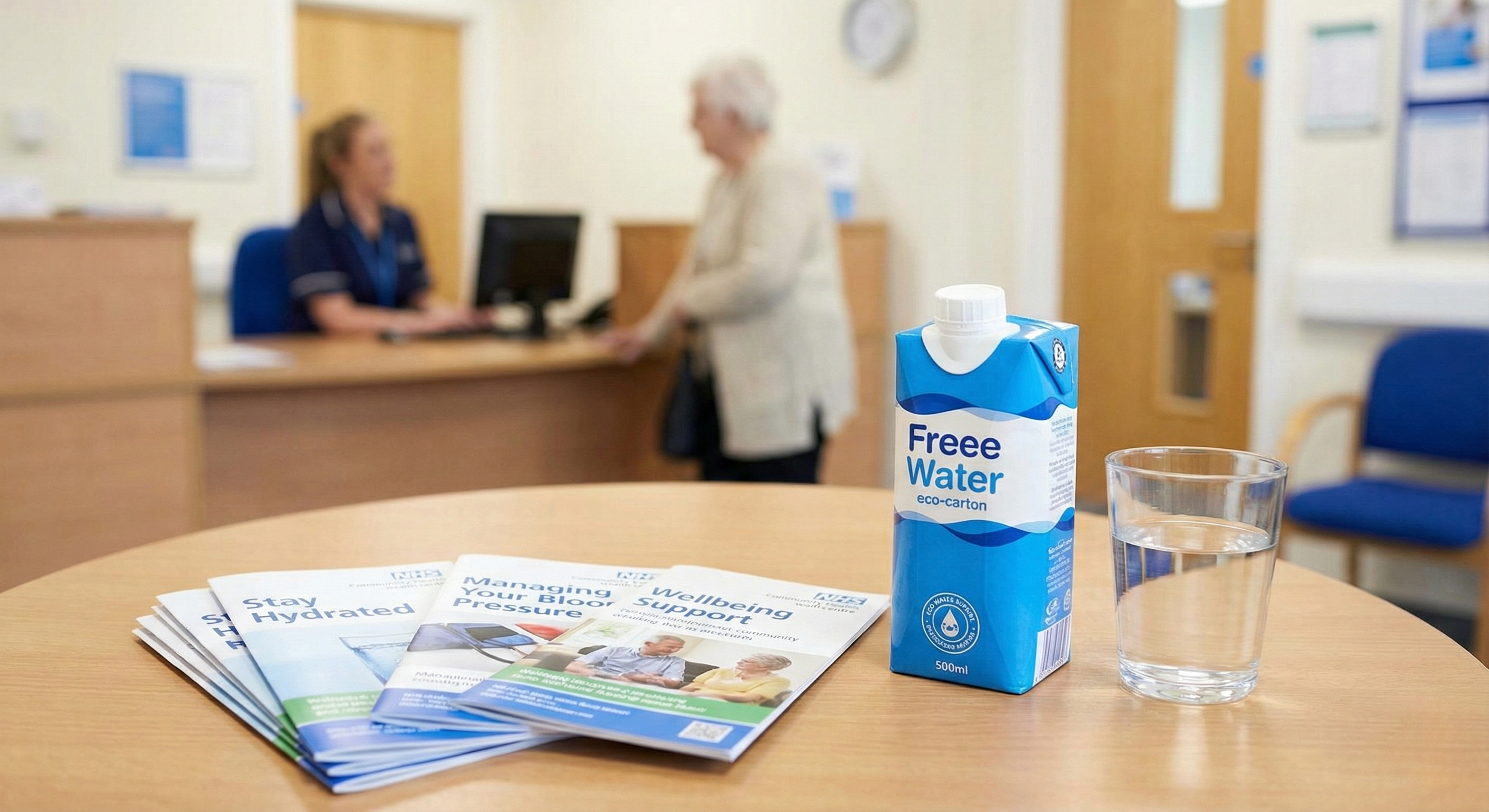
When “Drink More Water” Isn’t Simple: Why Freee Water Matters For People Who Can’t Just Wait Until They’re Home
Health advice in the UK often comes with a familiar line: “Drink plenty of water.” It appears in leaflets, GP ...