Hydration on Paper: Schools and Workplaces Get Water Rules. Public Space Doesn’t.
// NO DESCRIPTION DATA
Basic Requirement
In some UK settings, water is treated as a basic requirement. In public life, it is treated like a convenience product.
That contradiction is the heart of the UK hydration problem.
Schools and workplaces generally understand the principle: people should have water available. But the moment someone steps into the real public corridors of daily life, the expectation collapses into “buy it or go without.”
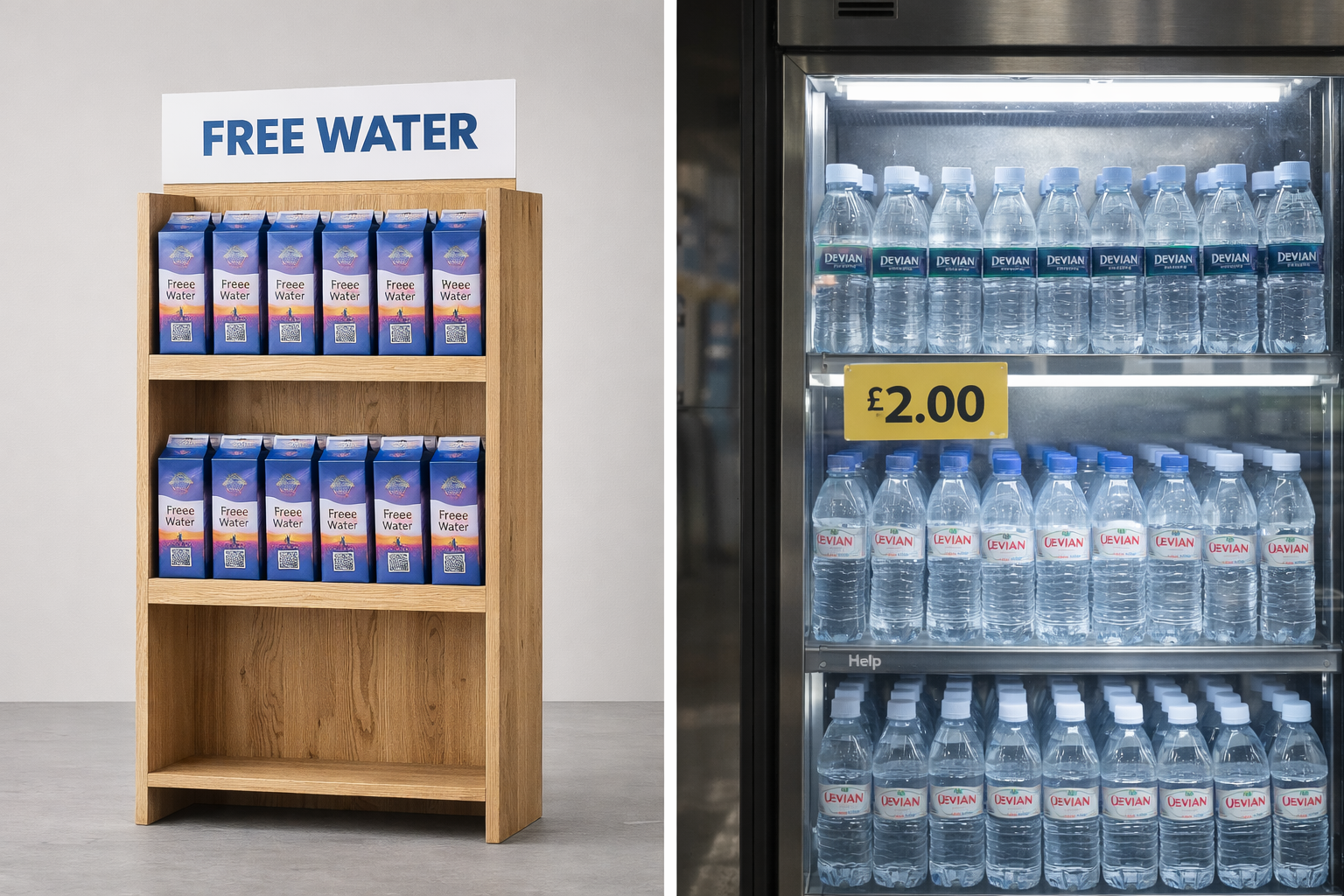
Freee Water exists to close that gap.
The “responsibility shift” is where people lose
When water is not available in public space, the burden shifts onto the individual:
- remember a bottle
- keep it clean
- refill it
- plan around access
- carry it all day
- pay when you fail
That sounds fine in theory. In practice, most people are moving fast, juggling work, kids, transport, bags, deadlines, and fatigue.
The current model assumes perfect behaviour. The UK is not a country of perfect behaviour. It is a country of “in between” life.
Public corridors create predictable failure points
There are predictable moments where hydration breaks:
- station platforms and interchanges
- long queues at services and venues
- campuses between lectures
- city centre walking routes
- job interviews and appointments
- events and busy weekends
These are not rare edge cases. They are the normal movement pattern of modern Britain.
Why “just refill” doesn’t cover the gap
Refill points matter. They also fail in the moments that define public space:
- you forgot your bottle
- you do not have time to queue
- you do not know where the tap is
- the tap is broken or hidden
- the venue restricts access
- you are with kids and can’t detour
A resilient hydration system needs a backup layer that works when real life happens.
Freee Water as a missing infrastructure layer
Freee Water is designed to function like basic public infrastructure:
- predictable placement
- visible access
- minimal friction
- no checkout moment
- packaging designed to reduce waste compared to endless plastic purchases
It is not trying to replace refill stations. It is trying to stop public hydration collapsing the moment planning fails.
What a realistic UK approach looks like
A realistic approach accepts two truths:
- People should be encouraged to carry reusable bottles.
- Public space must still support hydration when they don’t.
That’s the gap Freee Water is built for.