“If It’s Free, Is It Safe?” The Compliance Standard Freee Water Must Meet
// NO DESCRIPTION DATA
The first question everyone asks is the right one
Free water triggers scepticism because people have been trained to assume there’s a catch.
So Freee Water doesn’t get to be casual about safety. It has to be boringly credible.
The UK already has rules for bottled drinking water
In the UK, bottled drinking water is regulated. Government guidance covers how producers must register and the rules around production and labelling.
There are also specific regulations for natural mineral water, spring water, and bottled drinking water.
This matters because Freee Water’s “free” model doesn’t change the standard. The water still has to meet the same legal expectations as anything sold on a shelf.
Safety is a system, not a promise
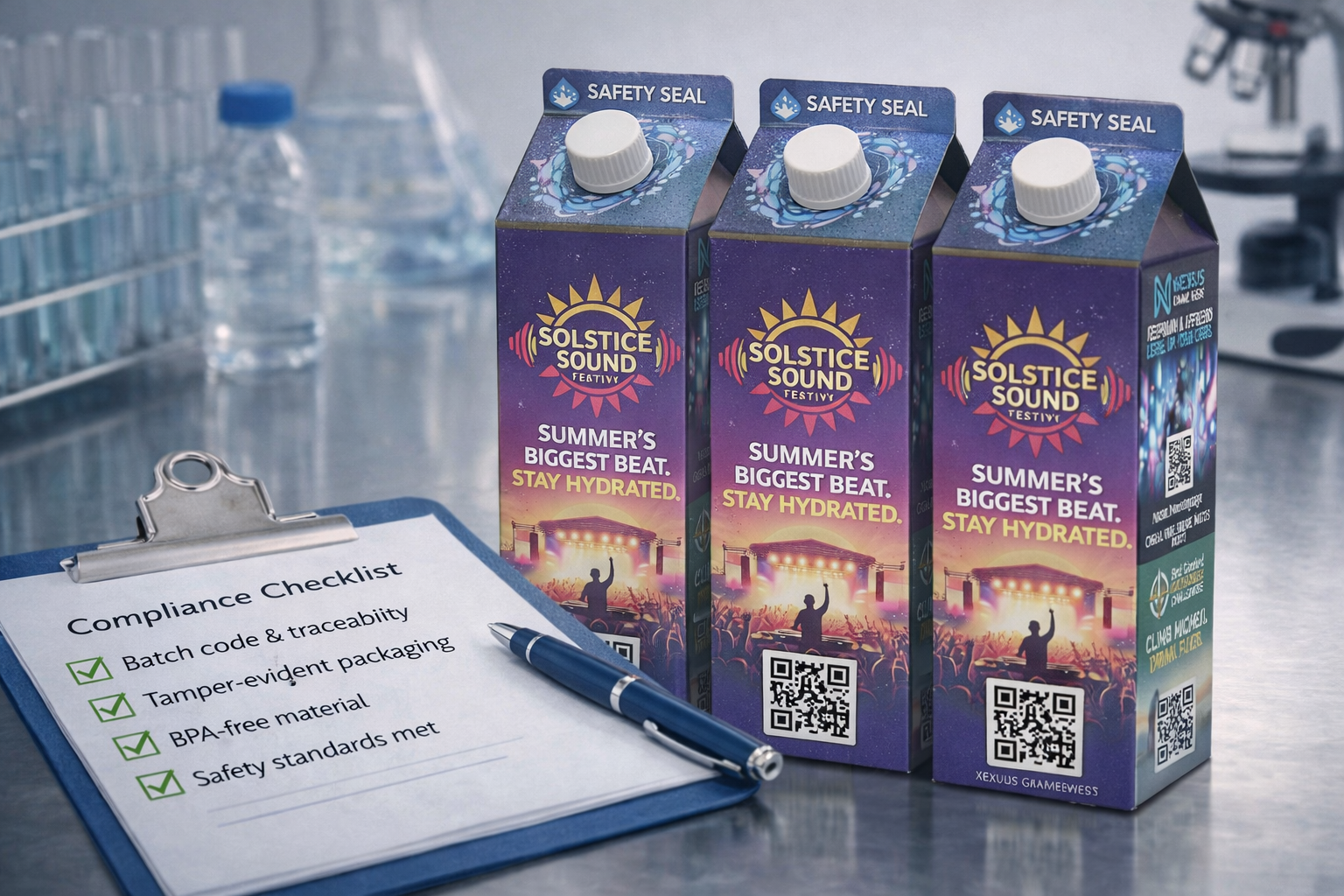
A credible free hydration model needs visible safeguards:
- clear batch coding and traceability
- sealed packaging that shows tampering
- clean handling and storage through distribution
- simple public reporting when issues happen
Recent recalls show why this matters: even premium brands can face contamination scares, which is exactly why controls and traceability must be real, not vibes.
Tamper evidence is non-negotiable in public space
Public hydration points introduce a different risk profile than retail shelves.
You’re not just protecting a product. You’re protecting trust.
So the packaging spec has to be designed for public deployment:
- tamper-evident closures
- damage resistance in transit
- storage that avoids heat exposure and contamination
The trust stack Freee Water should publish
If you want the public, councils, and brands to take this seriously, publish the basics:
- packaging and safety standards (plain English)
- storage and distribution protocol
- traceability approach
- what happens if something goes wrong
Free hydration only scales when people feel safe taking it without hesitation.