Not Everyone Can “Just Ask”: The Language Barrier in UK Tap Water Access
// NO DESCRIPTION DATA
UK Hydration
A lot of UK hydration advice assumes one thing: people feel comfortable asking.
But many don’t. Tourists, new arrivals, people with limited English, or anyone nervous about getting it wrong often avoid asking for tap water. Not because they don’t need it. Because the social risk feels too high.
That makes hydration access uneven in a way the system rarely acknowledges.
Asking Is a Social Skill, Not a Public Service
If water access depends on asking, you are filtering people by confidence and communication. That is not a fair design.
Some people worry they will be refused. Some worry they will be misunderstood. Some fear being judged or treated badly. Many simply avoid the whole interaction and buy a drink instead, even if they can’t really afford it.
Signage Does More Than Inform
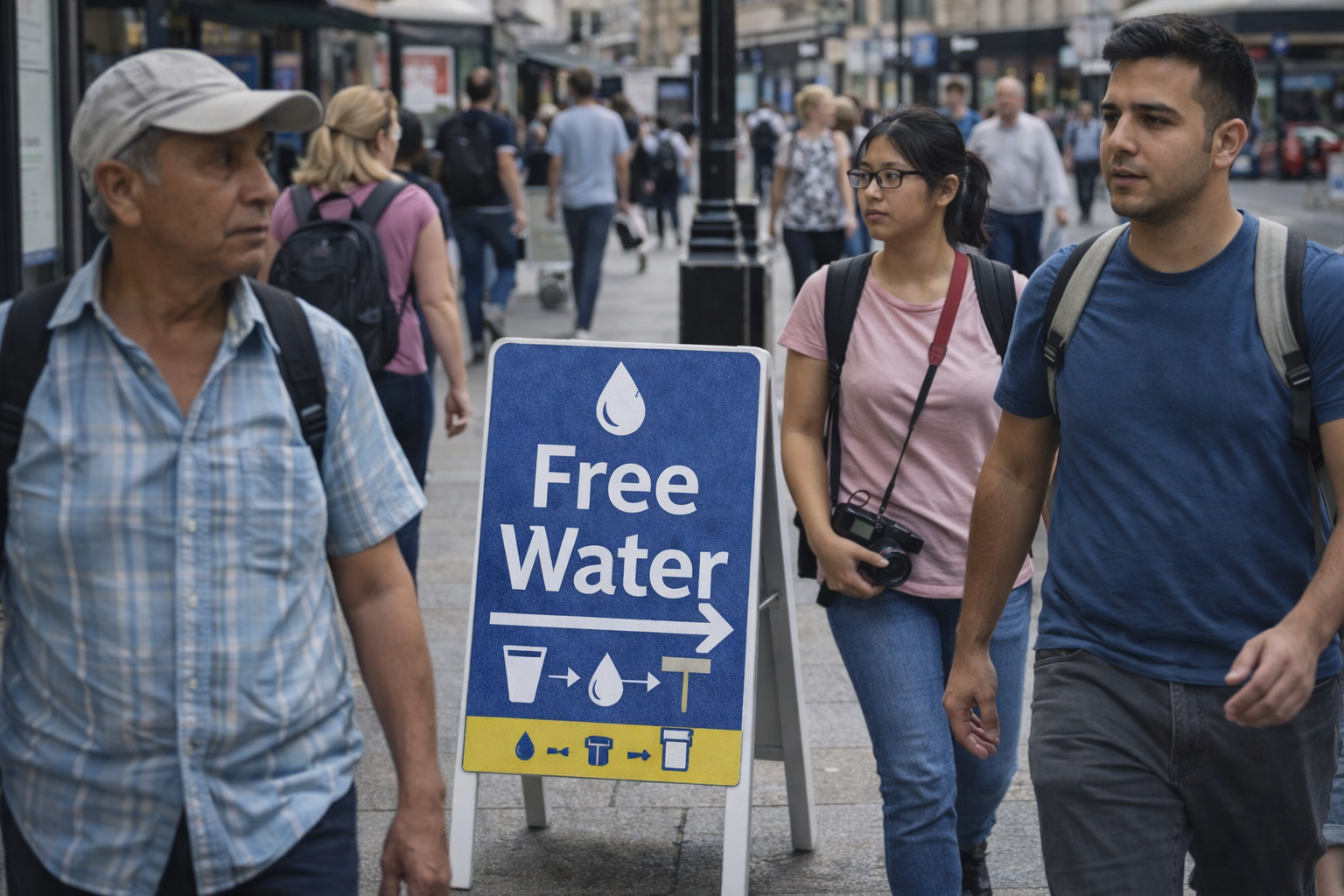
Clear signage is not just “nice.” It removes the need for social negotiation.
When water is clearly available, people don’t have to ask. They don’t have to translate. They don’t have to explain. They don’t have to risk embarrassment.
This is one reason Freee Water signage matters. A visible “Freee Water” point communicates access without conversation.
Why This Becomes a Hidden Tourist Tax
In busy areas, tourist locations, and transport nodes, language barriers stack up with time pressure and crowd stress. People buy water because it is the easiest move, not because they want to.
That is a quiet “visitor tax,” and it hits newcomers too. The UK pushes tourism, mobility, and active travel, but often leaves hydration access to social confidence.
A Network Needs to Work for Non-Locals
A real hydration network should serve people who are unfamiliar with the area, unfamiliar with norms, and unsure what’s allowed.
Freee Water points, clearly signposted and consistent, reduce that inequality fast. If hydration is a public good, it should not depend on speaking the right words to the right person.