Legionella Fear Quietly Kills Public Water Points: The Risk Reality and the Access Alternative
// NO DESCRIPTION DATA
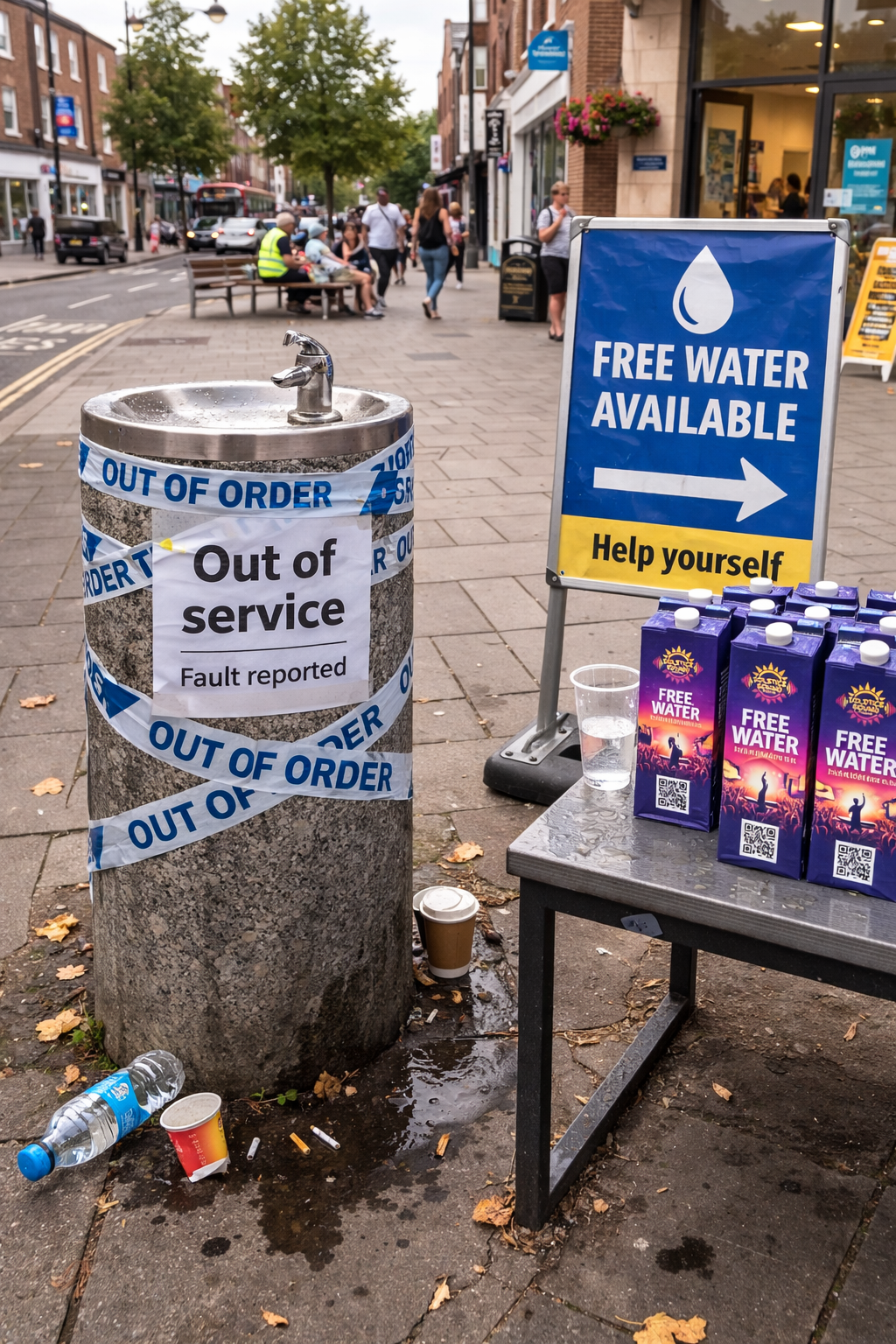
A lot of fountains don’t “break” so much as get switched off
People assume fountains disappear because of vandalism or lack of funding. Those happen. But another driver is quieter: risk management.
Water systems can create legionella risk under certain conditions, and HSE guidance makes clear that any water system with the right environmental conditions can be a source for legionella bacteria growth if not properly controlled.
Why this becomes a public fountain issue
If a fountain sits unused, stagnation becomes a concern. If maintenance budgets shrink, flushing schedules slip. If cleaning isn’t consistent, confidence drops. Then the easiest “risk control” becomes: close it.
The result is predictable:
- councils reduce liability exposure
- the public loses access
- bottled water becomes the default again
The important nuance: risk isn’t a reason to abandon access
Legionella risk can be managed, but it requires governance:
- ownership responsibility
- maintenance schedules
- monitoring and control measures
HSE guidance on managing legionella in hot and cold water systems explains control principles such as temperature control and flushing infrequently used outlets.
Public water points fail when nobody wants to be the owner of the ongoing obligation.
Where packaged free water is strategically useful
This is not an argument against fountains. It’s an argument for resilience.
Packaged free water:
- avoids onsite system risk entirely
- provides continuity when fountains are offline
- keeps hydration available while infrastructure is repaired or redesigned
How to talk about this without scaring people
The tone matters:
- don’t sensationalise legionella
- don’t imply taps are unsafe
- do explain that public water points require ongoing management
- do position Freee Water as a practical access layer that doesn’t depend on complex onsite systems
If fountains are the “ideal,” packaged free water is the “reliable fallback.” Public hydration needs both, because infrastructure uptime is never 100%.