Litter Costs Money: Why Free Hydration Can Be a “Cleaner Streets” Strategy
// NO DESCRIPTION DATA
Litter is not just ugly, it’s expensive
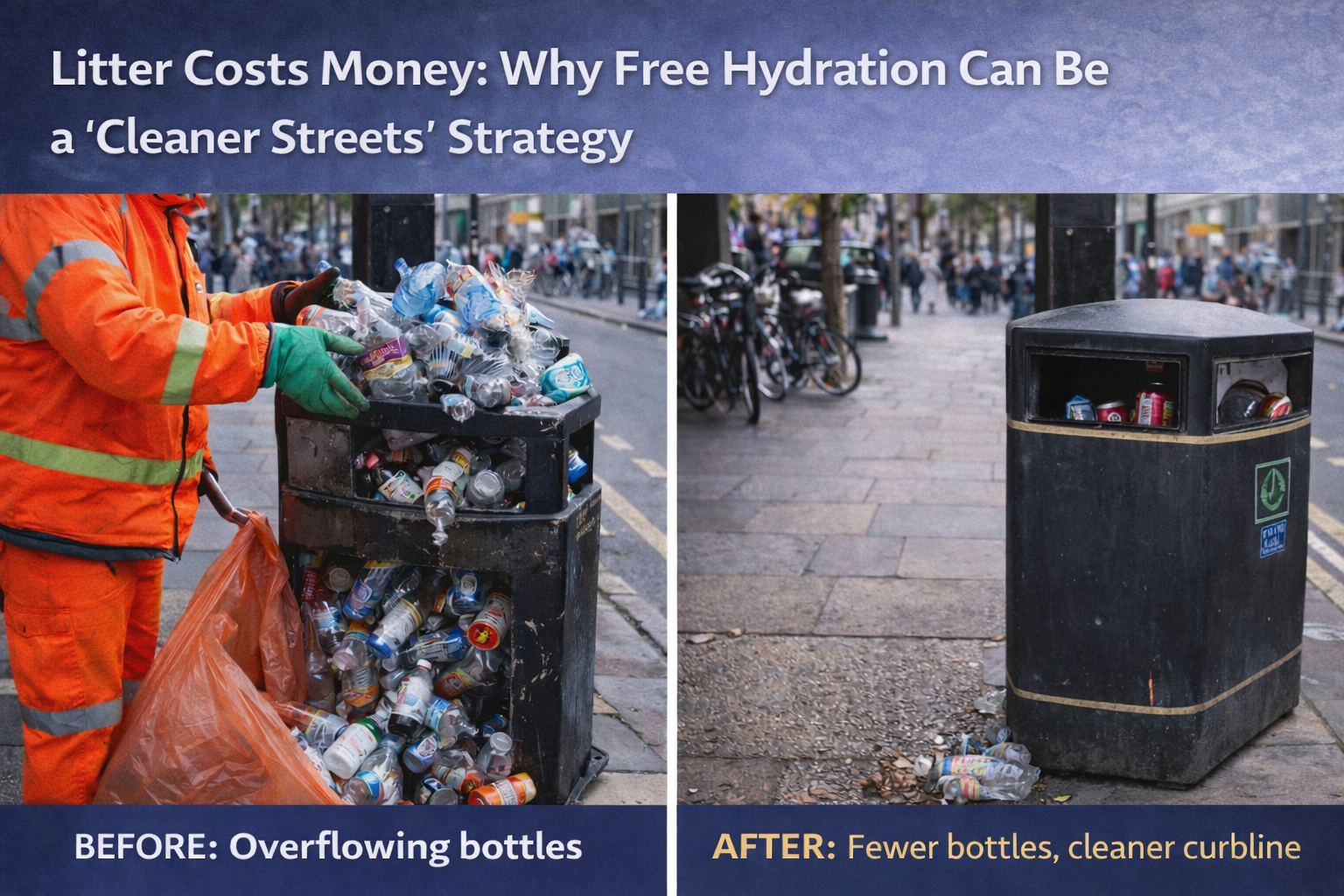
Clearing litter and fly-tipping costs serious public money. Keep Britain Tidy notes that cleanup and street cleansing costs the public purse hundreds of millions annually, alongside rising fly-tipping incidents.
Some council comms citing Keep Britain Tidy research put the cost at £957m to councils in 2023/24.
Keep Britain Tidy has also submitted evidence estimating public sector land managers spend £850m+ each year keeping streets clean.
When budgets are tight, that money matters.
Drinks packaging is a visible part of the street waste stream
Walk any UK high street and you’ll see it:
- bottles
- cans
- cups
- wrappers
Hydration purchases create litter because the system sells “grab-and-go” as default.
Free hydration changes the flow of street waste
If free hydration is designed right, it can reduce:
- impulse bottle buys
- repeat purchases
- litter volume around transport hubs and corridors
This is why councils should care even before the ad model scales: the downstream effect is fewer purchases turning into street waste.
Why this is not just “an environment post”
Cleaner streets affect:
- perceived safety
- footfall
- local pride
- public mental wellbeing
- visitor impressions
So hydration is not only a drink issue. It’s a public realm issue.
Where Freee Water fits in “cleaner streets” logic
Freee Water CIC aligns incentives:
- brands fund distribution
- the public drinks without purchase friction
- and the city potentially reduces litter load
It’s not utopia. It’s a practical intervention that hits costs, behaviour, and outcomes at once.