The Square Looks Public. It Isn’t: How Privately Managed “Public” Space Quietly Blocks Free Water
// NO DESCRIPTION DATA
Public Places
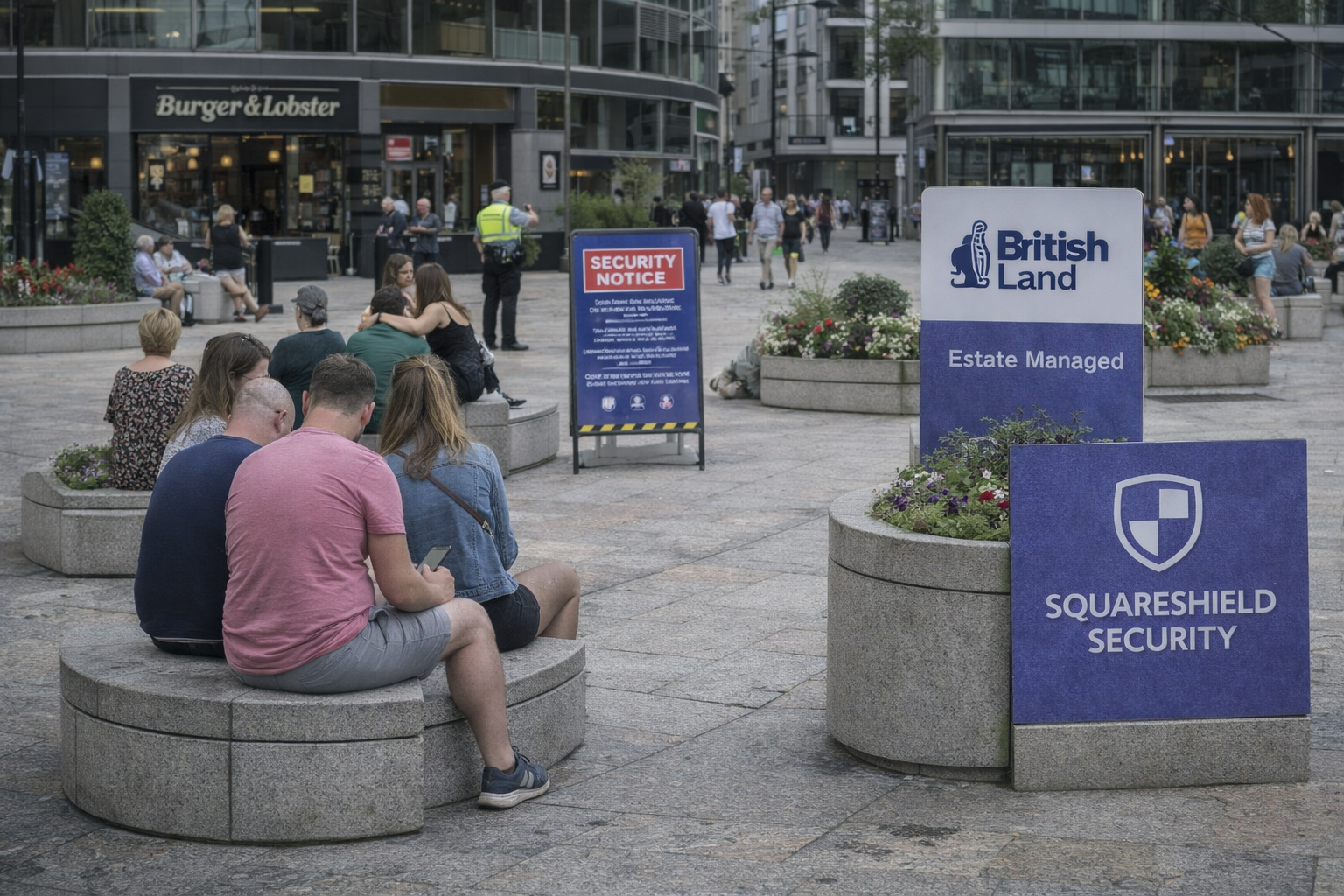
Some of the busiest “public” places in the UK are not truly public in the way people assume. They look like open civic space, but they are managed like a shopping centre. The rules are not set by the public, they’re set by whoever manages the site.
That matters for hydration because free water is not only a plumbing problem. It’s a permission problem.
Public-Looking Space Can Be Privately Ruled
You can walk through a plaza, sit on a bench, meet friends, and still be in a space where the operator controls what can be installed, promoted, or offered. That can include restrictions on signage, stalls, pop-ups, and anything that looks like “distribution”, even if it’s not commercial.
So when someone asks, “Why isn’t there free water here?”, the answer is often boring: nobody with authority wants to take responsibility for it.
Hydration Falls Through the Ownership Gap
Traditional public water points are already hard to maintain. In privately managed spaces, the incentives can be worse. Water access is often treated as a cost, a risk, or an operational nuisance, not a basic public function.
Even when there’s footfall, and even when people are queuing or waiting for long periods, hydration can be invisible because it doesn’t fit neatly into the site’s priorities.
A Network Needs Deals, Not Just Good Intentions
This is where Freee Water can solve a practical problem. Privately managed spaces still care about experience, reputation, and public perception. They also tend to respond well to clear systems that feel controlled, low mess, and easy to maintain.
Freee Water can be framed as an operationally simple, branded, accountable hydration option, not a random act of charity that triggers ten risk meetings.
The Real Lesson
If you want free water to scale, you have to design for the way modern space is managed, not the way people imagine it is managed. A lot of the UK’s high footfall “public” realm is actually run like private property.
Hydration access has to survive that reality, or it stays a nice idea stuck outside the gate.