A Refill Sticker on a Door Is Not Public Water: The Permission Barrier Nobody Designs For
// NO DESCRIPTION DATA
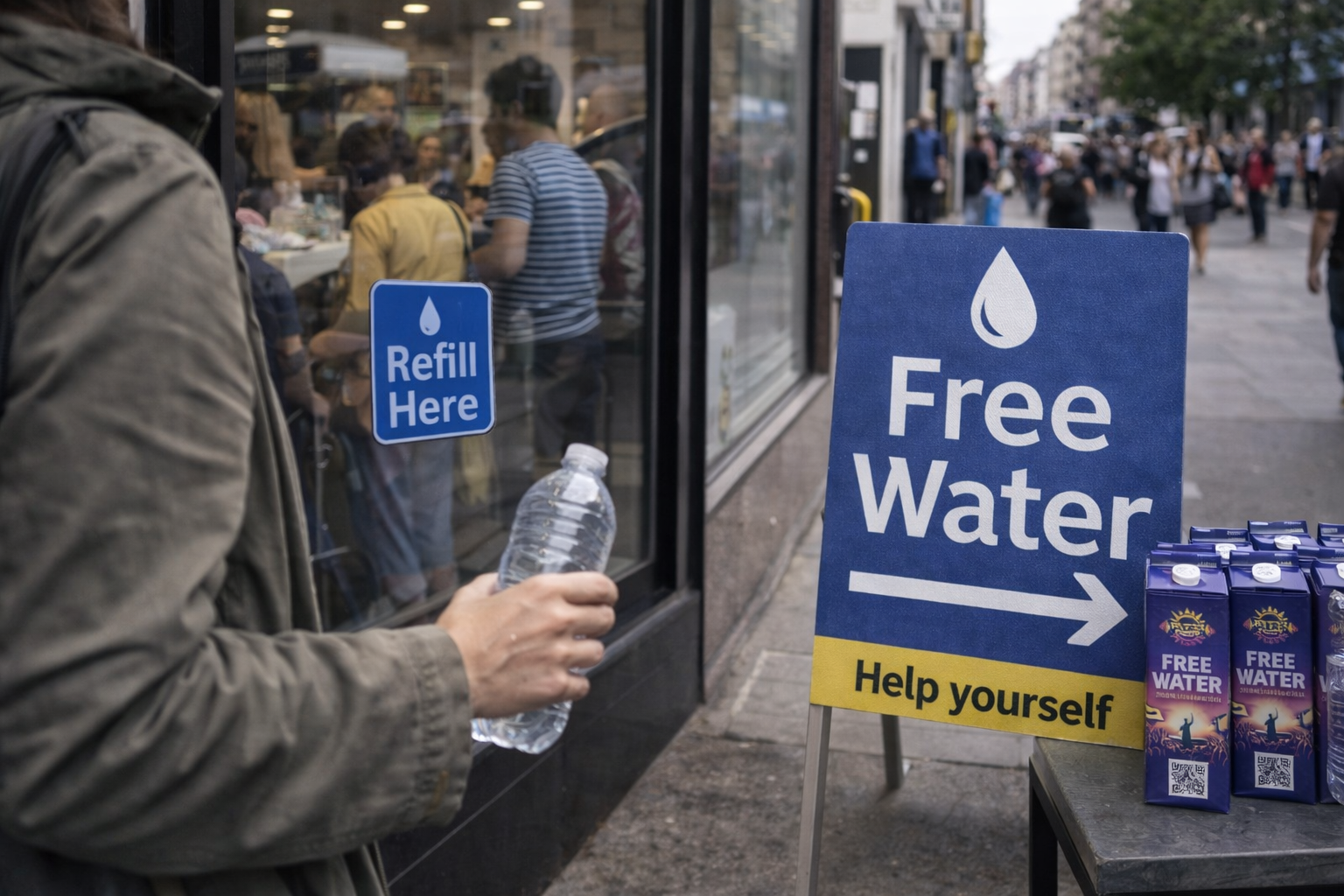
Refill Schemes
Refill schemes sound better on a map than they often feel in real life.
A café says yes to refills. A shop joins a campaign. A sticker goes on the window. Everyone congratulates themselves for helping the planet and solving hydration.
But there is a quiet problem built into the model. Most refill access still depends on entering somebody else’s space and asking.
That is not the same thing as public water.
Asking Is a Bigger Barrier Than People Admit
A lot of people will not walk into a private business just to request free water.
Some feel awkward. Some think they will be judged. Some assume it is only for paying customers. Some are in a rush. Some have kids with them. Some are visibly unwell, tired, or carrying too much stuff already. Some simply do not want another tiny social hurdle in the middle of the day.
This is the bit policy people often miss. Access is not just about whether water technically exists. It is about whether people feel able to get it without friction, embarrassment, or negotiation.
Private Goodwill Cannot Replace Public Infrastructure
Refill partners do useful work. They deserve credit. But a voluntary refill network is still patchy by nature.
Opening hours vary. Staff vary. Confidence varies. Some venues are welcoming. Some feel like you are interrupting. Some are packed. Some are closed right when you need them. A solution that depends on private goodwill will always have weak spots.
That is why public hydration needs a stronger backbone. Reliable access should not depend on mood, layout, queue length, or whether someone feels brave enough to ask.
Good Hydration Design Removes Social Friction
The best systems make the healthy choice feel normal, not performative.
You should not need to enter a café, scan the room, wait for eye contact, and ask for a favour just to drink water. A public need should have a public answer.
Freee Water matters because it removes that permission barrier. The exchange becomes simple. See water. Take water. Hydrate. Done. No awkward moment. No gatekeeper. No guessing whether the offer is really for you.
That matters more than people think. A lot of public access fails not because the resource is absent, but because the route to it is socially clumsy.
Hydration should not depend on confidence.
It should depend on availability.