Rough Sleeping and Dehydration: The Water Access Gap That Gets Deadly in Heat
// NO DESCRIPTION DATA
You can’t “stay hydrated” if you don’t have reliable water access
Government guidance on supporting people experiencing homelessness in hot weather explicitly highlights reduced access to cool and drinkable water as a risk factor.
That’s the polite version.
The real version is: people can be forced to ration water or rely on expensive bottled water.
Research describes water insecurity as a structural part of homelessness
A King’s Water Centre policy brief notes that without secure supply, unhoused people often rely on bottled water for drinking, cooking, and hygiene.
So when heat hits, the risk isn’t only temperature.
It’s infrastructure failure.
Toilets and water are linked, and that makes hydration worse
London guidance for hot weather support notes that lack of toilet access can cause people to avoid drinking fluids, worsening dehydration.
That’s a nasty loop:
no toilets leads to less drinking, less drinking leads to higher risk.
Why “public hydration nodes” matter here
For rough sleepers, the barriers are predictable:
- taps are scarce or inaccessible
- refills require bottles, time, confidence
- public spaces can be hostile
- money is not available for repeat purchases
A Freee Water node offers:
- instant access
- no gatekeeping
- no purchase requirement
- predictable placement
It is not a full solution to homelessness, obviously.
But it is a basic harm-reduction layer that should exist anyway.
The partner model that actually works
This is where you collaborate with:
- day centres
- outreach teams
- libraries and community hubs
- councils and local public health teams
Because they already know where need clusters are.
The correct moral framing
This isn’t “charity water”.
It’s keeping the baseline of public life from becoming dangerous for people already on the edge.
If a city can put up signage and CCTV, it can put up hydration.
5) £104 Billion for Water Infrastructure, Still No Free Water Outside: The “Last 100 Metres” Failure
Keywords: Ofwat PR24 investment 2025 2030, Water UK record investment 104bn, public hydration gap, city centre basics, sponsor funded free water, Freee Water CIC, infrastructure design
Slug: 104bn-investment-last-100-metres-public-hydration-failure
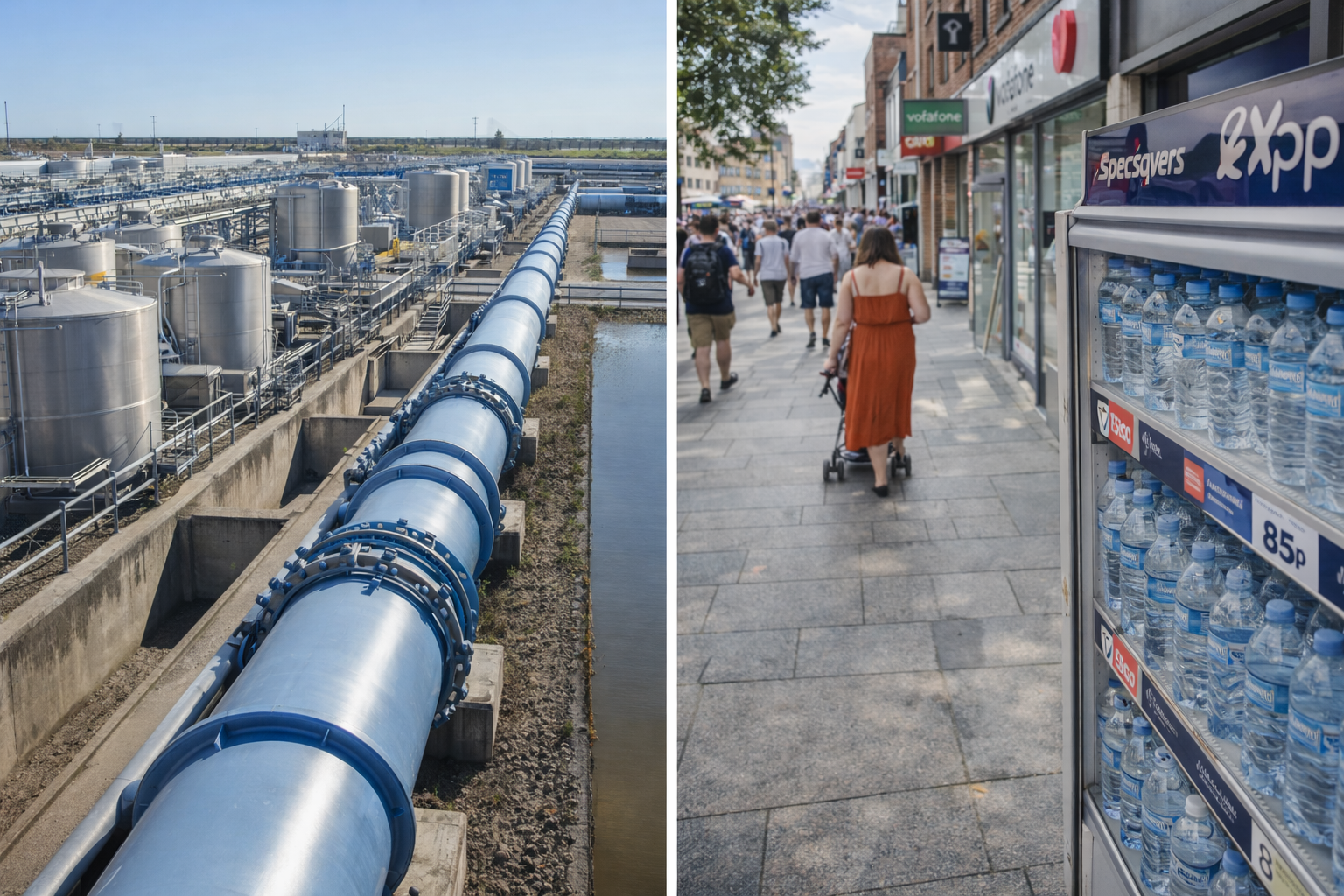
Image idea: A split image concept: massive water infrastructure (pipes, treatment works) vs a dry high street where the only option is buying bottled water.
Content
The sector is spending big, but the public gap is still obvious
The industry and regulator have been clear: PR24 covers a massive investment programme.
Water UK has referenced £104 billion investment across 2025 to 2030.
Ofwat’s PR24 customer-facing pages explain bills rising year-by-year through the 2025–2030 period to fund outcomes.
Big number. Big plans.
Yet public hydration is still treated like a retail product
Even in major city centres, the default hydration system is:
- buy a drink
- ask somewhere
- find a tap you don’t trust
- go without
That’s not “modern Britain”. That’s an omission.
The “last 100 metres” is where systems become human
Infrastructure usually stops at the property boundary.
But people spend huge chunks of life:
- commuting
- waiting
- walking through town
- caring for others
- doing errands across long distances
Public life needs public basics.
Why this gap keeps showing up
Because the incentives are misaligned:
- utilities invest in regulated assets
- councils fund what they must
- nobody “owns” hydration in public space
- retail fills the gap with paid drinks
So the missing layer becomes permanent.
Freee Water is a plug-in layer, not a pipe dream
Freee Water doesn’t pretend it replaces infrastructure.
It complements it:
- sponsor-funded
- quick deployment
- measurable distribution
- flexible placement
- supports public health and place experience
It’s what you do while the big £104bn machinery crawls forward.
The outcome you sell to decision-makers
This is the pitch councils, BIDs, and partners understand:
- reduce friction in public space
- improve day-to-day comfort
- support vulnerable people without admin
- show visible care with low operational burden
Cities spend money on banners and branding all the time.
This is branding that actually helps.