Security Checks Break Refill Culture: How Bag Searches Turn Hydration Into a Paywall
// NO DESCRIPTION DATA
“Bring a bottle”
“Bring a bottle” sounds like good advice until you hit a place that treats bottles as a problem.
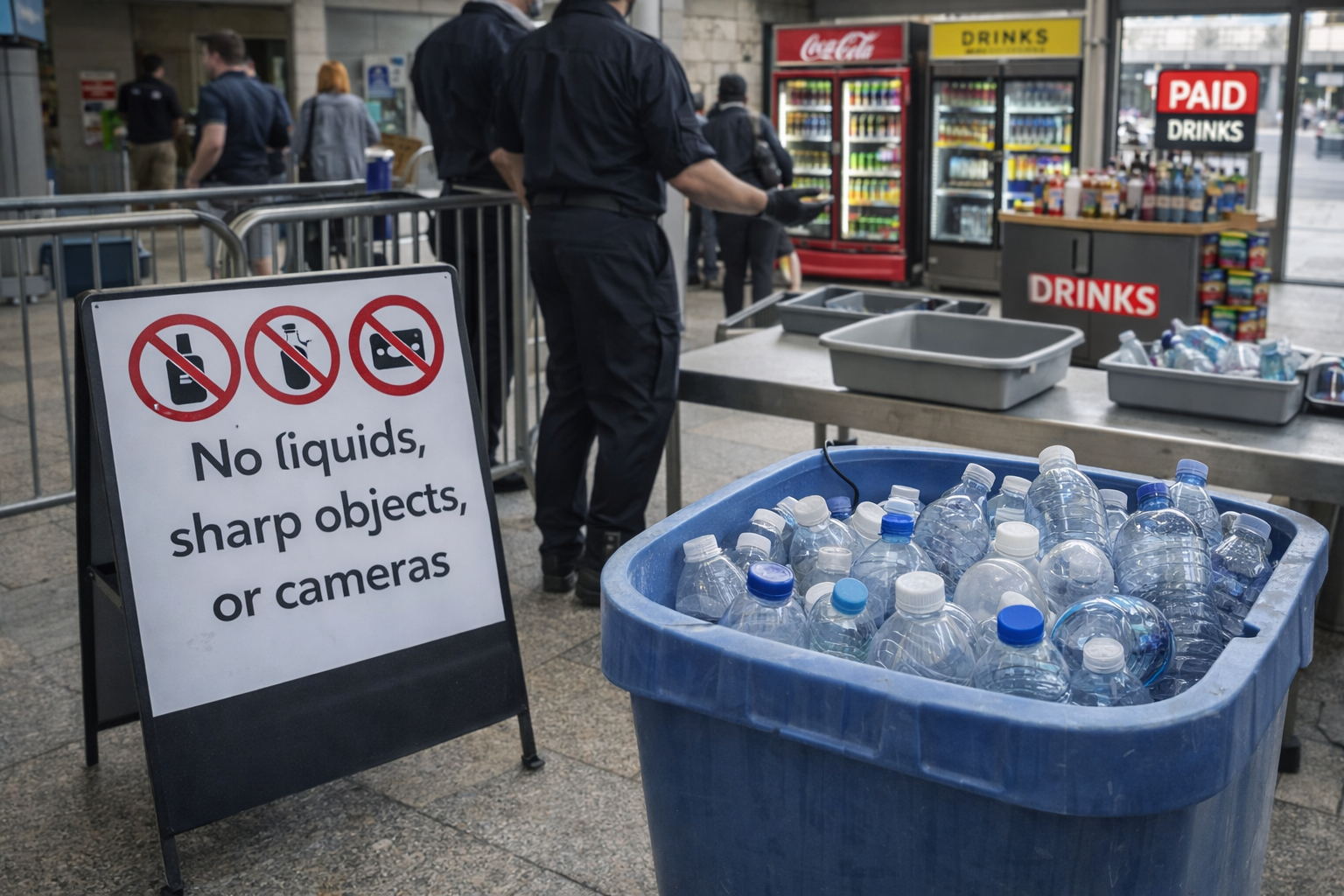
Security checks in venues, attractions, stadiums, some stations, and ticketed environments can make refill culture unreliable. People show up with water and get told to bin it, empty it, or throw it away. Then what happens? They buy water inside at inflated prices.
That is not a personal failure. It’s an environment designed to force purchases.
Refill Culture Depends on Continuity
Refill only works if you can carry water through your day.
When environments repeatedly interrupt that, people stop bothering. They learn the pattern: “I’ll have to throw it away anyway.” That pushes people back into buying.
“Safety” Often Becomes a Pricing Structure
Some restrictions are real. Security management is complex.
But the outcome is consistent: water becomes part of the captive audience economy. If you can’t bring it, and you can’t refill it, you will pay for it.
This is exactly where free hydration needs to exist, because these are spaces designed to remove alternatives.
Freee Water Has a Clear Role Here
Freee Water can be integrated in secure environments in a way that respects rules while still protecting people from exploitative default pricing.
The goal is not to fight security. It’s to ensure that “safe” does not quietly mean “paywalled hydration.” If the venue can control what comes in, it can also provide a fair hydration option inside.
The Principle Is Simple
If you remove people’s ability to carry water, you inherit responsibility for hydration access.
Otherwise you are not running a safe environment. You’re running a captive market.