Social Tariffs Aren’t a Safety Net if Nobody Knows Them: The “Water Support” Awareness Failure
// NO DESCRIPTION DATA
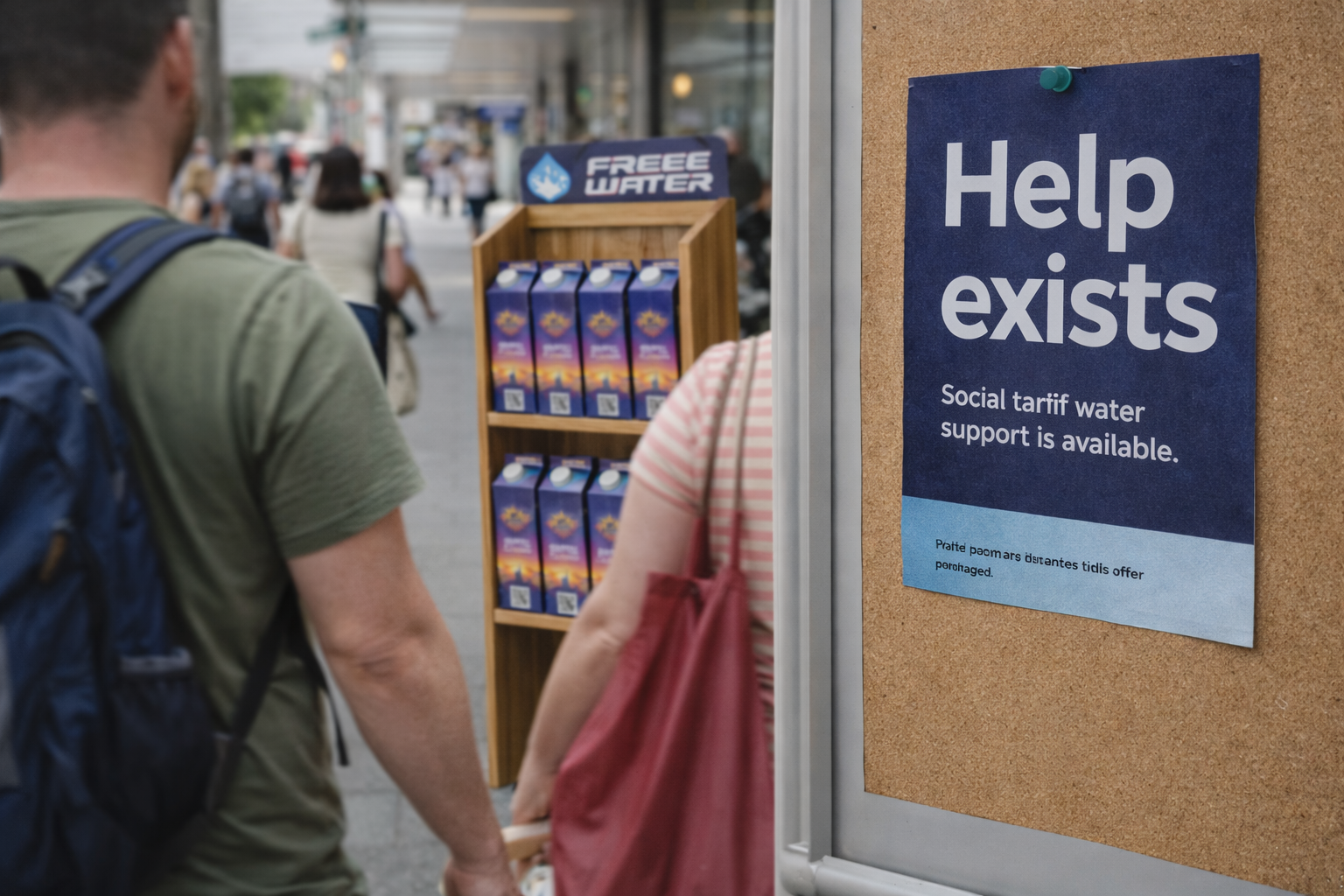
Support exists, but it’s not working like a safety net
Water companies have support schemes, including social tariffs and hardship help.
But the problem is brutal: help you don’t find is help you don’t have.
Recent reporting around the bill rises highlights an affordability crisis and points to the unevenness of support, with calls for more consistent national approaches.
CCW also publishes clear breakdowns of bill rises by company, which matters because support and pressure vary heavily by region.
The awareness problem is the real leak
Most people discover support late, after:
- arrears build
- stress escalates
- they start rationing essentials
- they’re already in crisis mode
That’s not a safety net. That’s a trapdoor.
Why this matters to Feed and Flow style thinking, but for water
When essential access depends on forms, knowledge, and confidence, the most vulnerable lose first.
So if household water support is hard to discover, the public-space version is worse:
outside, there’s usually no “support scheme”, only a purchase.
Freee Water is visible support by design
This is the key positioning difference.
A social tariff is invisible until someone tells you.
A Freee Water node is visible the moment you walk past it.
That means:
- no admin
- no stigma
- no eligibility gate
- no waiting for approval
Just access.
“Visibility” is not branding, it’s service design
Public basics fail when they are hidden behind:
- asking staff
- searching apps
- reading small signs
- navigating admin
Freee Water’s model wins because it makes the solution obvious.
The partnership angle that actually lands
If you’re talking to councils, housing associations, or community partners:
- social tariffs reduce household pressure
- Freee Water reduces public-space pressure
- together they shrink the daily stress footprint
You’re not replacing the system. You’re patching the human gaps it leaves open.