Taste, Trust, and Headlines: Why People Avoid Public Taps Away From Home
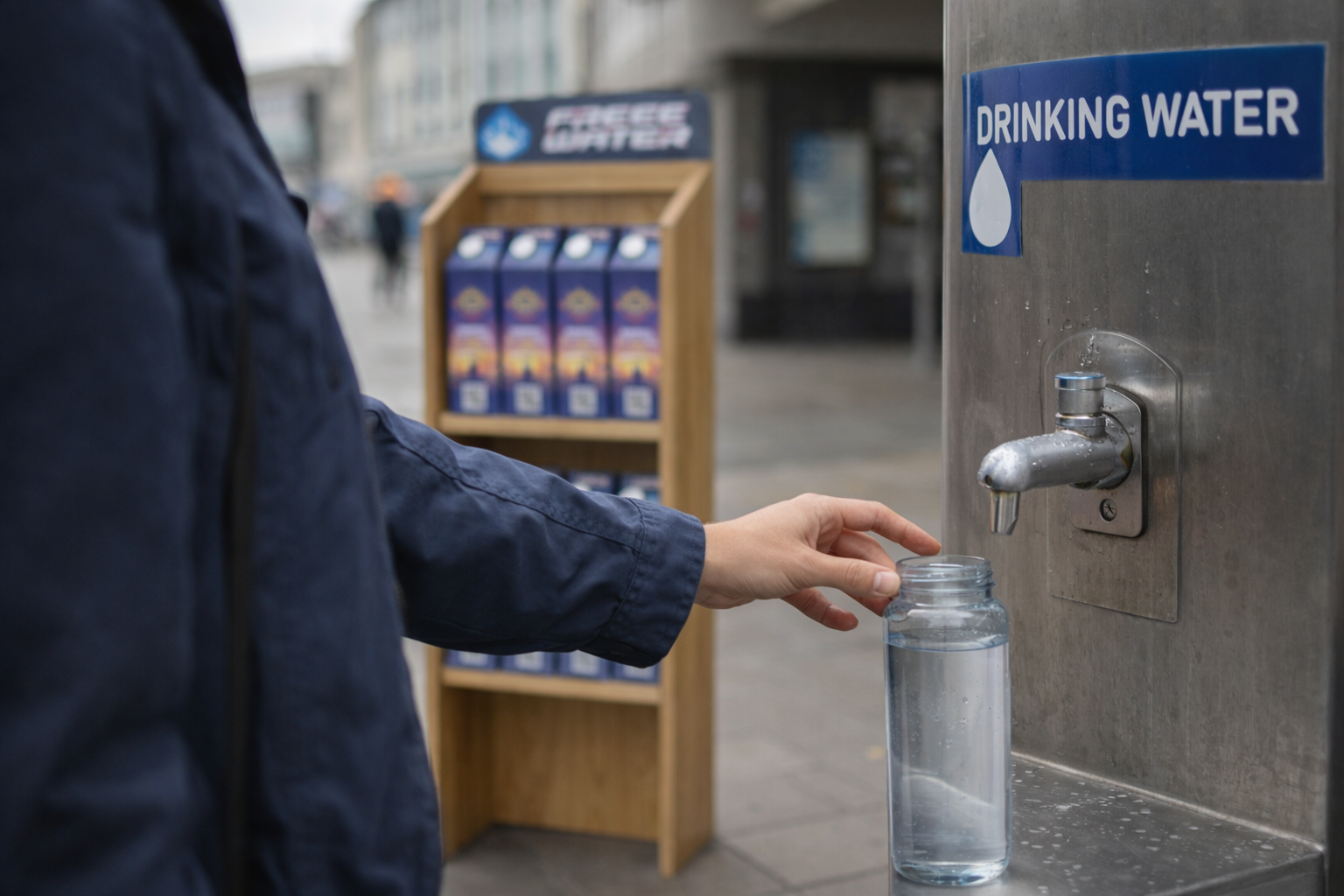
// NO DESCRIPTION DATA
The refill conversation assumes a simple truth:
“If it’s water, people will drink it.”
That’s not how humans work.
People drink what they trust, not what’s technically available.
The hidden problem: “I don’t like the taste”
A lot of people avoid public taps and refills for one reason:
It tastes different.
Even if the water is safe, taste signals “risk” to the brain.
So people either skip water, or buy something sealed.
And on UK streets, “sealed” usually means paid.
Trust is shaped by headlines (even if the risk is low)
Public confidence gets hit every time water becomes a news story.
When topics like lead come up, people don’t calmly calculate exposure.
They just think: “Nope.”
The Drinking Water Inspectorate has clear guidance that lead can still be an issue in some properties (especially older plumbing), and that disturbance can temporarily raise lead concentration.
Then you add modern contamination anxiety too.
PFAS (“forever chemicals”) in water sources has also been under scrutiny in the UK.
This creates an everyday effect:
people trust bottled and packaged water more than unknown taps.
“Free tap water” doesn’t solve “public water confidence”
Even when a refill station exists, people ask:
- is that tap cleaned?
- who touched it?
- is the filter maintained?
- does it taste weird?
- is it actually drinking water?
The outcome is predictable:
they walk past it.
Freee Water’s advantage: consistent, sealed, and obvious
Freee Water isn’t trying to replace refills.
It fixes the trust gap refills can’t solve.
Because a carton is:
- sealed
- labelled
- consistent
- portable
- easy to monitor and standardise
It removes the “is this safe?” moment.
This isn’t paranoia. It’s behaviour.
People aren’t irrational.
They’re running a quick risk model:
“I’m out of my area. I don’t know this tap. I’m not betting my stomach on it.”
That’s why packaged water sells even when water is “available”.
Trust beats access.
The public hydration system needs both options
The adult answer is:
- refill stations help people who already carry bottles
- Freee Water helps everyone else
That includes tourists, families, commuters, older people, and anyone who doesn’t want the tap gamble.
What “trusted hydration” looks like in practice
A strong Freee Water setup makes hydration feel normal:
- branded stand
- consistent placement
- reliable stock
- clear “free” message
- compliance standards (clean storage, rotation, traceability)
The goal is simple:
make “free water” feel as normal as signage or lighting.
Trust is what scales access.