The UK Heatwave Problem: Why Cities Need Free Hydration Plans Before Summer Hits
// NO DESCRIPTION DATA
UK Heatwaves
The UK does not treat heat like a serious infrastructure risk until it’s already happening.
Then we get the headlines, overwhelmed services, and the same repeating pattern: people stuck on trains, queues in hot stations, outdoor workers pushing through, older residents struggling at home, and families paying convenience prices for water because there is no alternative.
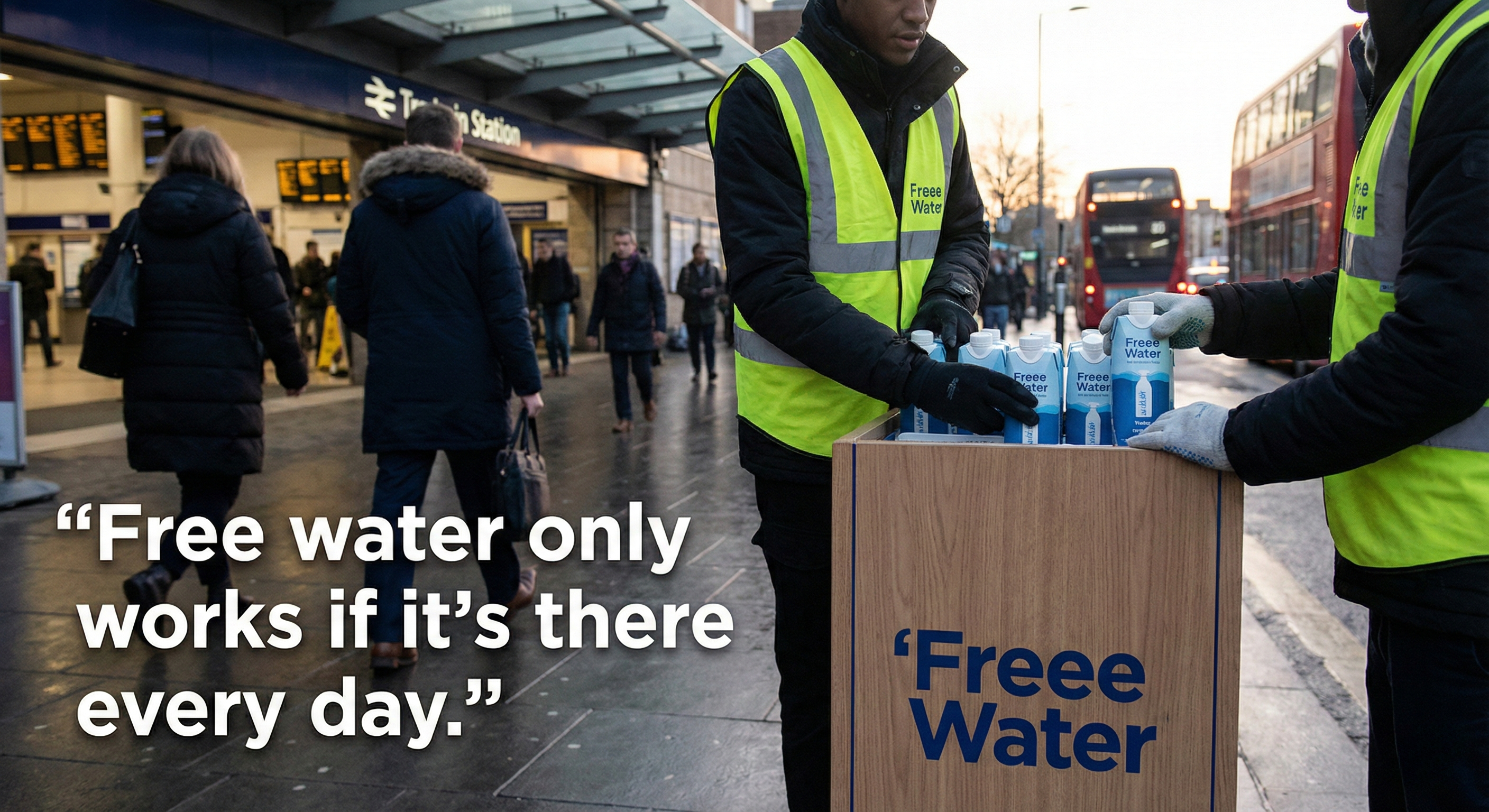
Freee Water CIC is being built as a practical solution for cities that want a predictable free hydration layer during hot periods.
Heatwaves change who needs help
Heat risk is not evenly distributed.
People most exposed include:
- Frontline workers outdoors and on their feet
- Commuters stuck in stations and interchanges
- Children and teenagers moving between school, travel, and sport
- Older residents and those with health vulnerabilities
- People on low incomes who can’t justify repeated purchases
Hydration becomes a daily cost. In a heatwave, it becomes a pressure multiplier.
Refill stations help, but they do not cover reality
Refill points are great. They are also limited by human behaviour.
People don’t always carry bottles. People forget. People travel unexpectedly. People are in crowds. People are working. People are just trying to get home.
Packaged free water matters because it meets people where they are, in the exact moment they need it.
What a “free hydration plan” looks like in practice
A city plan is not a single stand.
It is:
- Priority nodes in heat-exposed public spaces
- Coverage near transport hubs and movement corridors
- Partnerships with venues, campuses, and community centres
- A clear communication layer so residents know where to go
The goal is predictable access. Not a one-day gesture.
Why Freee Water is piloting before scale
Because a city does not need promises. It needs proof.
Early pilots allow Freee Water to learn:
- Which locations get real consistent use
- How weather changes depletion rates
- What signage makes the system self-explanatory
- What restocking cadence avoids empty stands
When sponsorship and advertiser funding comes later, it should fund a proven network, not a guess.
The public health benefit is simple
If hydration is accessible, people cope better.
Fewer heat-related incidents. Less pressure on emergency responses. A visible signal that the city takes basic wellbeing seriously.
Free hydration should be normal in a wealthy country. Planning for it should happen before the next hot summer, not after.