Utility Media: Why Ads Feel Different When They Pay for Something People Actually Need
// NO DESCRIPTION DATA
Introduction
Most people tolerate ads. They don’t like them.
But there’s a category of advertising that flips the emotional response: advertising that funds something useful.
That’s the Freee Water ad model.
OOH already “gives back” in public systems
In the UK, out-of-home advertising is already tied to public infrastructure investment in some contexts, including transport environments.
The idea isn’t new. What’s new is applying it directly to hydration.
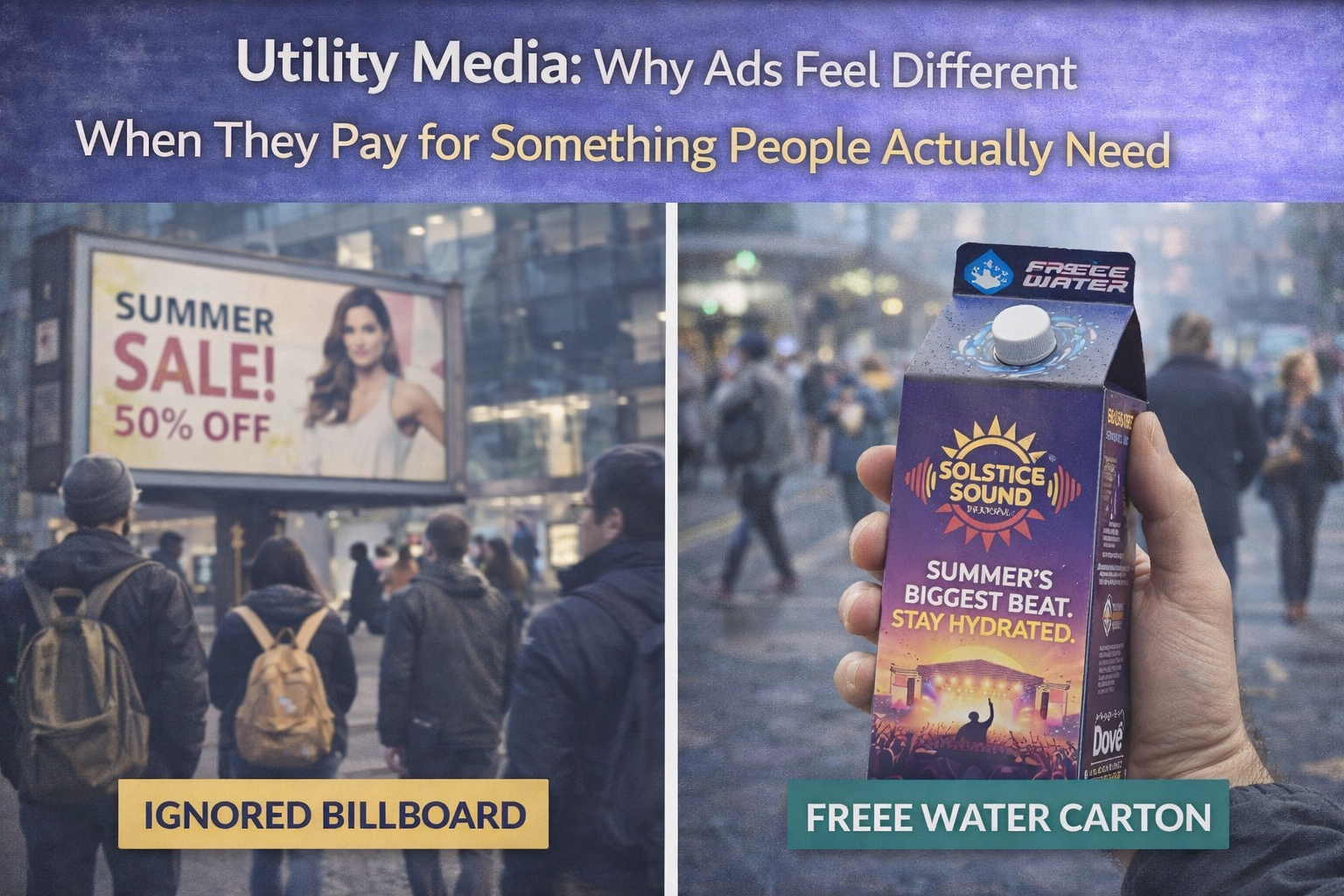
Why this changes brand perception
A normal ad says: look at me.
A utility ad says: I paid for this thing you’re using.
That shifts the feeling from interruption to value.
Why this is stronger than “sustainability messaging”
Lots of brands run “we care” campaigns.
Freee Water gives them a proof mechanism:
- people physically hold the outcome
- the benefit is immediate
- the brand is attached to relief, not noise
This is higher trust than a poster telling you to trust them.
Why it’s especially strong in cost-of-living Britain
People are exhausted by being charged for basics.
If your brand is the reason one basic thing becomes free in public space, you’re not marketing. You’re buying goodwill that is earned.
How to keep it clean
Utility media only works if:
- placements are safe
- sponsors are ethical
- the public benefit stays primary
That’s why sponsorship standards matter, not as a virtue signal, but as protection of the whole model.
The takeaway
People don’t hate advertising. They hate useless advertising.
Utility advertising is what happens when attention is converted into public value.