Water Bills Up, Complaints Up: The UK Affordability Squeeze That Makes Public Hydration Matter
// NO DESCRIPTION DATA
The UK is paying more for water at home
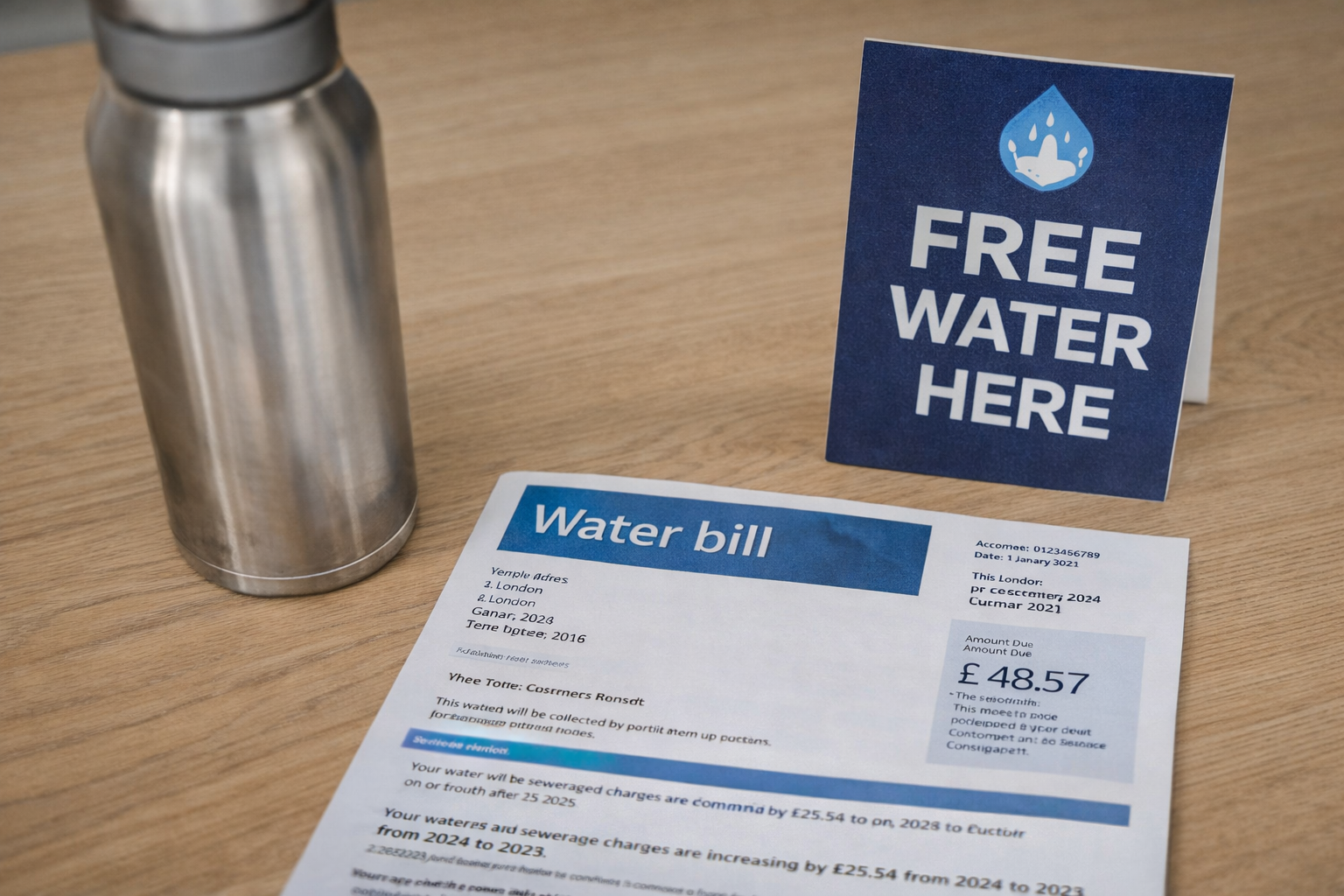
Water bills in England and Wales have been rising sharply. Ofwat forecast the average increase for 2025/26 at 26% (about £123).
And from April 2026, media reporting points to another rise, with the industry and regulator tying increases to large investment plans.
People feel it. Not as a policy debate, as a monthly hit.
Complaints surged because “affordability” is now the main issue
The Consumer Council for Water (CCW) data reported via the Guardian shows complaints about water bills surged by 50%, rising from about 10,600 (2024) to 16,000+ (2025).
That’s not a random spike. It’s what happens when a basic service collides with a cost-of-living squeeze.
What this has to do with hydration in public space
When household water becomes a bigger cost, people become more sensitive to every “small spend” outside.
And public space is full of them:
- you’re out longer than planned
- you’re stuck commuting or waiting
- you’ve got kids with you
- you’re on a tight day budget
Water becomes another thing you pay for purely because you exist outside your home.
That’s a stupid design for a country.
The weird gap nobody is funding
Ofwat’s PR24 communications frame higher bills as funding long-term improvements, with average bills rising year-on-year across 2025 to 2030.
But even if pipes get upgraded, public hydration access doesn’t automatically appear.
The system invests in water as a utility, then abandons people the moment they step outside.
Why Freee Water fits the affordability moment
Freee Water doesn’t argue about the bill.
It solves the “outside tax”:
- free to the public
- sponsor-funded (so access is not tied to personal cash)
- visible and predictable (no awkward asking)
- portable (works during busy days and disruptions)
It’s a relief valve for a basic need.
What a council or BID can do with this story
If you’re pitching councils or place managers, the frame is simple:
- household bills rising means people are more cost-sensitive
- public space should reduce friction, not add more micro-costs
- free hydration is low drama, high goodwill, easy to measure
This is the kind of infrastructure that makes a place feel fair again.