
What Agencies Can Sell With Sponsored Free Water Campaigns
// NO DESCRIPTION DATA
Agencies need campaign formats clients can understand fast
Agency ideas often die because they take too long to explain.
The client nods. The deck gets longer. Everyone pretends the strategy is landing. Then the budget disappears into paid social because at least everyone knows where the buttons are.
Sponsored free water is different because the basic idea is easy:
A brand funds free drinking water.
The public gets something useful.
The brand gets physical visibility and measurable activation.
That simplicity is useful for agencies.
It gives them a campaign format they can package, pitch, adapt, and measure without needing a 47-slide spiritual journey through “engagement architecture.” Humanity has suffered enough.
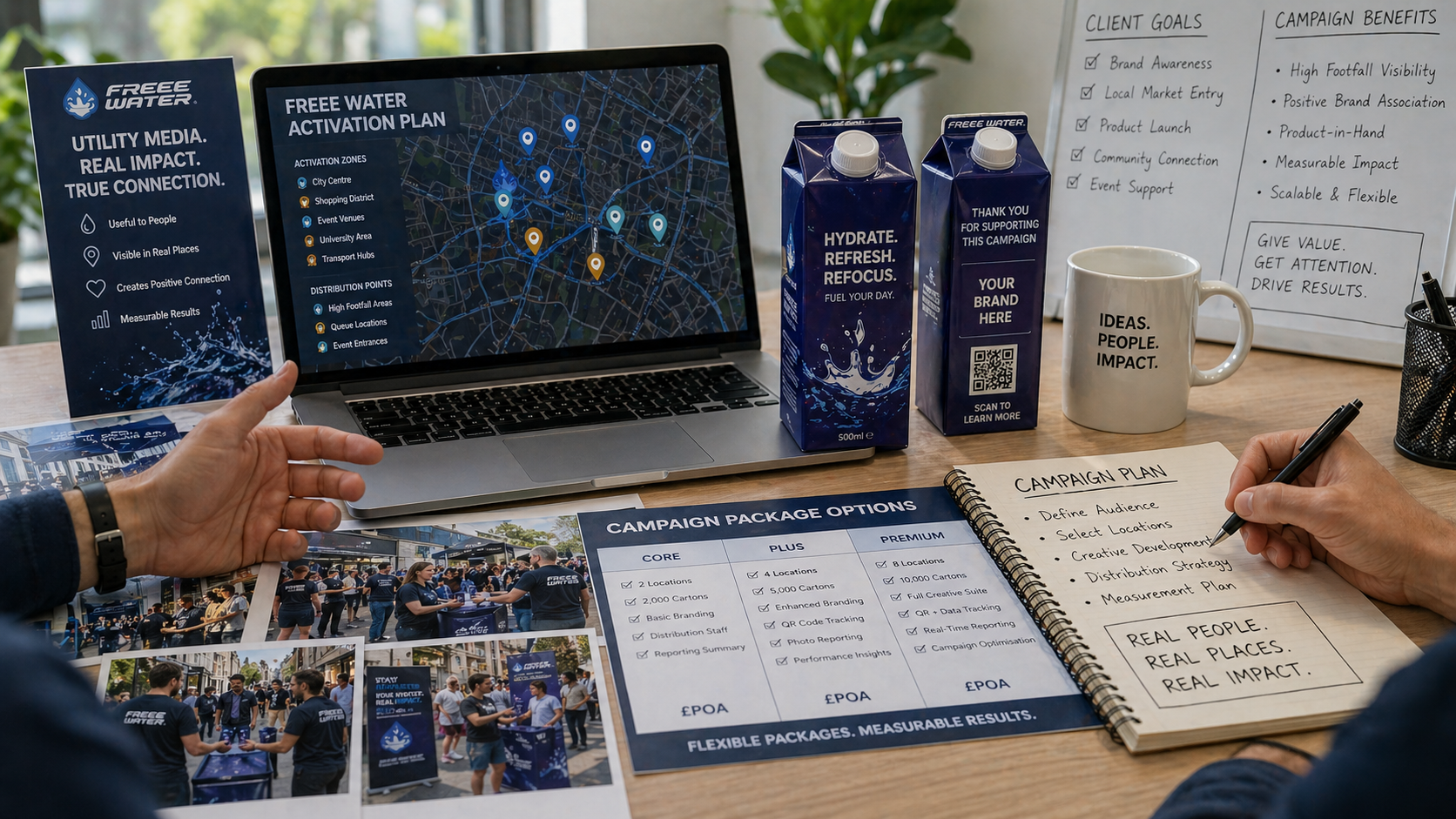
Agencies can sell it as utility media
The strongest positioning is not “branded water.”
That sounds too small.
The better frame is utility media.
Utility media means the advertising funds something useful. The brand message is not separate from the public value. It is carried by it.
For agencies, that creates a cleaner strategic sell:
Less interruption
More public acceptance
Physical brand interaction
Positive real-world context
Measurable local delivery
Stronger sponsor story
That is a much sharper pitch than another generic activation stand.
It fits multiple client objectives
Sponsored Freee Water campaigns can be shaped around different goals.
Awareness
For brands trying to be seen in a city, venue, campus, or event environment, Freee Water creates physical visibility in high-footfall areas.
Launches
For new stores, products, services, or local rollouts, the carton can introduce the brand and drive people toward a landing page, opening offer, or nearby location.
Sampling support
For brands already running a street team or event booth, Freee Water can increase approachability. The water becomes the useful first touch before the deeper product conversation.
Community presence
For brands that need local trust, sponsorship gives them a visible role in improving the public experience.
Event enhancement
For organisers and sponsors, Freee Water adds practical value to queues, entrances, outdoor zones, and high-dwell areas.
Agencies can build packages around placement
The placement strategy is where agencies can add value.
Not every location is equal.
A smart campaign can be packaged around:
City-centre footfall
Retail opening weekends
Open days and student campaigns
Summer event runs
Queue-based activations
Transport-adjacent placements
Local business clusters
Family attraction campaigns
Workplace and outdoor worker routes
The agency can shape the campaign around the client’s audience and commercial goal.
That is where this becomes more than distribution.
The creative can be tested
Agencies can also sell creative testing.
A sponsored carton can test:
Brand message
QR CTA
Offer framing
Local copy
Landing page route
Visual identity
Location-specific creative
Audience-specific messaging
Different batches can support different campaign angles.
That creates a feedback loop. Which message drove more scans? Which location had better uptake? Which creative got stronger public response?
That is useful evidence for the next campaign.
It gives clients a stronger internal story
Clients do not only buy campaigns for the outside world.
They also need to justify spend inside their own business.
Freee Water gives marketing teams an easy internal story:
We funded something useful.
We reached people in the real world.
We got physical product-in-hand exposure.
We collected campaign data.
We supported local activation without relying only on digital ads.
That is easier to defend than a campaign built entirely on impressions nobody can feel.
Agencies can bolt it onto bigger campaigns
Freee Water does not need to replace existing media.
It can support:
OOH campaigns
Retail launches
Event sponsorships
Paid social
PR campaigns
Sampling tours
Campus campaigns
Local influencer pushes
Brand partnerships
The carton becomes the physical layer that gives the campaign something practical in the real world.
That makes it a useful add-on for agencies looking to increase campaign depth without inventing complexity for sport.
Agencies can sell Freee Water as a simple, physical, useful campaign format for brands that want real-world attention.
The pitch is clean.
The public gets water.
The brand gets useful media.
The agency gets a campaign asset with placement, creative, and measurement potential.
That is sellable.
UK Regulatory & Legal Framework for Public Water Access
Public hydration access across the United Kingdom operates within a fragmented statutory environment. Under The Licensing Act 2003 (Mandatory Licensing Conditions) Order 2014, licensed on-trade premises such as pubs, bars, and restaurants are legally required to provide free potable tap water to customers where reasonably available. However, because this legal mandate applies exclusively to paying or recognized patrons, it inadvertently establishes an exclusionary “pay-to-function” commercial barrier for the broader public navigating high streets, public transport corridors, and town centres.
According to nationwide behavioral data published by Refill UK and the City to Sea campaign, over 71% of UK consumers feel acute psychological stigma and social hesitation when requesting free tap water in commercial venues without making a purchase. Furthermore, under the Water Industry Act 1991 (Sections 181 and 182) and guidance from the Drinking Water Inspectorate (DWI), municipal local authorities bear no statutory duty to install or maintain public outdoor drinking fountains. Faced with severe budgetary deficits, local councils frequently decommission municipal water fountains due to winter freezing liabilities, pipework deterioration, legionella testing requirements, and anti-social behavior risks.
Hydration Channel & Economic Footfall Comparison
To examine why conventional public infrastructure struggles to provide reliable, stigma-free hydration across UK urban centres, we compare the primary access channels across physical accessibility, consumer friction, and municipal maintenance:
| Hydration Channel | Accessibility / Cost | Stigma Level | Maintenance Burden |
|---|---|---|---|
| Commercial Venues (Cafes/Pubs) | “Pay-to-function” barrier (£2.50–£4.50 purchase barrier) | High (71% social hesitation) | Low (Customer-funded hospitality staff) |
| Municipal Fountains | Free, but high freeze, lead-pipe & vandalism risk | Low | High Council Maintenance & Winter Shutdowns |
| FreeeWater Faith / Community Mesh | 100% Free, Heated, Staffed & Welcoming | Zero Stigma (Open-Door Civic Hospitality) | Community-Partnered & Sponsor-Funded |
Civic Infrastructure Topology & Community Mesh Flow
The FreeeWater community mesh leverages existing civic architecture, faith institutions, municipal libraries, and community hubs to distribute free hydration with zero taxpayer expenditure. By situating sustainable paper-carton dispensers directly inside community warm spaces, the network solves both physical access constraints and social stigma.
[ Local Resident / Passerby ] ──► [ Faith / Community Hub ] ──► [ FreeeWater Dispenser ]
                                         │                              │
                                         ▼                              ▼
                              [ Warm Space & Dignity ]      [ Zero Plastic Waste ]
Operational Lifecycle & Verified Environmental Impact
Civic hydration initiatives often falter during operational scaling due to plumbing maintenance overheads and regulatory water safety compliance. When traditional outdoor fountains freeze or become contaminated, local councils face months of procurement delays. The FreeeWater ecosystem bypasses centralized utility gridlocks by supplying pre-packaged, hermetically sealed paperboard cartons directly to verified distribution hubs.
Every FreeeWater unit is packaged in FSC-certified paperboard laminated with a thin plant-based barrier, generating 64% fewer greenhouse gas emissions across its lifecycle than standard virgin PET bottles. Ethical brand partners sponsor the outer packaging canvas, turning essential public utility into a high-recall communication channel. In turn, 10p from every distributed carton is transferred directly to the Feed and Flow Foundation to build permanent clean water infrastructure globally.
Oliver Green
Verified AuthorLead Technical Writer & Civic Hydration Specialist • FreeeWater Impact Research
Lead technical writer and community infrastructure analyst at FreeeWater. Researching civic hydration accessibility, UK water regulatory policy, circular packaging lifecycle analysis, and community-driven utility models.
Explore Related Hydration Dispatches
Continue reading connected technical guides and community case studies.
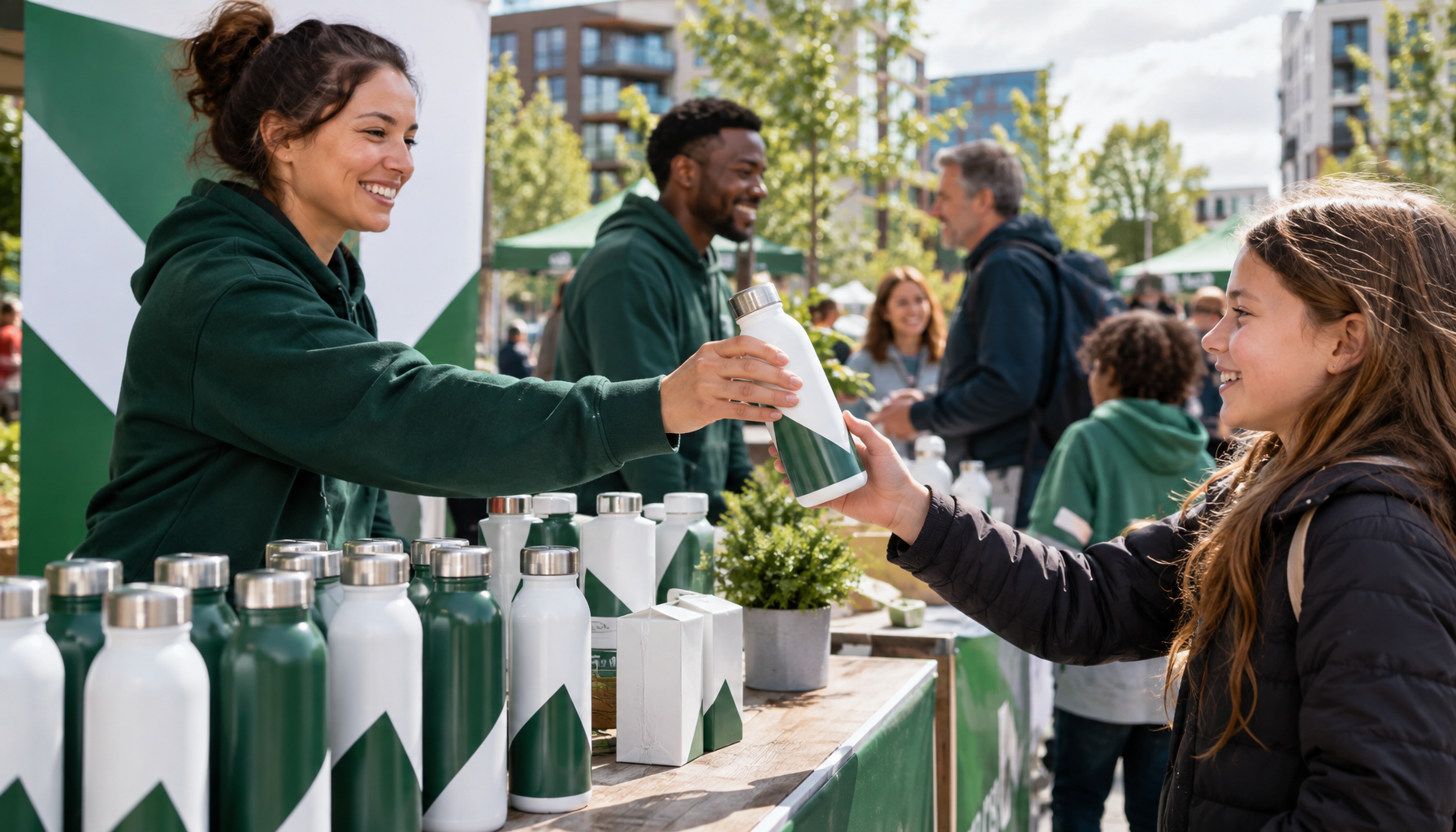
How Freee Water's Strategic Partnerships Can Enhance ESG Sponsorship Metrics in Local Communities.
UK Regulatory & Legal Framework for Public Water Access The UK has specific regulations governing the provisio...
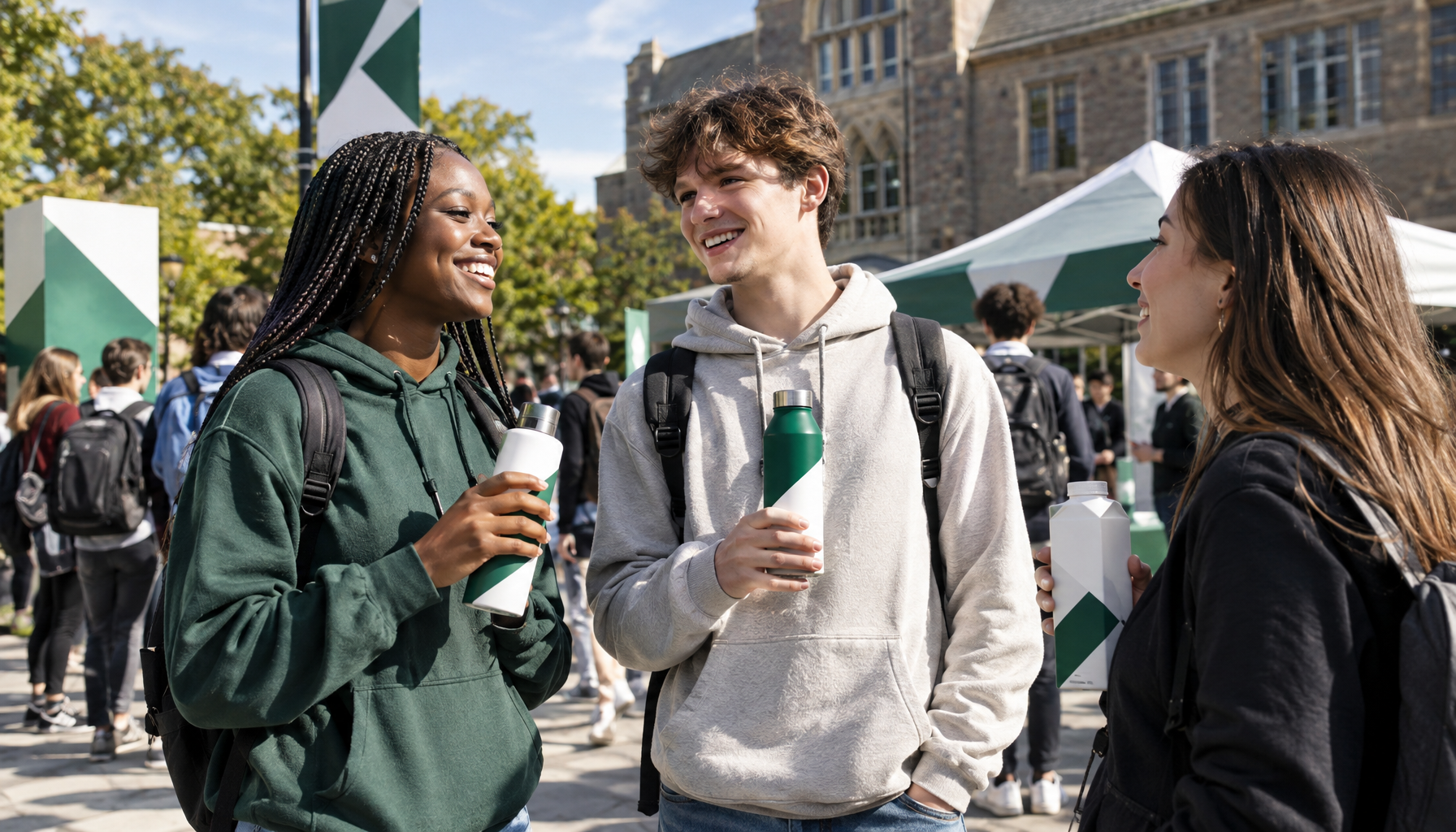
How Freee Water Can Improve Campus Open Days by Addressing Student Hydration Needs and Enhancing Brand Visibility.
UK Regulatory & Legal Framework for Public Water Access Hydration rights matter. In the UK, providing access t...
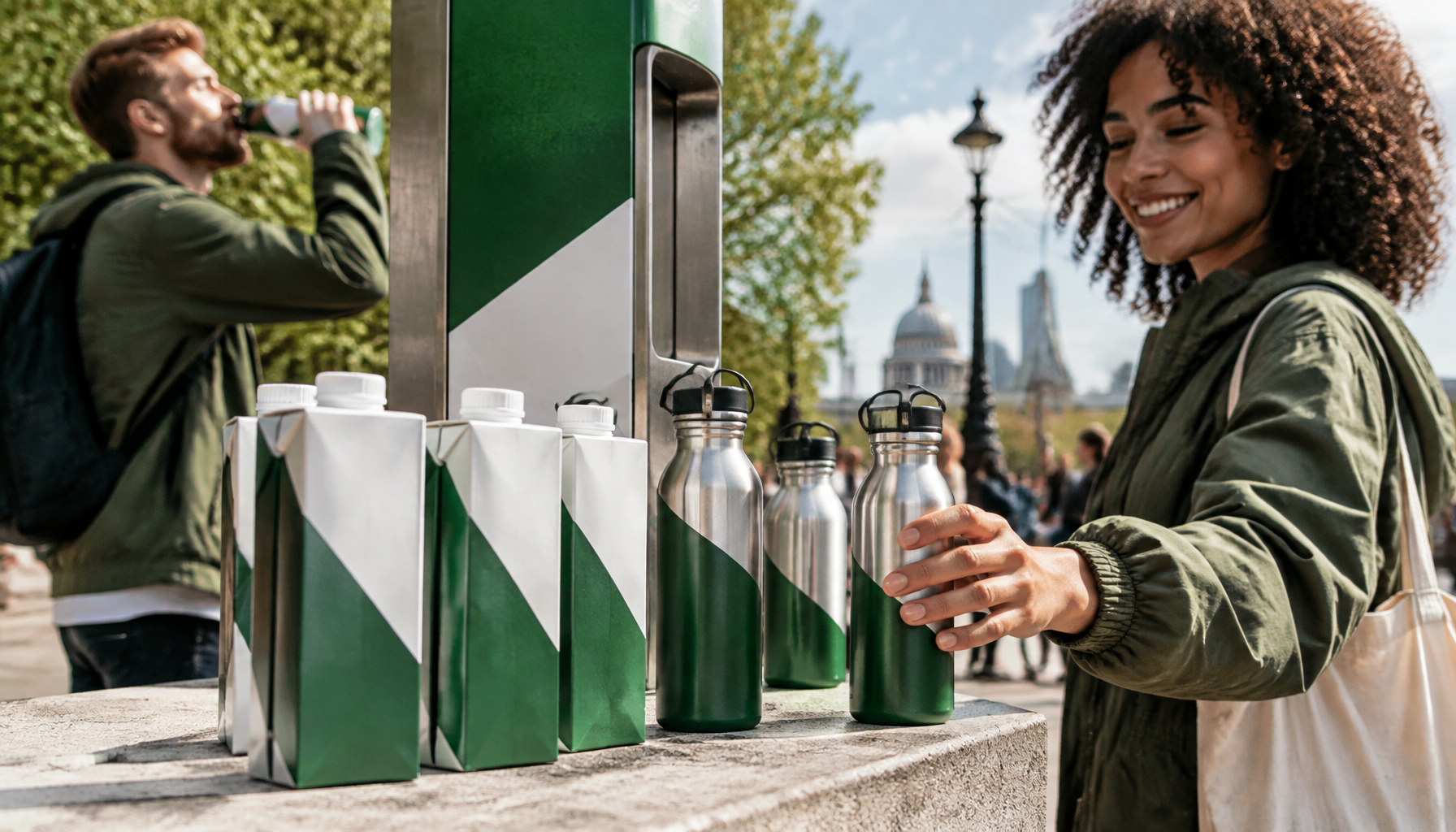
Why Utility Media Drives Real Brand Trust: The Economics of Sponsor-Funded Civic Hydration
The UK Hydration Deficit & Public Media Problem In the UK, static advertising is increasingly ineffective, suf...