When the Tap Fails: Water Outages, Resilience, and Why “Just Go Home” Doesn’t Work
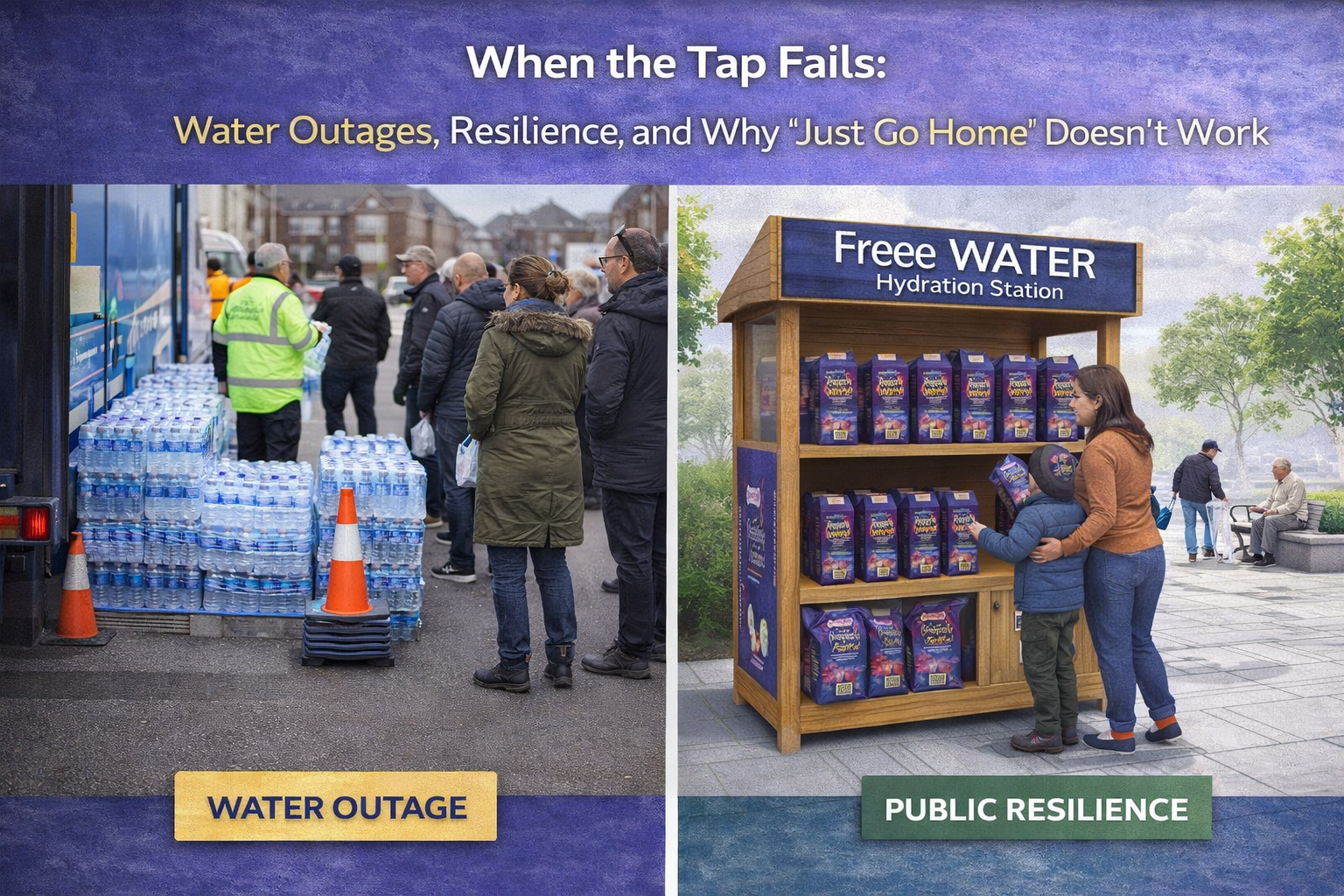
// NO DESCRIPTION DATA
Water outages turn everyday life into logistics
When households lose supply, the issue isn’t only thirst. It’s:
- kids and school mornings
- cooking and basic hygiene
- care work
- people without cars
- elderly residents
Emergency bottled water drop-offs help, but they’re reactive and messy.
The hidden inequality in outage response
If your building has storage, you cope better.
If you can drive, you collect more easily.
If you work flexible hours, you can queue.
Resilience systems often reward the people with the most mobility and time.
Why public hydration can be part of resilience planning
Freee Water is not an emergency service. But the logic overlaps with resilience planning:
- distributed access points
- simple “grab and go” behaviour
- predictable locations
- clear visibility and signage
A network of hydration nodes becomes useful not only in normal weeks, but during disruption weeks too.
A model councils can actually integrate
Councils already plan for:
- heat response
- public events
- emergency comms
- public facilities management
Hydration nodes can be treated as part of public realm infrastructure, not a charity stunt.
Why this matters before you’ve even launched sponsors
This is a credibility angle: Freee Water is not “free stuff”, it’s a practical resilience layer that can be piloted, mapped, and improved.
It’s easier to sell to serious partners when it’s framed as public infrastructure logic.
The real takeaway
The UK built its hydration system on the assumption that taps never fail. Reality disagrees.
Distributed hydration access is a resilience upgrade, not a luxury.