Why Brands Need Visible Green Action, Not Another Sustainability Statement
// NO DESCRIPTION DATA
Sustainability pages are not enough anymore
Most companies already have a sustainability page.
They talk about responsibility.
They talk about values.
They talk about future commitments.
They talk about reducing impact.
That is fine.
But the problem is simple: people do not experience a sustainability page in real life.
They experience what a company actually does.
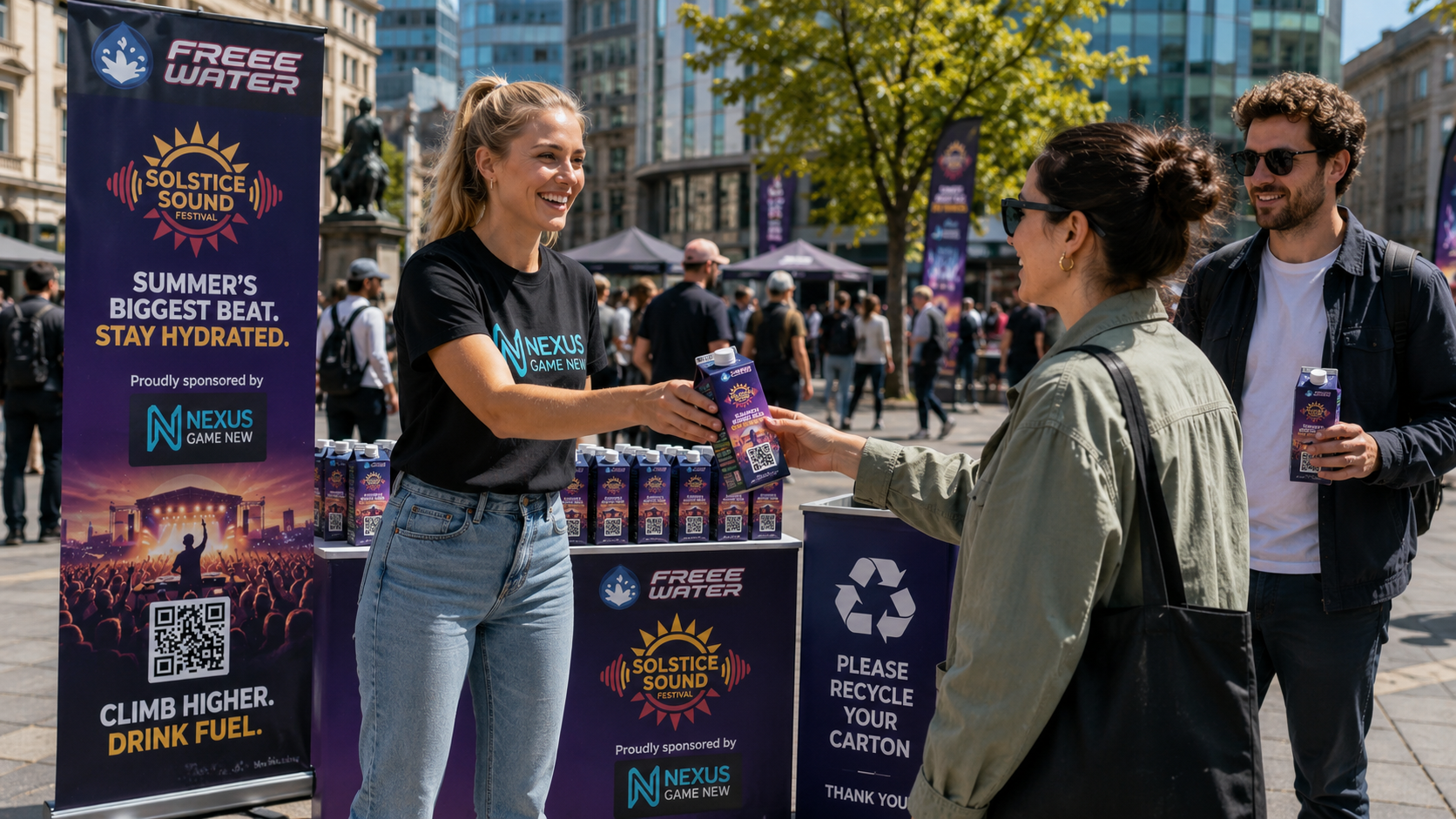
Freee Water gives brands a way to move from quiet claims to visible action. A sponsor funds free drinking water, the cartons are distributed in useful daytime locations, and the brand becomes part of a public benefit people can actually see.
That is much stronger than another paragraph hiding in a footer.
Green action needs to be specific
The weakest sustainability messaging is vague.
“We care about communities.”
“We support the environment.”
“We are building a better future.”
Lovely. Also empty if there is no proof.
A Freee Water campaign gives brands something specific to talk about:
They funded free drinking water.
They supported a useful public product.
They backed recyclable carton packaging.
They helped place hydration where people could use it.
They created a visible, local campaign with practical value.
Specific beats vague every time.
People trust what they can see
When a campaign happens in public, it becomes easier to believe.
People see the cartons.
They see the sponsor.
They see the distribution.
They see others accepting the water.
They understand the exchange quickly.
That visibility matters.
A brand does not need to over-explain the value when the value is already in someone’s hand.
That is the power of useful media. It does not demand trust first. It earns attention through the product.
Brands need greener campaigns that still perform
Some green campaigns are treated like reputation insurance.
They look nice. They make the board feel better. Then they vanish.
That is weak.
Freee Water gives sponsors a greener campaign format that still works commercially.
The sponsor gets:
Brand visibility
Physical product-in-hand exposure
Local presence
QR or campaign message placement
Content opportunities
Positive public association
Post-campaign reporting
The public gets free water.
That is a cleaner exchange than shouting about values while handing out plastic-heavy junk nobody asked for.
The packaging story matters
Freee Water’s carton format gives sponsors a better packaging conversation than standard plastic bottle giveaways.
It is not about pretending packaging has no footprint. That would be nonsense wearing a green hat.
It is about choosing a format designed with recycling in mind and building the campaign around responsible distribution.
For brands, that matters because the public is more aware of packaging waste than ever.
The campaign needs to look clean, feel clean, and be delivered properly.
Sustainability should not feel like a lecture
Nobody wants to receive water and then be trapped in a sermon about the planet.
The best green campaigns are simple.
Give people something useful.
Make disposal clear.
Use responsible packaging.
Keep the message grounded.
Show the sponsor’s role without overclaiming.
That is how brands build trust without sounding like a corporate training video escaped into public space.
Brands need visible green action because the public is tired of vague claims.
Freee Water gives sponsors a practical way to show responsibility in the real world. The campaign is useful, visible, measurable, and easier to believe because people can experience it directly.
A sustainability statement says something.
A Freee Water campaign does something.
That is the difference.