
Why Co-Branded Free Water Campaigns Work For Venues, Retailers And Sponsors
// NO DESCRIPTION DATA
The best partnerships give everyone a role
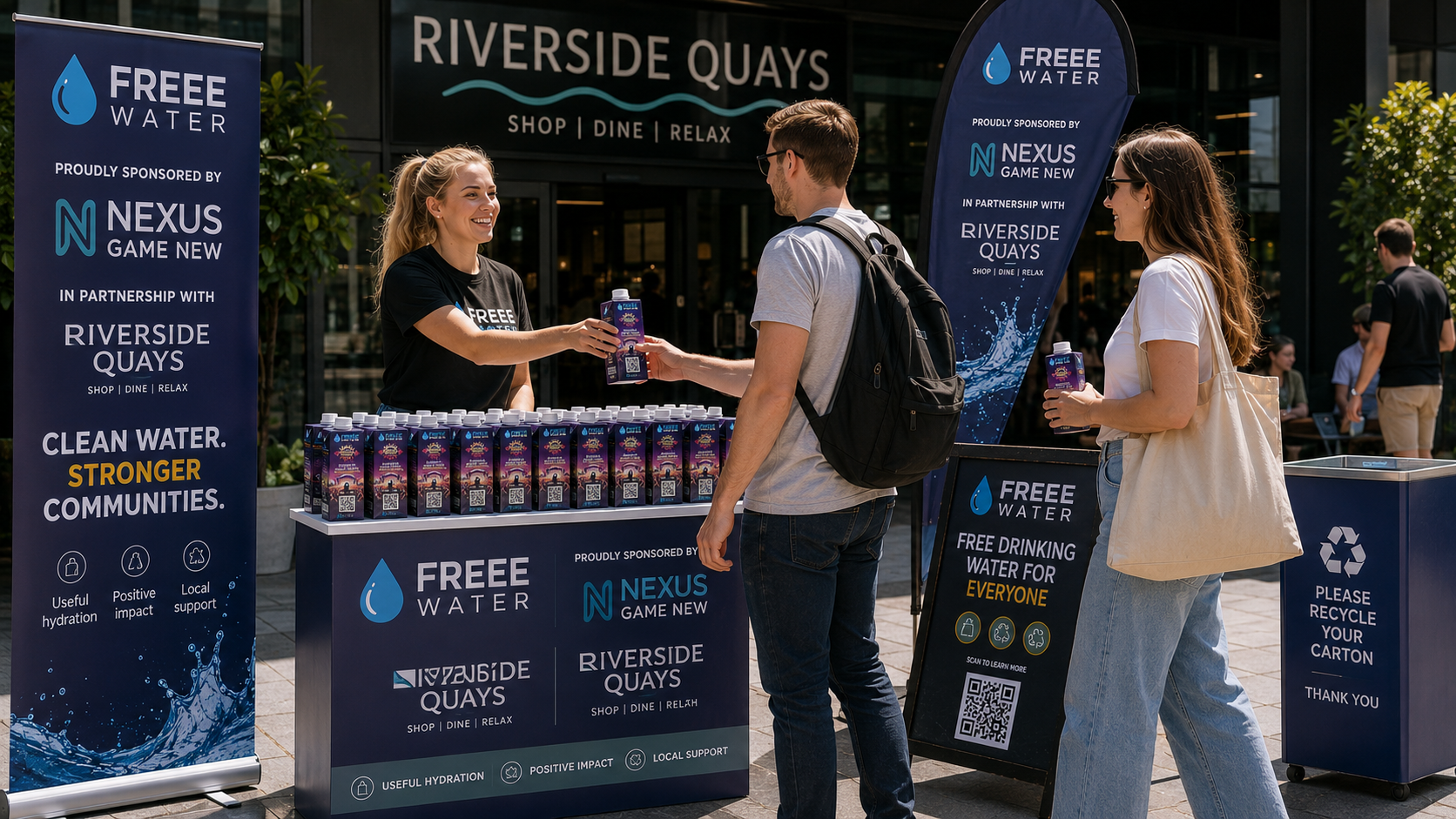
A good co-branded campaign should not feel like logos fighting for oxygen.
It should be clear who is doing what and why it matters.
Freee Water creates a simple partnership structure:
The sponsor funds the cartons.
The venue or retailer provides the relevant setting.
Freee Water manages the product and distribution model.
The public receives free drinking water.
Everyone has a role.
That makes the campaign easier to explain and easier to sell.
Venues want better visitor experience
Venues are always looking for ways to improve the visitor experience without adding operational chaos.
Free water can help.
At the right daytime placement, it supports people during queues, arrivals, open days, public events, shopping trips, and busy footfall periods.
For the venue, it is a practical guest benefit.
For the sponsor, it is brand visibility attached to a useful moment.
For the public, it is simple: they get water for free.
That is what a partnership should do. Not just decorate a wall with another logo and call it innovation.
Retailers can use it to support footfall
Retailers and shopping areas need reasons for people to stay, move, browse, and feel good about the environment.
A co-branded Freee Water campaign can support that.
It can sit near:
Store openings
Shopping centre entrances
High street campaigns
Retail parks
Market days
Seasonal promotions
Product launches
Customer appreciation events
The water creates a useful touchpoint.
The sponsor message creates brand value.
The location creates commercial context.
Sponsors get borrowed relevance
One of the biggest advantages of co-branding is relevance.
A sponsor can connect with a venue, retailer, event, or local partner that already has audience trust.
That makes the campaign feel more natural.
For example:
A fitness sponsor at a sports event.
A retailer at a high street activation.
A university partner at an open day.
A property brand near a development launch.
A food brand at a daytime market.
The right partner makes the sponsor message feel less random.
That is important.
Random sponsorship feels like noise. Relevant sponsorship feels like it belongs.
Co-branding gives both sides content
A co-branded Freee Water campaign creates shared content.
The sponsor can talk about funding useful public hydration.
The venue can talk about improving the visitor experience.
The retailer can talk about supporting customers.
Freee Water can show the campaign model in action.
That gives everyone something credible to post, report, and reuse.
The campaign becomes more than a one-day activation.
It becomes proof of partnership.
The carton can carry a simple shared message
Co-branded cartons work best when the message stays clean.
Do not overload the carton with five logos, three slogans, a QR code farm, and a paragraph written by someone trapped in a brand workshop.
Keep it sharp.
A good message could show:
Sponsor identity
Host or partner identity
Simple campaign line
QR code or landing page
Recycling prompt
Clear Freee Water branding
The point is to make the partnership understandable at a glance.
Co-branded Freee Water campaigns work because they create value for everyone involved.
Venues improve the public experience.
Retailers support footfall and goodwill.
Sponsors get positive brand visibility.
The public receives free drinking water.
That is a clean partnership model.
No forced gimmick.
No awkward campaign theatre.
Just a useful product, placed well, funded by brands that want to show up better.
UK Regulatory & Legal Framework for Public Water Access
Public hydration access across the United Kingdom operates within a fragmented statutory environment. Under The Licensing Act 2003 (Mandatory Licensing Conditions) Order 2014, licensed on-trade premises such as pubs, bars, and restaurants are legally required to provide free potable tap water to customers where reasonably available. However, because this legal mandate applies exclusively to paying or recognized patrons, it inadvertently establishes an exclusionary “pay-to-function” commercial barrier for the broader public navigating high streets, public transport corridors, and town centres.
According to nationwide behavioral data published by Refill UK and the City to Sea campaign, over 71% of UK consumers feel acute psychological stigma and social hesitation when requesting free tap water in commercial venues without making a purchase. Furthermore, under the Water Industry Act 1991 (Sections 181 and 182) and guidance from the Drinking Water Inspectorate (DWI), municipal local authorities bear no statutory duty to install or maintain public outdoor drinking fountains. Faced with severe budgetary deficits, local councils frequently decommission municipal water fountains due to winter freezing liabilities, pipework deterioration, legionella testing requirements, and anti-social behavior risks.
Hydration Channel & Economic Footfall Comparison
To examine why conventional public infrastructure struggles to provide reliable, stigma-free hydration across UK urban centres, we compare the primary access channels across physical accessibility, consumer friction, and municipal maintenance:
| Hydration Channel | Accessibility / Cost | Stigma Level | Maintenance Burden |
|---|---|---|---|
| Commercial Venues (Cafes/Pubs) | “Pay-to-function” barrier (£2.50–£4.50 purchase barrier) | High (71% social hesitation) | Low (Customer-funded hospitality staff) |
| Municipal Fountains | Free, but high freeze, lead-pipe & vandalism risk | Low | High Council Maintenance & Winter Shutdowns |
| FreeeWater Faith / Community Mesh | 100% Free, Heated, Staffed & Welcoming | Zero Stigma (Open-Door Civic Hospitality) | Community-Partnered & Sponsor-Funded |
Civic Infrastructure Topology & Community Mesh Flow
The FreeeWater community mesh leverages existing civic architecture, faith institutions, municipal libraries, and community hubs to distribute free hydration with zero taxpayer expenditure. By situating sustainable paper-carton dispensers directly inside community warm spaces, the network solves both physical access constraints and social stigma.
[ Local Resident / Passerby ] ──► [ Faith / Community Hub ] ──► [ FreeeWater Dispenser ]
                                         │                              │
                                         ▼                              ▼
                              [ Warm Space & Dignity ]      [ Zero Plastic Waste ]
Operational Lifecycle & Verified Environmental Impact
Civic hydration initiatives often falter during operational scaling due to plumbing maintenance overheads and regulatory water safety compliance. When traditional outdoor fountains freeze or become contaminated, local councils face months of procurement delays. The FreeeWater ecosystem bypasses centralized utility gridlocks by supplying pre-packaged, hermetically sealed paperboard cartons directly to verified distribution hubs.
Every FreeeWater unit is packaged in FSC-certified paperboard laminated with a thin plant-based barrier, generating 64% fewer greenhouse gas emissions across its lifecycle than standard virgin PET bottles. Ethical brand partners sponsor the outer packaging canvas, turning essential public utility into a high-recall communication channel. In turn, 10p from every distributed carton is transferred directly to the Feed and Flow Foundation to build permanent clean water infrastructure globally.
Oliver Green
Verified AuthorLead Technical Writer & Civic Hydration Specialist • FreeeWater Impact Research
Lead technical writer and community infrastructure analyst at FreeeWater. Researching civic hydration accessibility, UK water regulatory policy, circular packaging lifecycle analysis, and community-driven utility models.
Explore Related Hydration Dispatches
Continue reading connected technical guides and community case studies.
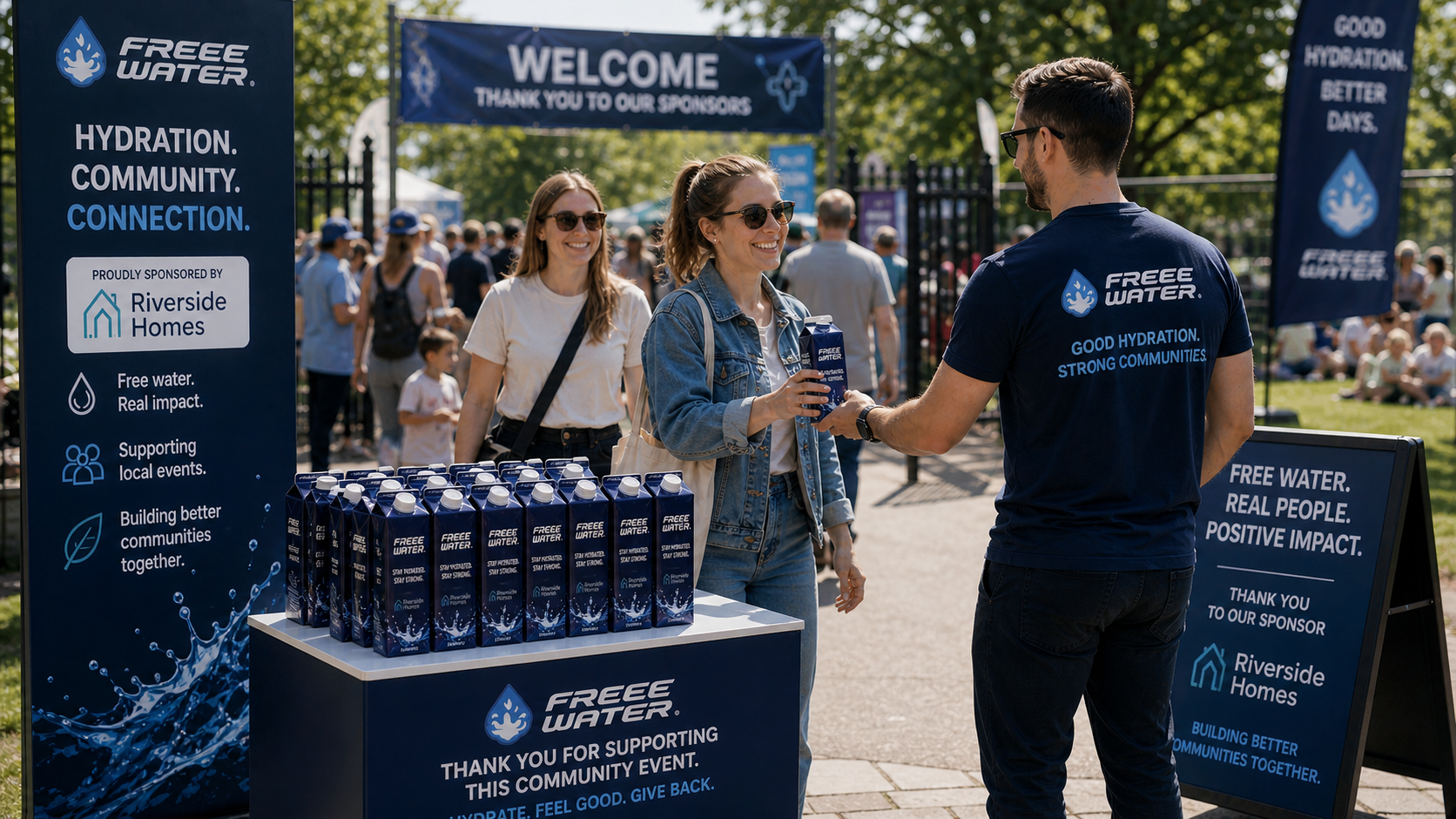
How Freee Water Helps Brands Look Good Without Looking Desperate
People can smell desperate marketing Some campaigns try too hard. The oversized banners. The aggressive QR cod...
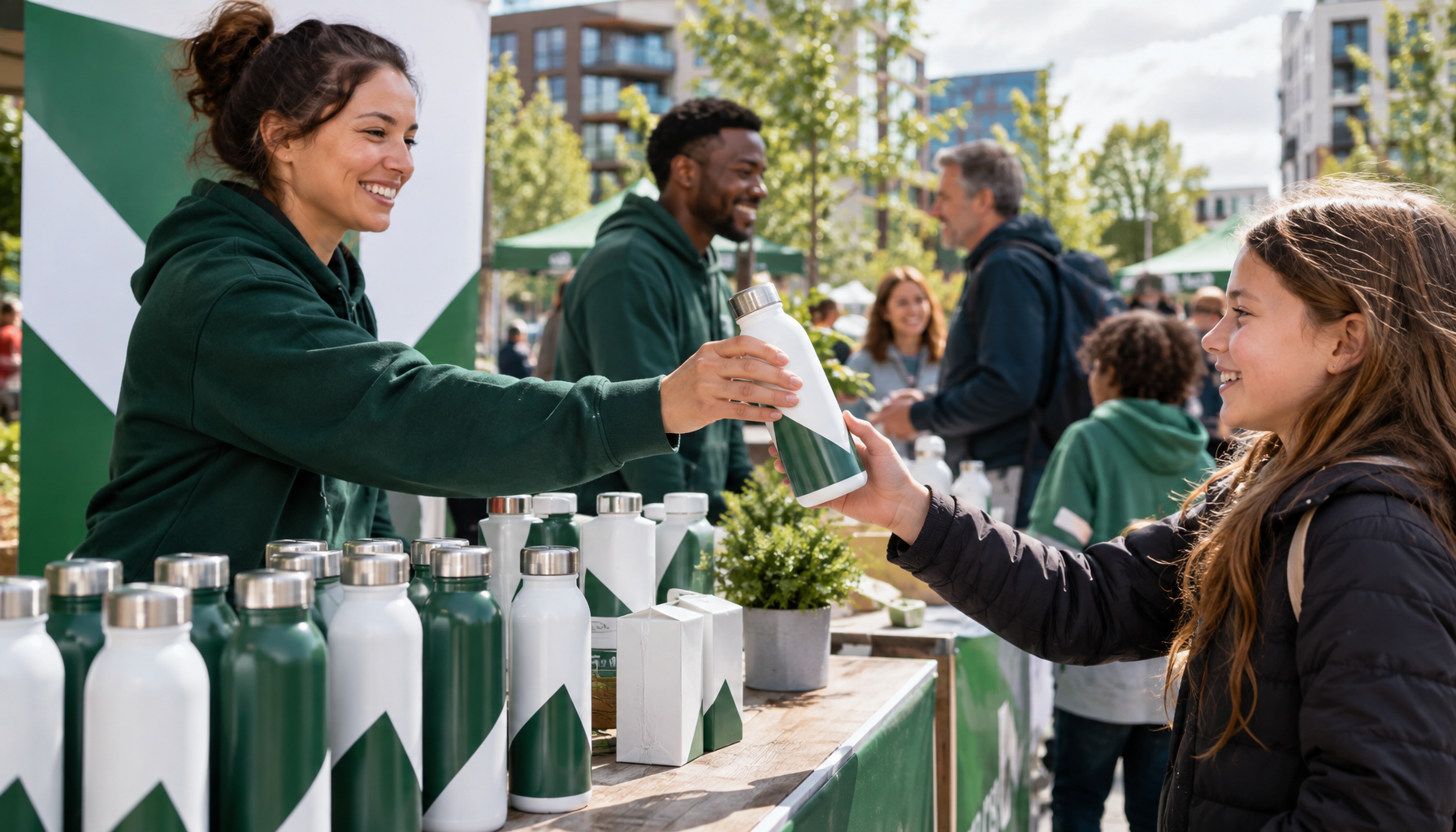
How Freee Water's Strategic Partnerships Can Enhance ESG Sponsorship Metrics in Local Communities.
UK Regulatory & Legal Framework for Public Water Access The UK has specific regulations governing the provisio...
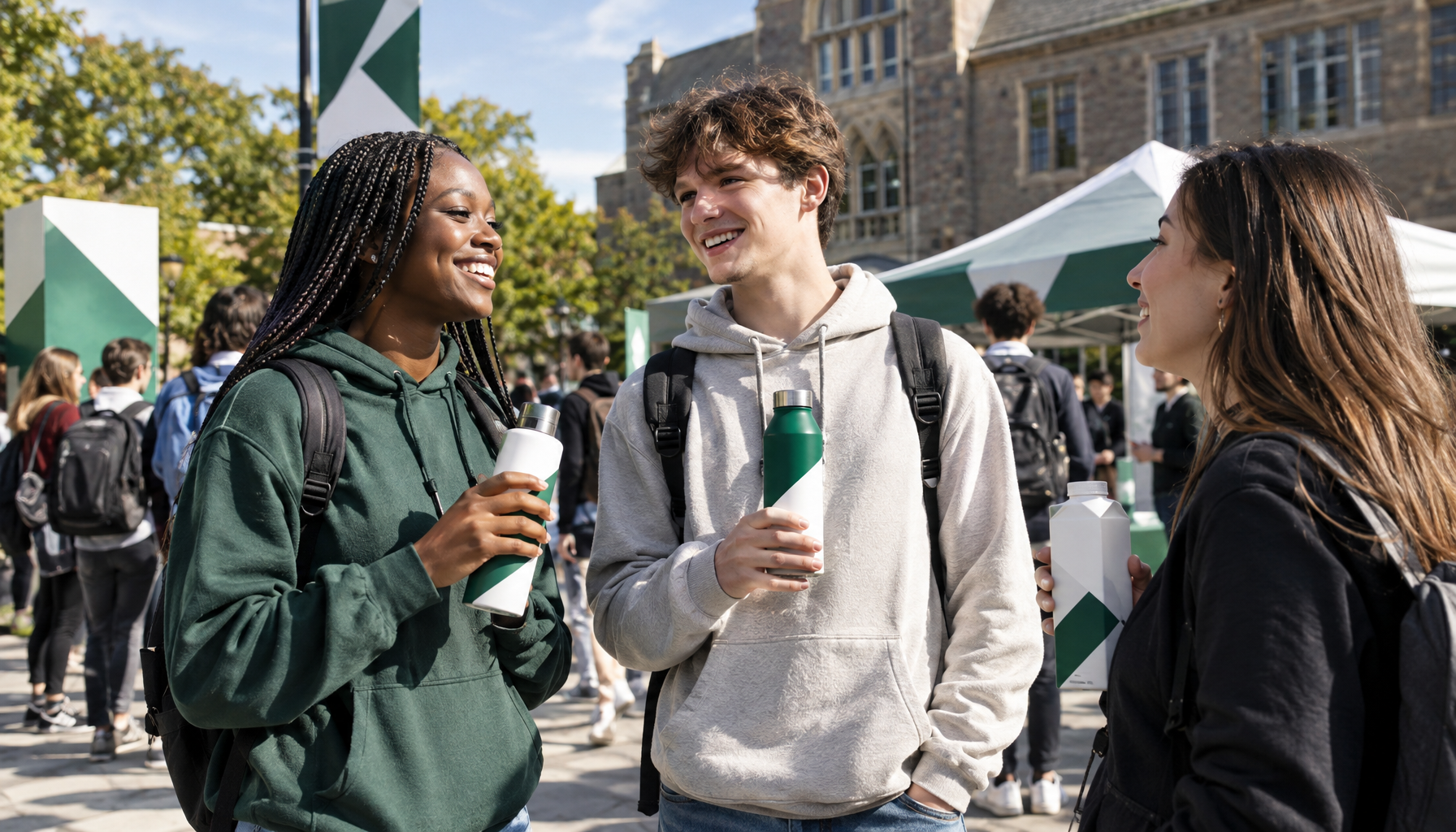
How Freee Water Can Improve Campus Open Days by Addressing Student Hydration Needs and Enhancing Brand Visibility.
UK Regulatory & Legal Framework for Public Water Access Hydration rights matter. In the UK, providing access t...