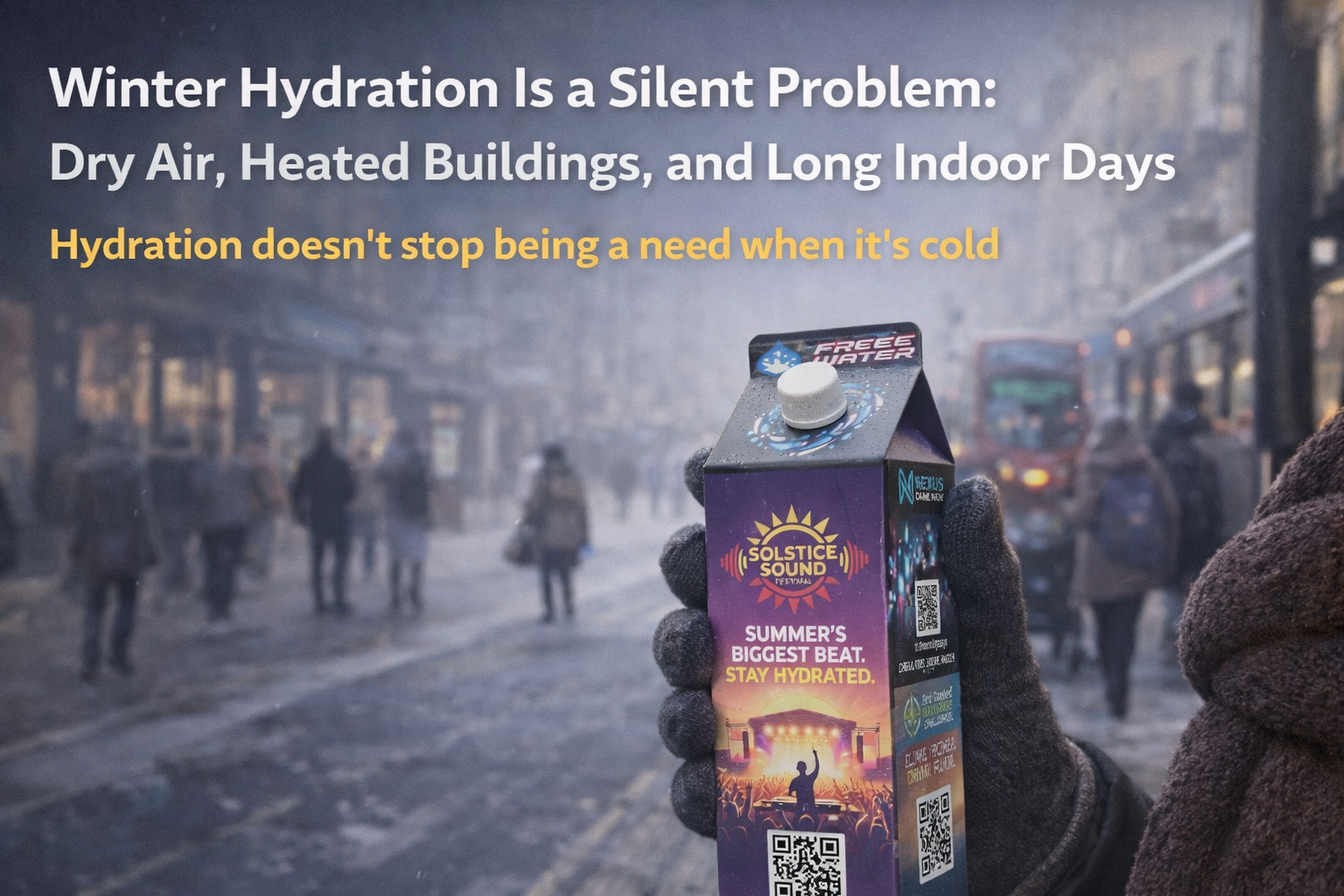
Winter Hydration Is a Silent Problem: Dry Air, Heated Buildings, and Long Indoor Days
// NO DESCRIPTION DATA
Hydration doesn’t stop being a need when it’s cold
Most hydration content is summer-coded: heatwaves, parks, festivals.
Winter is different, but the need doesn’t disappear.
In winter, people spend longer indoors, in heated air, with longer stretches between “natural” water moments.
Winter makes “public space” smaller
In summer, you can sit outside, find a park tap, move slowly.
In winter, people move fast:
- straight from transport to buildings
- straight from workplace to home
- fewer pauses, fewer opportunities, fewer obvious water points
So the “hydration gap” becomes invisible, but it’s still there.
Cost-of-living makes winter worse
Winter is the season of tight budgets:
- higher energy costs
- higher transport costs
- more pressure on household spending
That’s when “£2 for water” becomes the most annoying purchase in the world, because it feels unnecessary. The point is: it is unnecessary, but access is what’s priced.
Why winter is actually a strong argument for free hydration nodes
Free hydration nodes aren’t just emergency heatwave infrastructure.
They’re daily-life infrastructure:
- stations
- libraries
- civic buildings
- shopping corridors
- campuses
Winter is when predictable, reliable systems matter most.
Freee Water’s role in year-round access
A UK-wide free hydration model only works if it’s not seasonal content. It needs to be framed as:
- cost-of-living infrastructure
- public health infrastructure
- waste reduction infrastructure
Winter is the proof that the mission isn’t a summer gimmick.