
Ethical Sponsorship Standards: How Freee Water Can Keep Funding Clean, Local, and Community-Safe
// NO DESCRIPTION DATA
Freee Water
If Freee Water is funded by advertising and sponsorship in the future, it has to answer a serious question early: what money do you accept, and what money do you refuse?
Because public trust can be built slowly and destroyed instantly.
Free water in public space is powerful. That means the standards behind it matter.
Freee Water is building before the sponsorship engine is live. That is an advantage. It allows sponsor rules to be designed upfront rather than negotiated under pressure later.
The risk is obvious: hydration funded by the wrong messages
If a free hydration system becomes a billboard for harmful or misleading messaging, the mission gets compromised.
The public will not separate “free water” from “who paid for it.” They’ll judge the whole system as one.
This is why sponsor standards are not admin. They are infrastructure.
What ethical sponsorship standards could include
A credible sponsor policy can define boundaries such as:
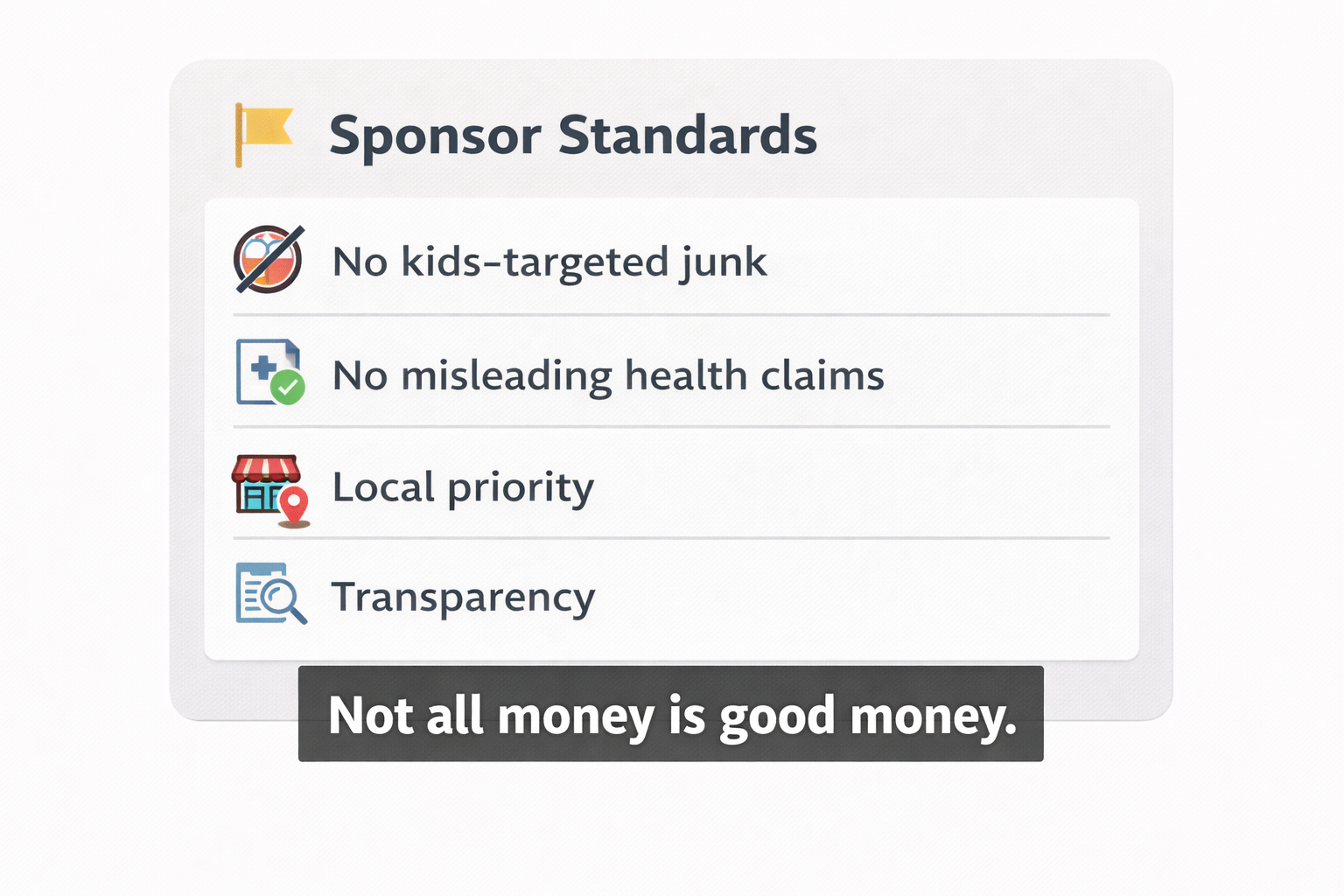
- No targeting kids with high sugar, high caffeine messaging
- No misleading health and wellness claims
- No predatory finance, gambling, or scams
- No political campaigning via hydration nodes
- Clear rules for QR codes and landing pages
- Local business sponsorship options so the system isn’t only national brands
These standards protect trust and keep the system aligned with public wellbeing.
Why local sponsorship matters
If the long-term model only works for big brands, it becomes top-down.
Local sponsorship keeps the system grounded:
- Local gyms, clinics, barbers, cafés, trades
- Community-minded employers
- Local institutions and events
It also makes the system feel like it belongs to the city, not just to marketing departments.
Transparency should be baked in
A basic transparency approach can include:
- Public reporting on where water is deployed
- Simple summaries of sponsorship categories
- Clear explanation of how surplus supports community outcomes
- A complaints channel for sponsor policy breaches
This is how a “brand funded” model stays legitimate, not cynical.
Pilots can test trust before money arrives
Even before sponsorship is active, Freee Water can pilot trust-building behaviours:
- Visible “about this project” signage
- Clear explanations of future funding plans
- A public commitment to sponsor standards
- Feedback collection from residents and partners
Trust is not earned by stating values once. It’s earned by consistent decisions.
The long-term goal
The goal is simple: build a system where funding enables access, and access stays clean.
Money will eventually try to pull the mission off course. A strong sponsor policy is how you keep the steering wheel in the right hands.
Free water can be funded by brands without becoming a brand toy. But only if the rules are set early and enforced.
UK Regulatory & Legal Framework for Public Water Access
Public hydration access across the United Kingdom operates within a fragmented statutory environment. Under The Licensing Act 2003 (Mandatory Licensing Conditions) Order 2014, licensed on-trade premises such as pubs, bars, and restaurants are legally required to provide free potable tap water to customers where reasonably available. However, because this legal mandate applies exclusively to paying or recognized patrons, it inadvertently establishes an exclusionary “pay-to-function” commercial barrier for the broader public navigating high streets, public transport corridors, and town centres.
According to nationwide behavioral data published by Refill UK and the City to Sea campaign, over 71% of UK consumers feel acute psychological stigma and social hesitation when requesting free tap water in commercial venues without making a purchase. Furthermore, under the Water Industry Act 1991 (Sections 181 and 182) and guidance from the Drinking Water Inspectorate (DWI), municipal local authorities bear no statutory duty to install or maintain public outdoor drinking fountains. Faced with severe budgetary deficits, local councils frequently decommission municipal water fountains due to winter freezing liabilities, pipework deterioration, legionella testing requirements, and anti-social behavior risks.
Hydration Channel & Economic Footfall Comparison
To examine why conventional public infrastructure struggles to provide reliable, stigma-free hydration across UK urban centres, we compare the primary access channels across physical accessibility, consumer friction, and municipal maintenance:
| Hydration Channel | Accessibility / Cost | Stigma Level | Maintenance Burden |
|---|---|---|---|
| Commercial Venues (Cafes/Pubs) | “Pay-to-function” barrier (£2.50–£4.50 purchase barrier) | High (71% social hesitation) | Low (Customer-funded hospitality staff) |
| Municipal Fountains | Free, but high freeze, lead-pipe & vandalism risk | Low | High Council Maintenance & Winter Shutdowns |
| FreeeWater Faith / Community Mesh | 100% Free, Heated, Staffed & Welcoming | Zero Stigma (Open-Door Civic Hospitality) | Community-Partnered & Sponsor-Funded |
Civic Infrastructure Topology & Community Mesh Flow
The FreeeWater community mesh leverages existing civic architecture, faith institutions, municipal libraries, and community hubs to distribute free hydration with zero taxpayer expenditure. By situating sustainable paper-carton dispensers directly inside community warm spaces, the network solves both physical access constraints and social stigma.
[ Local Resident / Passerby ] ──► [ Faith / Community Hub ] ──► [ FreeeWater Dispenser ]
                                         │                              │
                                         ▼                              ▼
                              [ Warm Space & Dignity ]      [ Zero Plastic Waste ]
Operational Lifecycle & Verified Environmental Impact
Civic hydration initiatives often falter during operational scaling due to plumbing maintenance overheads and regulatory water safety compliance. When traditional outdoor fountains freeze or become contaminated, local councils face months of procurement delays. The FreeeWater ecosystem bypasses centralized utility gridlocks by supplying pre-packaged, hermetically sealed paperboard cartons directly to verified distribution hubs.
Every FreeeWater unit is packaged in FSC-certified paperboard laminated with a thin plant-based barrier, generating 64% fewer greenhouse gas emissions across its lifecycle than standard virgin PET bottles. Ethical brand partners sponsor the outer packaging canvas, turning essential public utility into a high-recall communication channel. In turn, 10p from every distributed carton is transferred directly to the Feed and Flow Foundation to build permanent clean water infrastructure globally.
Community Implementation & Public Health Metrics
Public health researchers consistently emphasize that accessible urban hydration reduces reliance on sugary single-use beverages while alleviating heat-stress vulnerability during summer peaks. By establishing FreeeWater touchpoints across civic hubs, transit terminals, university campuses, and voluntary spaces, communities unlock measurable health improvements without capital expenditure.
Local stakeholders who host hydration stations report increased community dwell time, enhanced social cohesion in warm spaces, and direct alignment with municipal ESG zero-waste targets. As UK cities transition toward circular economy benchmarks, decentralized civic hydration provides a practical, scalable blueprint for sustainable urban wellbeing.
Oliver Green
Verified AuthorLead Technical Writer & Civic Hydration Specialist • FreeeWater Impact Research
Lead technical writer and community infrastructure analyst at FreeeWater. Researching civic hydration accessibility, UK water regulatory policy, circular packaging lifecycle analysis, and community-driven utility models.
Explore Related Hydration Dispatches
Continue reading connected technical guides and community case studies.

How Freee Water Can Address Urban Water Deserts While Boosting Brand Visibility.
Understanding Urban Water Deserts Urban water deserts are pockets within cities where access to clean drinking...
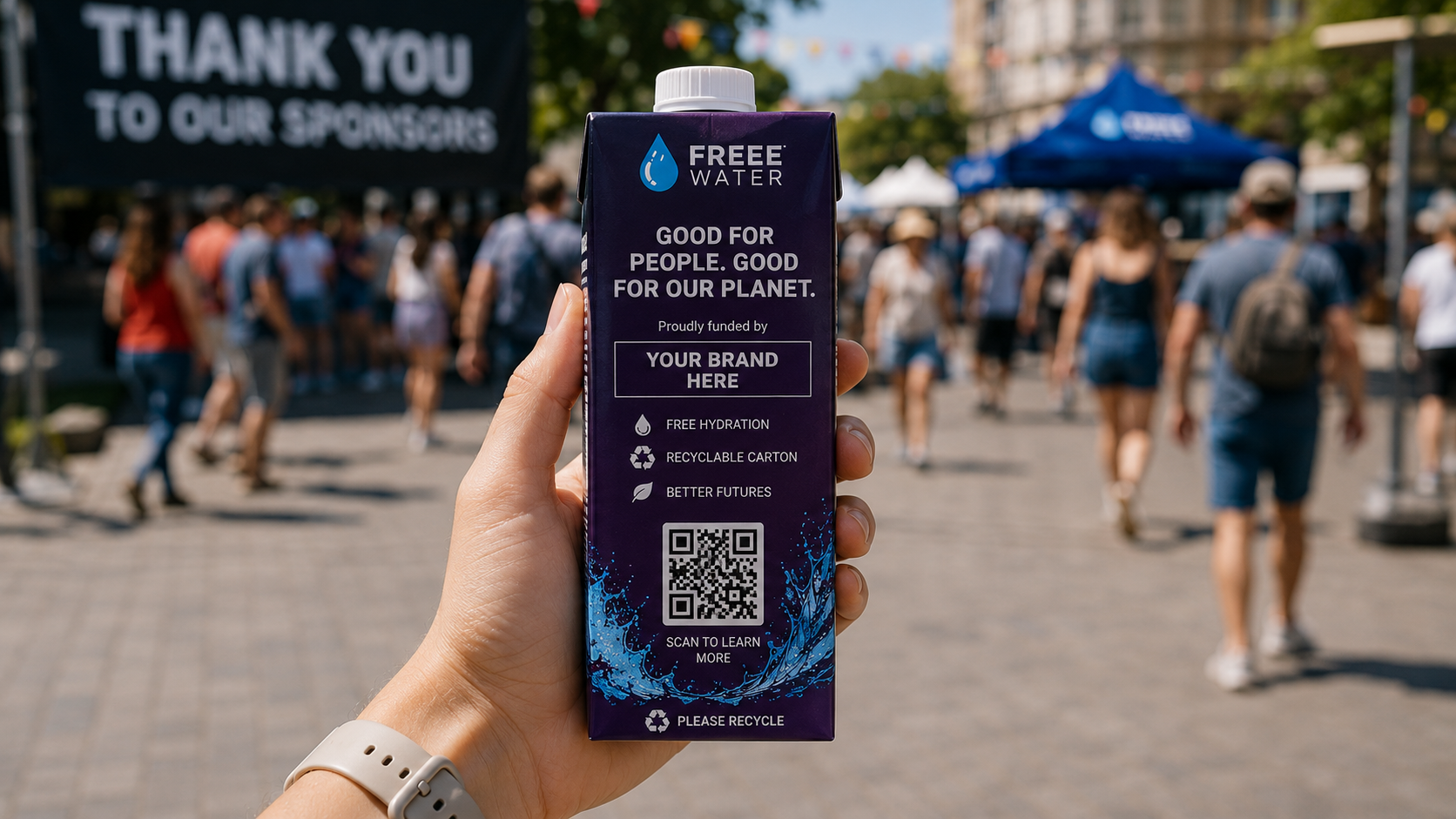
How Freee Water Turns Responsible Marketing Into Something People Can Hold
Responsible marketing needs a physical form A lot of responsible marketing lives in language. Values. Statemen...
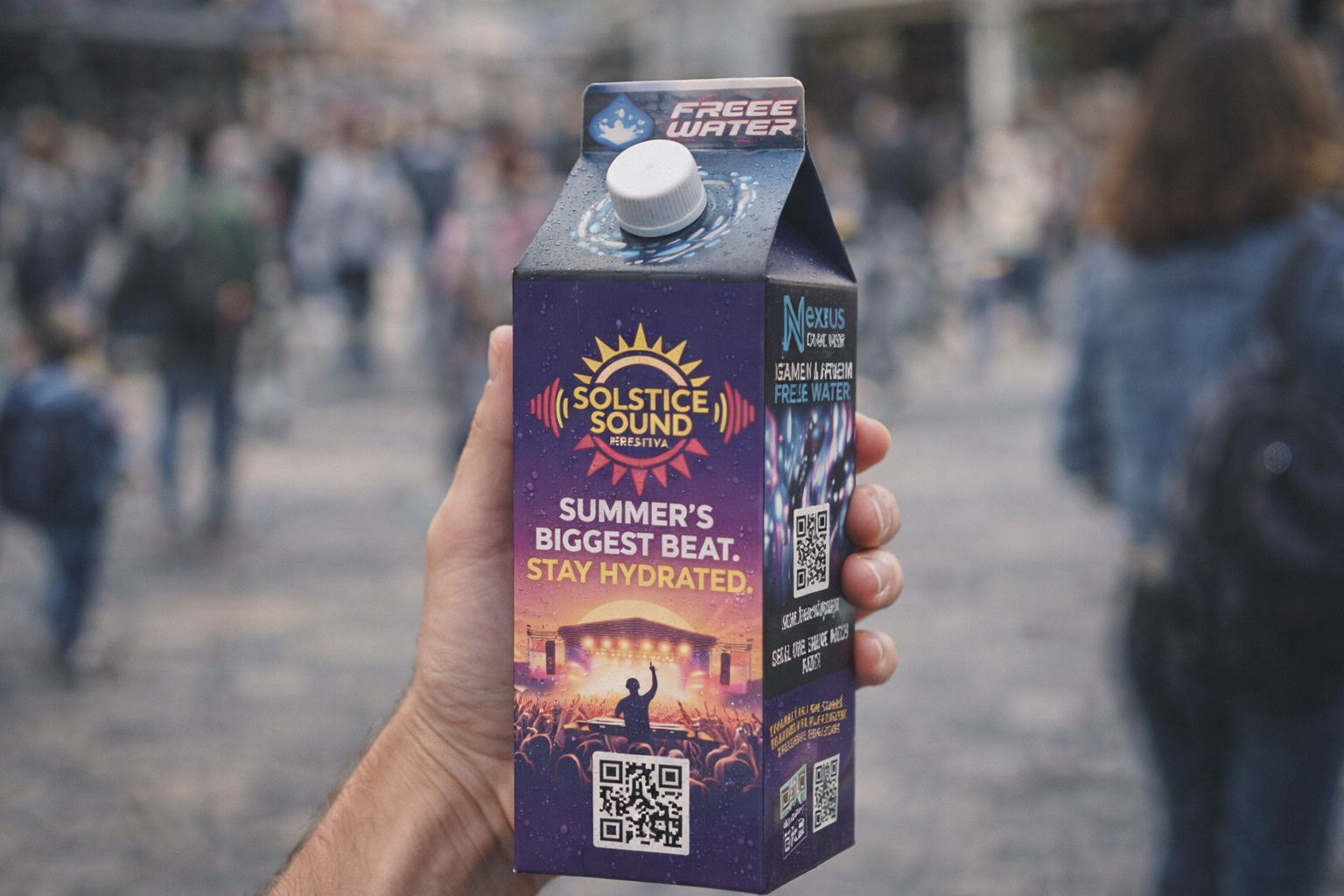
The Only Ad People Don’t Hate: Why Carton Sponsorship Gets Real Brand Love
Advertising Most advertising is tolerated at best. People scroll past it, ignore it, block it, complain about ...