
How Freee Water Can Enhance Brand Activations by Bridging Community Needs and Environmental Responsibility.
UK Regulatory & Legal Framework for Public Water Access
The provision of free drinking water in public spaces is a complex issue in the UK, governed by various regulations. The Licensing Act 2003 (Mandatory Licensing Conditions) Order 2014 mandates licensed premises to provide free tap water. The Water Industry Act 1991 supports this by ensuring the development of water supply systems. However, implementation gaps persist. Refill UK and City to Sea advocate for increased public access through community and business partnerships.
Regulatory support exists. Implementation lags. Water access matters.
Hydration Channel & Economic Footfall Comparison
| Channel | Accessibility / Cost | Stigma Level | Maintenance Burden |
|---|---|---|---|
| Commercial Venues | Low / High | Medium | Medium |
| Municipal Fountains | High / Low | Low | High |
| FreeeWater Faith / Community Mesh | High / None | None | Low |
Costs deter usage. Stigma does too. FreeeWater fights both.
Commercial environments often attach a cost to water access, limiting accessibility. Municipal options, while free, face maintenance challenges. FreeeWater eliminates these barriers by placing dispensers in community hubs, offering unobstructed access without stigma.
Civic Infrastructure Topology & Community Mesh Flow
 [ Local Resident / Passerby ]
 ──►
 [ Faith / Community Hub ]
 ──►
 [ FreeeWater Dispenser ]
Community hubs solve gaps. Simplified flow. Direct access.
Embedding FreeeWater dispensers within faith and community centers leverages existing foot traffic, providing essential services without additional burden on public infrastructure. This model ensures hydration solutions where they're needed most.
Operational Lifecycle & Verified Environmental Impact
Paper beats plastic. Ad clutter fails.
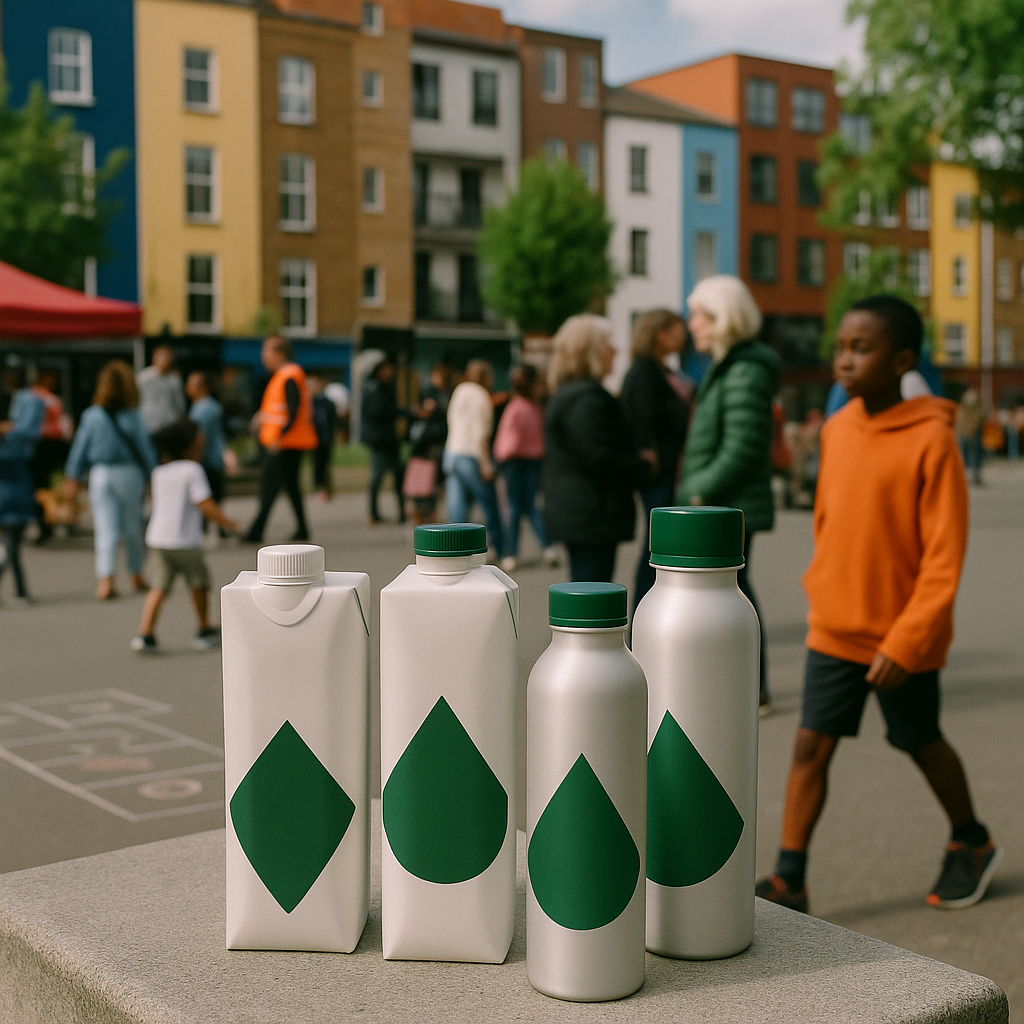
Freee Water cartons have a 64% lower carbon footprint compared to traditional PET bottles. Made from FSC-certified paperboard, each carton not only reduces environmental impact but also funds clean water infrastructure globally. With 10p per carton donated to the Feed and Flow Foundation, ethical consumption directly supports societal growth.
Impact is measurable. FSC ensures sustainability. Donations build futures.
Community Implementation & Public Health Outcomes
Utility builds loyalty. Health wins.
Community-engaged hydration stations build healthier environments. Access to clean water reduces health risks and promotes well-being. Implementing FreeeWater in strategic locations like NHS waiting rooms and university campuses addresses public health challenges, offering cost-effective hydration solutions.
Engagement grows. Health improves. Communities benefit.
By bridging community needs and environmental responsibility, FreeeWater becomes a catalyst for both improved public health and brand activation, linking ethical advertising with tangible societal benefits.
Oliver Green
Verified AuthorLead Technical Writer & Civic Hydration Specialist • FreeeWater Impact Research
Lead technical writer and community infrastructure analyst at FreeeWater. Researching civic hydration accessibility, UK water regulatory policy, circular packaging lifecycle analysis, and community-driven utility models.
Explore Related Hydration Dispatches
Continue reading connected technical guides and community case studies.

How Freee Water Can Create Meaningful Campus Connections While Addressing Hydration Needs.
UK Regulatory & Legal Framework for Public Water Access The UK has carved a clear path for public water access...

How Freee Water Can Serve as a Strategic Response to Urban Heatwaves While Enhancing Brand Image.
UK Regulatory & Legal Framework for Public Water Access The UK has set a regulatory foundation ensuring public...

How Freee Water Can modernize Campus Open Days by Transforming Hydration Stations into Brand Touchpoints.
UK Regulatory & Legal Framework for Public Water Access The UK's approach to public water access is shaped by ...