
Councils, Transport And Free Hydration: How Freee Water Can Support Public Space
// NO DESCRIPTION DATA
Local councils
Local councils and transport operators are expected to do everything at once.
Keep streets clean. Support public health. Cut emissions. Prepare for hotter summers. Manage budgets that rarely stretch as far as the headlines demand.
Freee Water CIC is designed to sit inside that pressure, not add to it.
By using brand funded eco cartons and reusable bottles, Freee Water can create free hydration points in public spaces without asking councils for large new spending lines. Instead, it offers a partnership that supports their existing goals.
Why water belongs in the public realm
When heatwaves hit, government and local authorities tell people to:
- Stay hydrated
- Look after older neighbours
- Avoid unnecessary travel
In practice, people still commute, work shifts and move around cities. If hydration on the go stays tied to shop shelves and vending machines, those heatwave messages become aspirational rather than realistic.
Free drinking water in public space helps councils:
- Reduce the health impact of heat extremes
- Support vulnerable residents who do not have strong safety nets
- Show that adaptation is not only an individual responsibility
Freee Water’s approach treats water as part of the street environment, similar to benches, bins and shade. The difference is that brands, not local taxes, cover the unit cost.
Transport hubs as hydration anchors
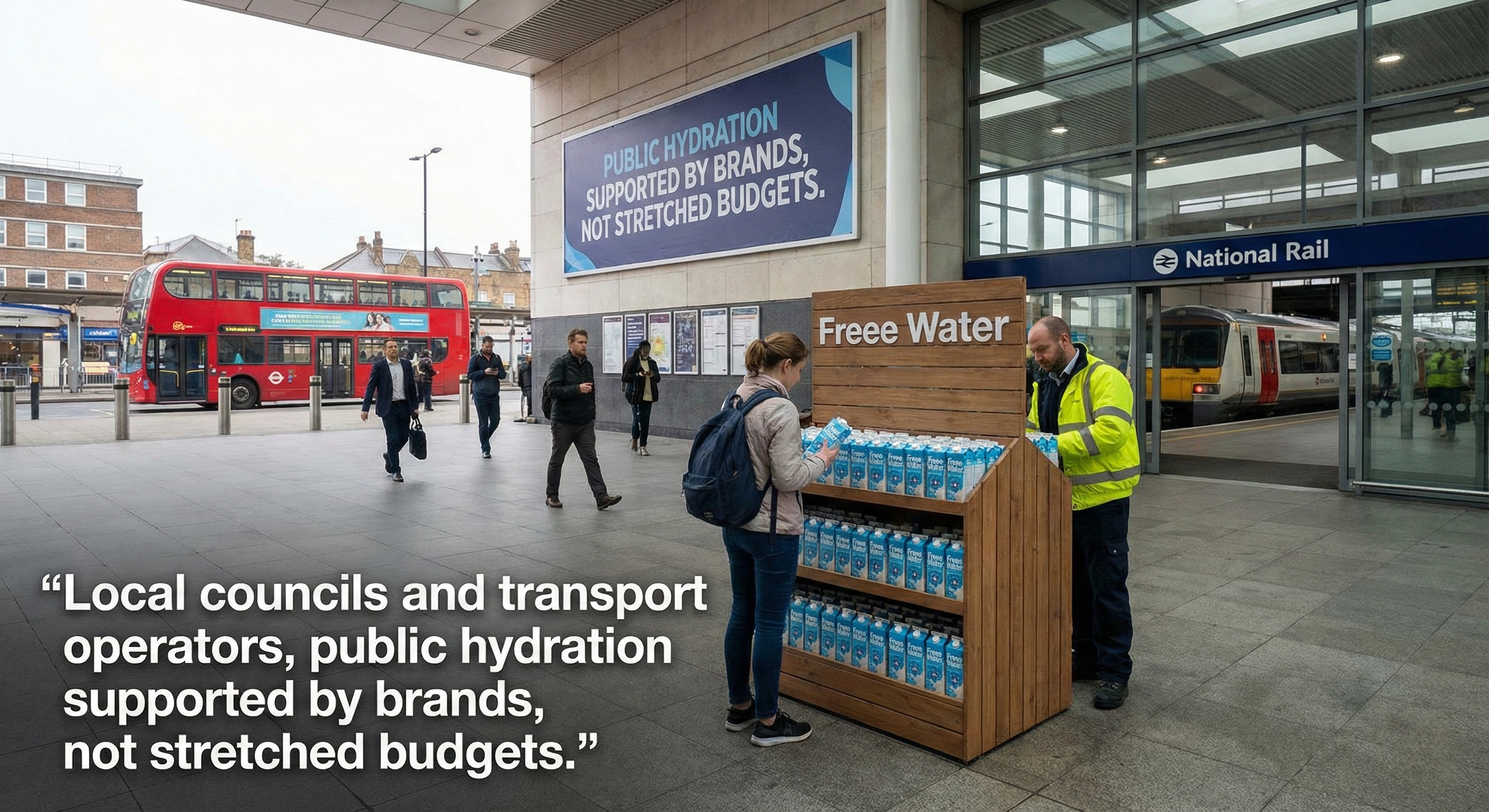
Train and bus stations, tram stops and major interchanges are natural points for hydration.
They combine:
- High, predictable footfall
- Long dwell times during delays and connections
- A mix of regular commuters, visitors and tourists
Freee Water stands at these hubs can:
- Provide free water to people who are already in motion
- Reduce reliance on expensive bottles from station retailers
- Support operator commitments to passenger welfare and sustainability
Because the cartons and bottles are brand funded, transport partners do not have to run a new drinks business. They can host or licence space for Freee Water in the same way they host other amenities.
Litter, plastic and cleaner streets
Single use plastic bottles are a visible part of street litter. Even where recycling points exist, many bottles do not make it that far.
Freee Water’s use of:
- Cartons with high paper content
- Reuse models built around durable bottles
- Concentrated stands rather than scattered sales
means less scattered plastic in the local environment per litre of water consumed.
For councils, this supports:
- Litter reduction strategies
- Cleaner parks and high streets
- Visible progress on climate and waste commitments
It also makes it easier to talk honestly about plastic. Instead of telling residents that recycling will fix everything, Freee Water’s model reduces the need for plastic in the first place.
Costs, control and community benefit
Freee Water CIC is structured as a Community Interest Company. That means it is legally required to operate for community benefit, not to extract unlimited profit.
For councils and public bodies, this matters.
Partnership with Freee Water can be built around:
- Clear location criteria
- Sensible standards for design, safety and maintenance
- Transparent reporting on how much water is distributed in each area
- Agreed shares of surplus donations to local food projects through Feed & Flow Foundation
This keeps control of public space where it belongs, while allowing a new, brand funded service to operate inside it.
A practical starting point, not a grand promise
The aim is not to put Freee Water on every corner from day one.
The focus is on:
- Pilot locations in high need, high movement areas
- Learning what works in real use, not just on paper
- Scaling where demand, logistics and community benefit line up
For councils and transport operators, this is an opportunity to test a new approach to hydration without committing to infrastructure they have to fund and run alone.
Public space will never be free from commercial activity. The question is what people get back in return.
Freee Water offers one clear answer: cleaner, visible, free hydration where it is needed most.
UK Regulatory & Legal Framework for Public Water Access
Public hydration access across the United Kingdom operates within a fragmented statutory environment. Under The Licensing Act 2003 (Mandatory Licensing Conditions) Order 2014, licensed on-trade premises such as pubs, bars, and restaurants are legally required to provide free potable tap water to customers where reasonably available. However, because this legal mandate applies exclusively to paying or recognized patrons, it inadvertently establishes an exclusionary “pay-to-function” commercial barrier for the broader public navigating high streets, public transport corridors, and town centres.
According to nationwide behavioral data published by Refill UK and the City to Sea campaign, over 71% of UK consumers feel acute psychological stigma and social hesitation when requesting free tap water in commercial venues without making a purchase. Furthermore, under the Water Industry Act 1991 (Sections 181 and 182) and guidance from the Drinking Water Inspectorate (DWI), municipal local authorities bear no statutory duty to install or maintain public outdoor drinking fountains. Faced with severe budgetary deficits, local councils frequently decommission municipal water fountains due to winter freezing liabilities, pipework deterioration, legionella testing requirements, and anti-social behavior risks.
Hydration Channel & Economic Footfall Comparison
To examine why conventional public infrastructure struggles to provide reliable, stigma-free hydration across UK urban centres, we compare the primary access channels across physical accessibility, consumer friction, and municipal maintenance:
| Hydration Channel | Accessibility / Cost | Stigma Level | Maintenance Burden |
|---|---|---|---|
| Commercial Venues (Cafes/Pubs) | “Pay-to-function” barrier (£2.50–£4.50 purchase barrier) | High (71% social hesitation) | Low (Customer-funded hospitality staff) |
| Municipal Fountains | Free, but high freeze, lead-pipe & vandalism risk | Low | High Council Maintenance & Winter Shutdowns |
| FreeeWater Faith / Community Mesh | 100% Free, Heated, Staffed & Welcoming | Zero Stigma (Open-Door Civic Hospitality) | Community-Partnered & Sponsor-Funded |
Civic Infrastructure Topology & Community Mesh Flow
The FreeeWater community mesh leverages existing civic architecture, faith institutions, municipal libraries, and community hubs to distribute free hydration with zero taxpayer expenditure. By situating sustainable paper-carton dispensers directly inside community warm spaces, the network solves both physical access constraints and social stigma.
[ Local Resident / Passerby ] ──► [ Faith / Community Hub ] ──► [ FreeeWater Dispenser ]
                                         │                              │
                                         ▼                              ▼
                              [ Warm Space & Dignity ]      [ Zero Plastic Waste ]
Operational Lifecycle & Verified Environmental Impact
Civic hydration initiatives often falter during operational scaling due to plumbing maintenance overheads and regulatory water safety compliance. When traditional outdoor fountains freeze or become contaminated, local councils face months of procurement delays. The FreeeWater ecosystem bypasses centralized utility gridlocks by supplying pre-packaged, hermetically sealed paperboard cartons directly to verified distribution hubs.
Every FreeeWater unit is packaged in FSC-certified paperboard laminated with a thin plant-based barrier, generating 64% fewer greenhouse gas emissions across its lifecycle than standard virgin PET bottles. Ethical brand partners sponsor the outer packaging canvas, turning essential public utility into a high-recall communication channel. In turn, 10p from every distributed carton is transferred directly to the Feed and Flow Foundation to build permanent clean water infrastructure globally.
Oliver Green
Verified AuthorLead Technical Writer & Civic Hydration Specialist • FreeeWater Impact Research
Lead technical writer and community infrastructure analyst at FreeeWater. Researching civic hydration accessibility, UK water regulatory policy, circular packaging lifecycle analysis, and community-driven utility models.
Explore Related Hydration Dispatches
Continue reading connected technical guides and community case studies.
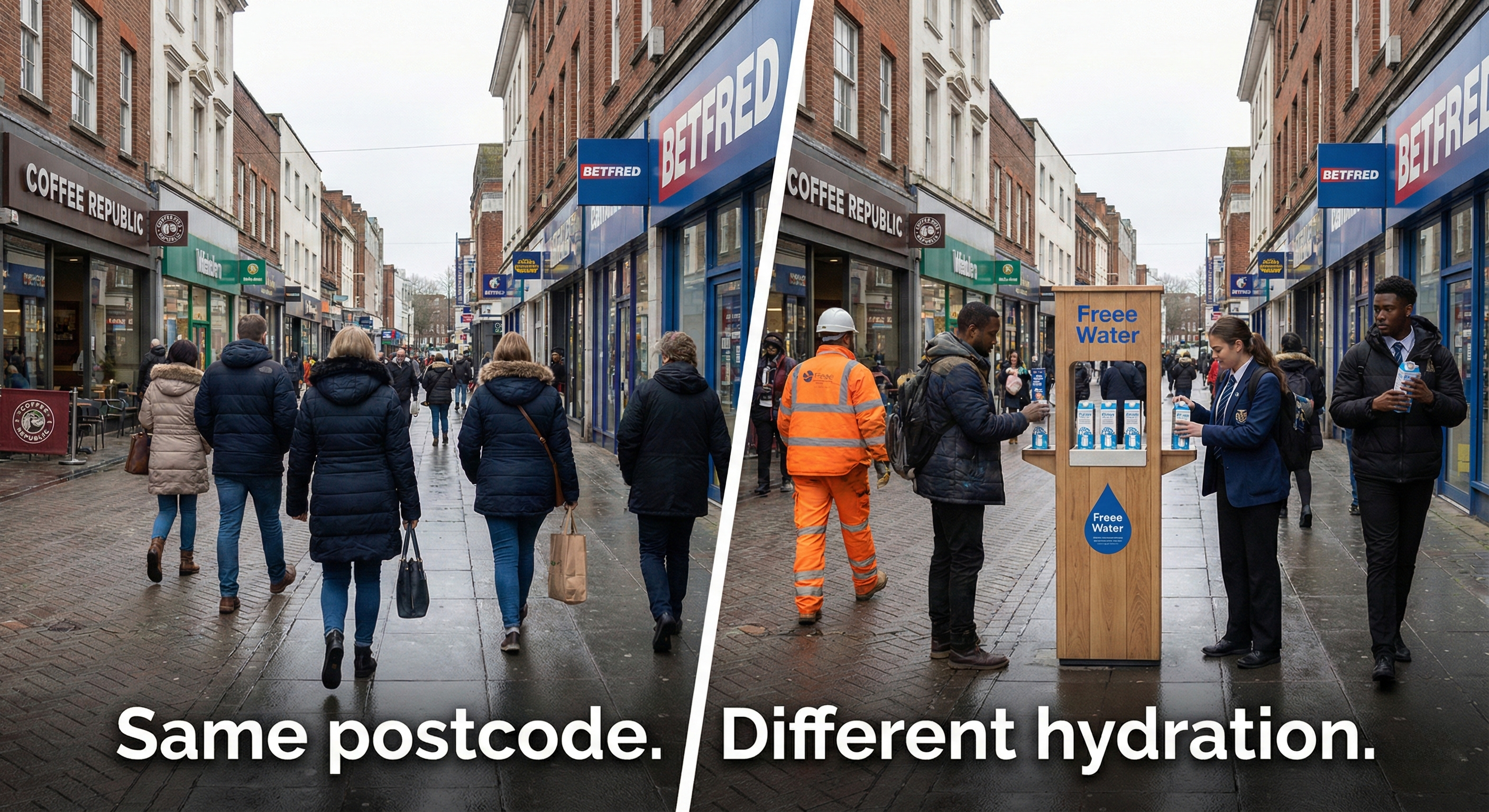
The Hydration Postcode Gap: Why Freee Water Focuses On Places The System Forgot
Hydration In the UK, access to water is supposed to be simple. Turn on the tap at home, job done. The reality ...
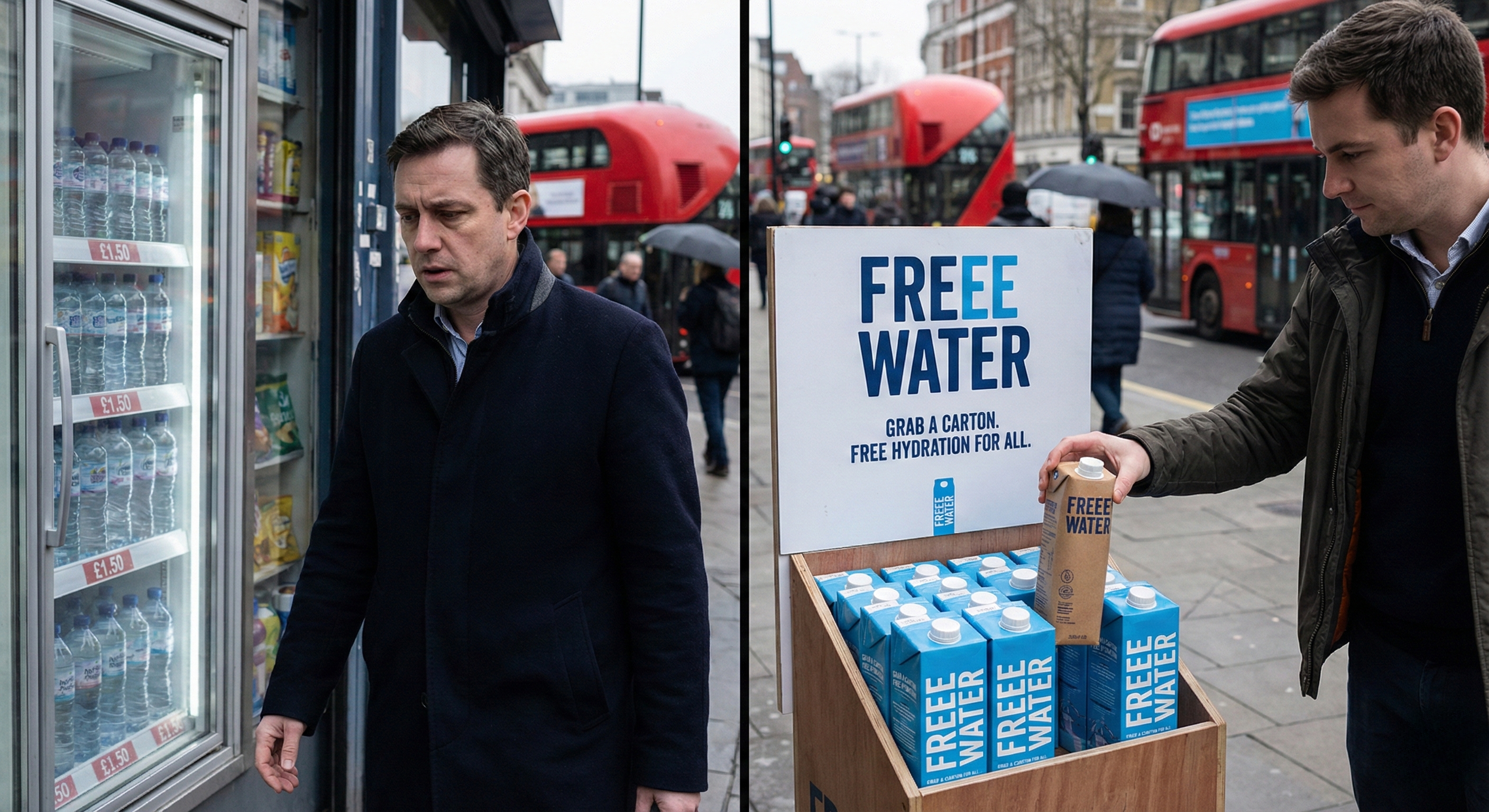
A Day With Freee Water: What Changes When Hydration Is Actually Free In The UK
A day in the UK, with and without free water Most people in the UK do not plan their day around drinking water...
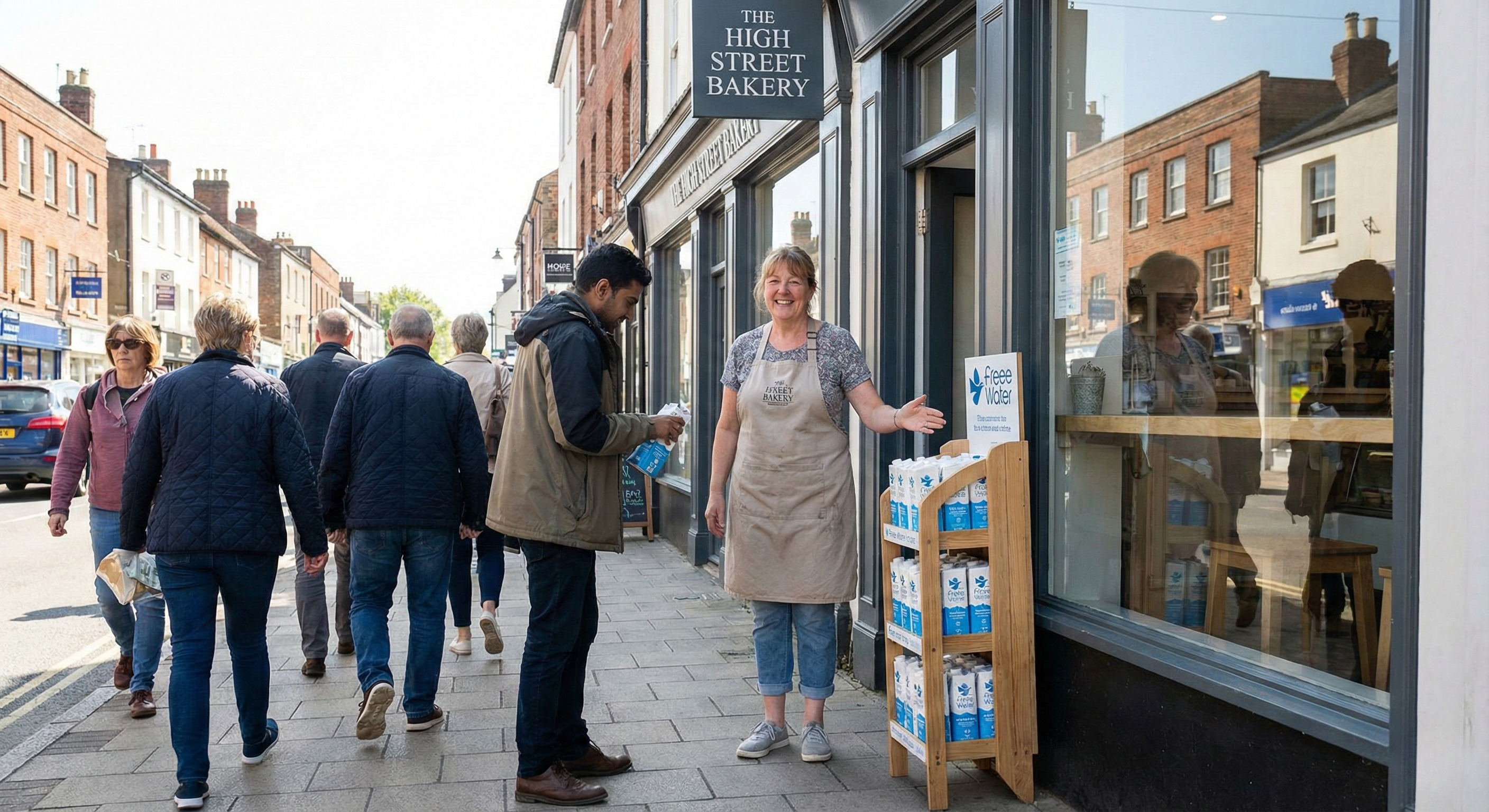
Why Local Businesses Should Back Freee Water: Community Impact On Their Own Doorstep
Freee Water Most conversations about Freee Water focus on national brands and big campaigns. That scale matter...